Pakistan sets up helpline for blood and plasma donations as virus cases surge

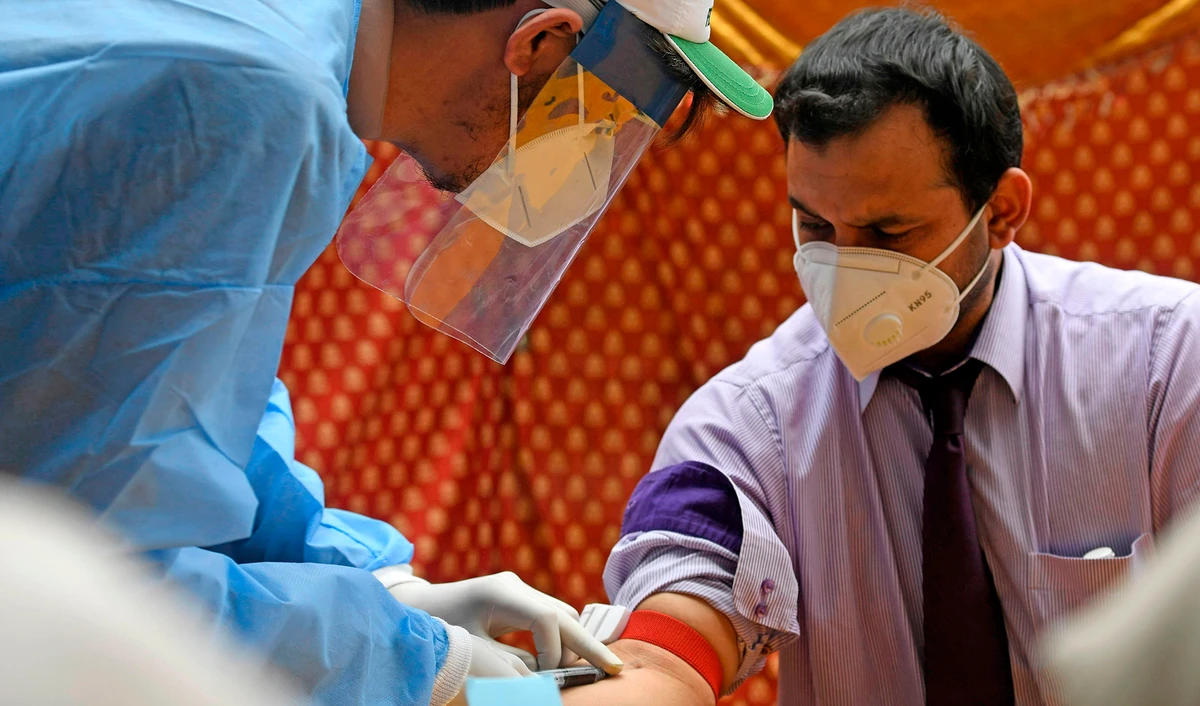
A health official wearing protective gear takes blood sample of a man at a drive-through screening and testing facility for the COVID-19 coronavirus, alongside a street in Islamabad on June 10, 2020. (AFP)
Short Url
Updated 15 June 2020
Follow

Pakistan sets up helpline for blood and plasma donations as virus cases surge

  • June 14, annually celebrated as World Blood Donor Day, has been met with a nationwide fall in blood donations
  • Pakistan needs three million blood bags every year to meet total transfusion and emergency needs

ISLAMABAD: Pakistani authorities have set up a helpline for regular blood as well as COVID-19 plasma donors, as surging coronavirus case rates have led to blood drives canceled around the country and strained regular supply.
Pakistan’s notoriously unregulated blood banks have been in the spotlight in recent years owing to the hundreds of thousands of people who require regular blood transfusions in the country-- covering a vast spectrum from thalassemia to kidney and hepatitis patients.
These patients now bear the brunt of the deficit in blood donations as the pandemic sweeps across Pakistan with almost 140,000 coronavirus cases recorded as of Sunday.
“We have set up a helpline for the donors, especially for COVID-19 survivors, to facilitate them in blood donation,” Saqib Mumtaz, a spokesperson for the National Disaster Management Authority (NDMA), told Arab News on Sunday.
June 14 is annually celebrated as World Blood Donor Day to raise awareness of the need for safe blood and blood products, and to thank donors for their voluntary and life-saving gift. 
But this year, countries around the world have reported a sharp fall in blood donations as governments restrict mobility and fears of infection affect availability.
“If plasma is a real therapy for COVID-19, then the government must identify specific centers where survivors can donate easily,” Abdul Haq, 44, who recovered from COVID-19 in Islamabad, told Arab News on Sunday.
No public or private institution had so far reached out to him to coordinate a plasma donation, he added.
Survivors of COVID-19 are generally left with blood containing antibodies made by the body’s immune system to fight off the virus. 
The blood plasma that carries the antibodies can be collected and given to newly infected patients, a method that has proven effective in treating people with a range of illnesses in the past. However, data on its effectiveness in treating COVID-19 is still inconclusive. 
In Pakistan, voluntary blood donations fulfil only 50 percent of the country’s total requirement, according to Dr. Saqib Ansari, a haematologist at Children’s Hospital Karachi.
With 100,000 patients suffering from thalassemia alone in Pakistan and 5,000 babies born with it every year, he added the country required at least three million blood bags every year just to meet its total transfusion and emergency needs.
“The real challenge is to get safe blood and its proper transfusion to patients,” he said.
He expressed concern that huge percentages of patients-- up to 70 percent receiving blood transfusions-- were liable to contract Hepatitis B or C due to the failure of proper blood screening.
These concerns were as important for coronavirus patients seeking blood plasma therapy, he said, with regulation falling under the ambit of the Drug Regulatory Authority of Pakistan.
“The best available testing and screening of the plasma must be ensured before transfusing it to COVID-19 patients to prevent other infections, and gauge the treatment’s efficacy,” he said.
Pakistan PM orders accelerated privatization of power sector to tackle losses

Updated 15 December 2025
Follow

Pakistan PM orders accelerated privatization of power sector to tackle losses

  • Tenders to be issued for privatization of three major electricity distribution firms, PMO says
  • Sharif says Pakistan to develop battery energy storage through public-private partnerships

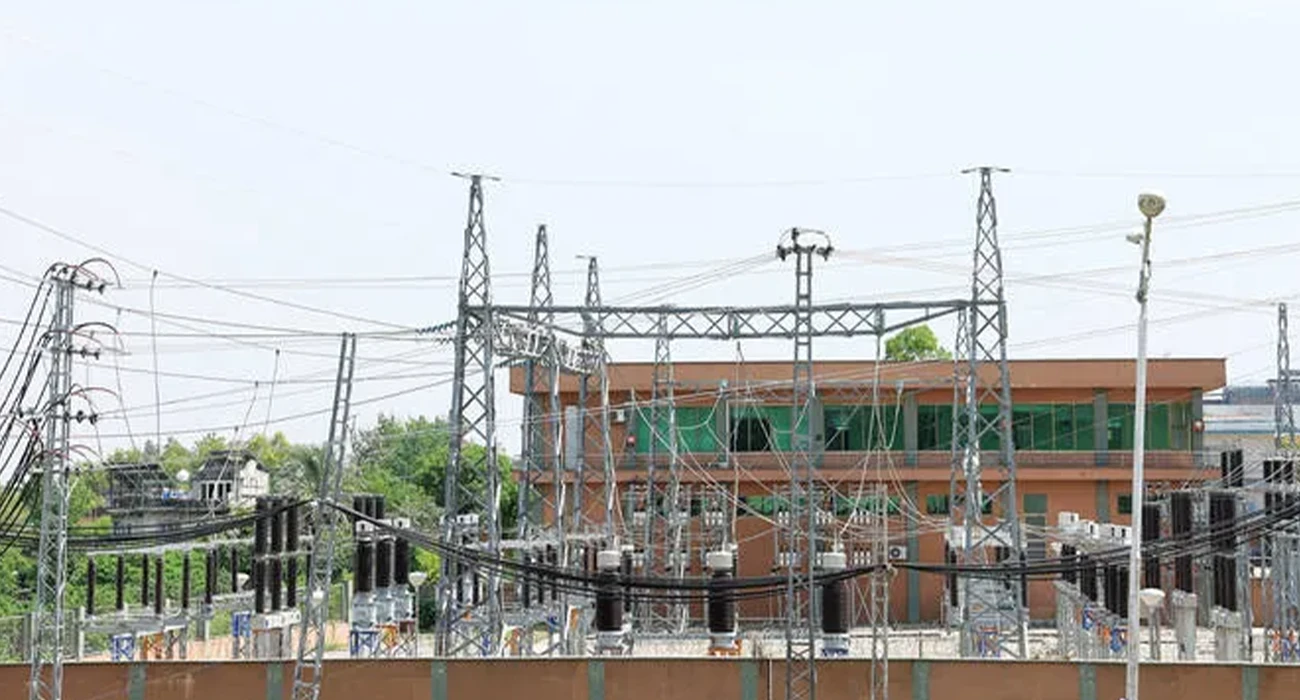
ISLAMABAD: Pakistan’s prime minister on Monday directed the government to speed up privatization of state-owned power companies and improve electricity infrastructure nationwide, as authorities try to address deep-rooted losses and inefficiencies in the energy sector that have weighed on the economy and public finances.

Pakistan’s electricity system has long struggled with financial distress caused by a combination of factors including theft of power, inefficient collection of bills, high costs of generating electricity and a large burden of unpaid obligations known as “circular debt.” In the first quarter of the current financial year, government-owned distribution companies recorded losses of about Rs171 billion ($611 million) due to poor bill recovery and operational inefficiencies, official documents show. Circular debt in the broader power sector stood at around Rs1.66 trillion ($5.9 billion) in mid-2025, a sharp decline from past peaks but still a major fiscal drain. 

Efforts to contain these losses have been a focus of Pakistan’s economic reform program with the International Monetary Fund, which has urged structural changes in the energy sector as part of financing conditions. Previous government initiatives have included signing a $4.5 billion financing facility with local banks to ease power sector debt and reducing retail electricity tariffs to support economic recovery. 

“Electricity sector privatization and market-based competition is the sustainable solution to the country’s energy problems,” Prime Minister Shehbaz Sharif said at a meeting reviewing the roadmap for power sector reforms, according to a statement from the prime minister’s office.

The meeting reviewed progress on privatization and infrastructure projects. Officials said tenders for modernizing one of Pakistan’s oldest operational hubs, Rohri Railway Station, will be issued soon and that the Ghazi Barotha to Faisalabad transmission line, designed to improve long-distance transmission of electricity, is in the initial approval stages. While not all power-sector decisions were detailed publicly, the government emphasized expanding private sector participation and completing priority projects to strengthen the electricity grid.

In another key development, the prime minister endorsed plans to begin work on a battery energy storage system with participation from private investors to help manage fluctuations in supply and demand, particularly as renewable energy sources such as solar and wind take a growing role in generation. Officials said the concept clearance for the storage system has been approved and feasibility studies are underway.

Government briefing documents also outlined steps toward shifting some electricity plants from imported coal to locally mined Thar coal, where a railway line expansion is underway to support transport of fuel, potentially lowering costs and import dependence in the long term.

State authorities also pledged to address safety by converting unmanned railway crossings to staffed ones and to strengthen food safety inspections at stations, underscoring broader infrastructure and service improvements connected to energy and transport priorities.