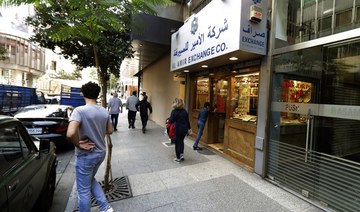

BEIRUT: The Lebanese Council of Ministers has extended the period of general mobilization in the country to July 5 following a recommendation by the Lebanese Supreme Council of Defense.
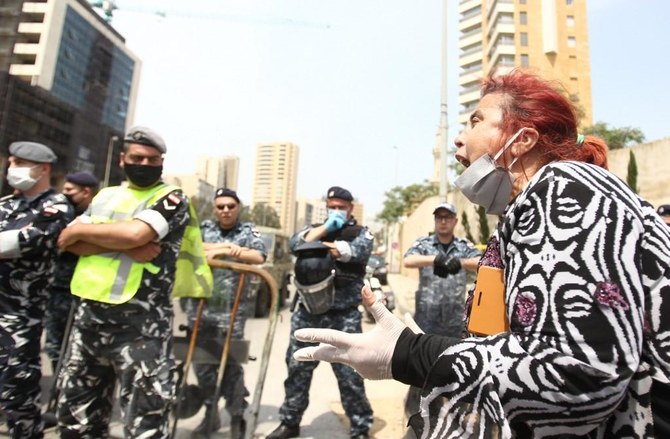
The decision comes two days before the demonstration planned by the civil movement on Saturday, resuming anti-government protests that erupted in the country on Oct. 17.
“We do not fear the demonstrators, rather we fear for their health, and we are keen to protect the demonstration so that it would achieve its goals,” said Minister of Information Manal Abdel Samad after a Cabinet session on Thursday.
In a statement, the Lebanese Supreme Council of Defense said: “The military and security services should be firm in deterring violations of the general mobilization in order to prevent the proliferation of the coronavirus, and to cooperate with civil society and local authorities to achieve this objective.”
General mobilization conditions include wearing masks, maintaining social distancing and avoiding overcrowding.
During the meeting of the Supreme Council of Defense, Prime Minister Hassan Diab said: “The risk remains high, considering that cases of COVID-19 are still being recorded.
“The precautionary and preventive measures are still necessary to avoid a second wave of the pandemic, which could be harder than the first wave.
“The government understands the suffering of the people due to the social situation, but there is fear that some groups might take advantage of this for their political objectives in cutting roads and dismantling the country, shutting down enterprises, and obstructing people’s businesses, that could result in employees losing their jobs,” he added.
“We respect the right to demonstrate, but it would become total chaos if roads were blocked and public and private property was sabotaged,” he said, adding: “Lebanese people cannot accept these practices as democratic practices.
“People will soon see a decline in food prices and a gradual return to the normal economic cycle after a large number of enterprises were allowed to reopen in order to save businesses, and people’s jobs and enterprises,” the Lebanese leader said.
Meanwhile, lawyers from the civil movement filed a case against outspoken parliamentarian Jamil Al-Sayyed for calling for the killing of protesters.
Al-Sayyed’s comments drew widespread condemnation on social media, even among his own supporters. In a press conference on Wednesday, he said: “If demonstrators come to the doorstep of an official who does not have guards, then this official has the right to shoot them from his own window, especially if the protesters verbally abuse the official.”
In a follow-up statement, he added: “My words yesterday were addressed to every bully who would dare come under my window to insult me or insult my family, I am serious when I say this and it is not a slip of the tongue.”
The Lebanese General Security declared that Lebanon will open its borders with Syria for two days per week to allow Lebanese citizens to return, while the government approved a fourth stage of repatriation of Lebanese people from abroad between June 11 and 19.
“We will take a decision to open the airport and start air travel with specific countries,” said Minister of Health Hamad Hassan.
Ethiopian workers
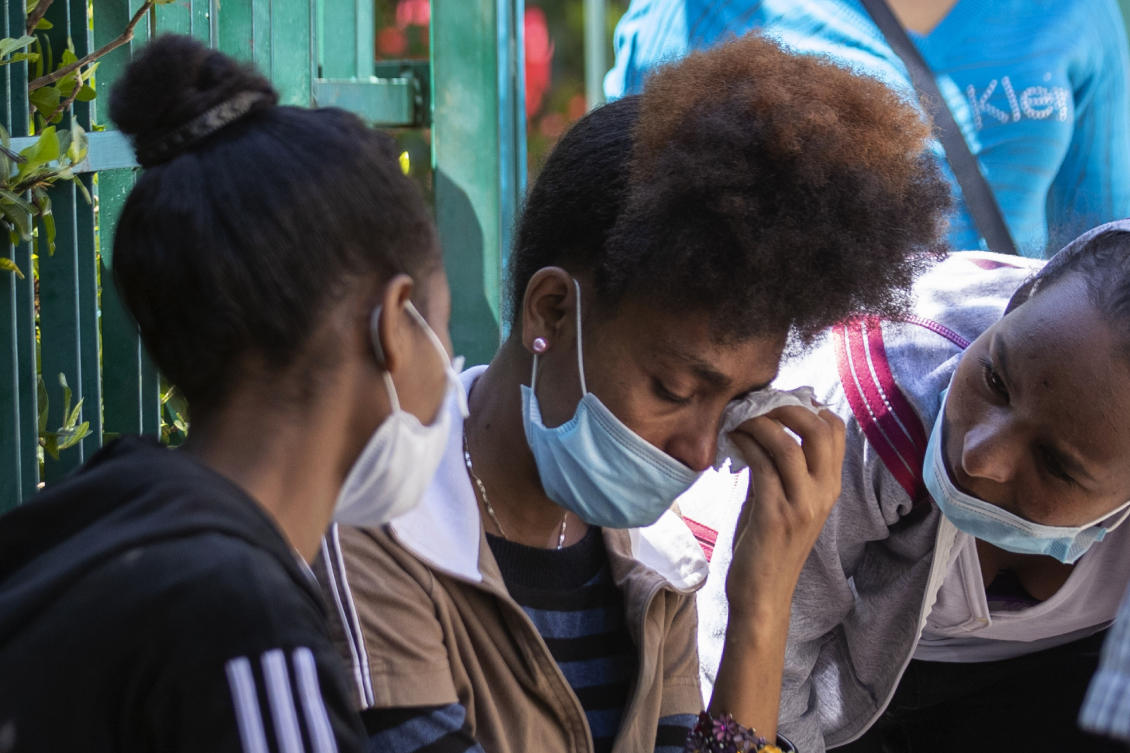
An Ethiopian domestic worker cries as she waits outside the Ethiopian consulate in Hazmieh, east of Beirut, Lebanon, on Thursday, June 4, 2020. (AP)
Dozens of Ethiopian workers gathered in front of the Ethiopian Embassy in Hazmieh in the eastern suburb of Beirut.
The Ministry of Labor said on Thursday that 35 Ethiopian workers had been transferred to a hotel in Beirut to provide them with shelter after they were dismissed by their employers.
The ministry said it provided health examinations for the workers, before transferring them from the hotel to the Caritas Foundation, adding that it is investigating claims of unfair dismissal.
The founding committee of the Domestic Workers Union and the National Federation of Employees’ and Workers’ Union in Lebanon said: “We condemn the racist behavior against migrant workers, especially domestic workers, in these economic conditions and during this health crisis.”
The Union of Owners of Recruitment Agencies of Domestic Workers hoped that the ministry would succeed in returning foreign workers to their countries.