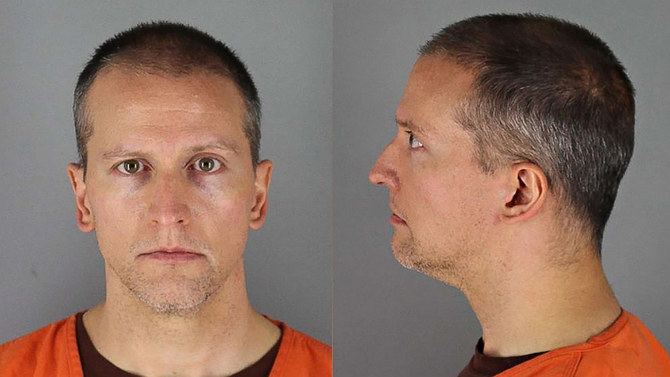
MINNEAPOLIS: The white Minneapolis police officer who kneeled on the neck of a black man who later died will now be charged with second-degree murder, and his three colleagues will also face charges, court documents revealed Wednesday.
The May 25 death of George Floyd — who had been accused of trying to buy cigarettes with a counterfeit bill — has ignited protests across the United States over systemic racism and police brutality.
“Minnesota Attorney General Keith Ellison is increasing charges against Derek Chauvin to 2nd degree in George Floyd’s murder and also charging other 3 officers,” US Senator Amy Klobuchar tweeted.
“This is another important step for justice.”
Chauvin was charged last week with third-degree murder, which is roughly akin to manslaughter. A charge of second-degree murder does not suggest premeditation but carries stiffer penalties.
Court documents show the second-degree murder charge was added to the prior charges.
The three other officers have been charged with aiding and abetting second-degree murder, documents show.
In a statement, Floyd’s family described news of the new charges as a “bittersweet moment.”
“This is a significant step forward on the road to justice, and we are gratified that this important action came before George Floyd’s body was laid to rest,” the statement said.
The statement, issued by family attorney Ben Crump, also said that Ellison would consider elevating the charge to premeditated murder “if the evidence supports it.”
The family urged protesters to “raise their voices for change in peaceful ways.”
Tens of thousands of demonstrators defied night-time curfews Tuesday in several US cities.
But the demonstrations were largely peaceful, and while there were tense standoffs with law enforcement, the protests did not feature the looting or clashes with police of previous days.


![]()

Four police officers charged in Floyd death, one faces 2nd-degree murder count
Short Url
https://arab.news/mbucd
Four police officers charged in Floyd death, one faces 2nd-degree murder count
- Chauvin will now be charged with second-degree murder
- His three colleagues will also face charges


Latest updates


© 2026 SAUDI RESEARCH & PUBLISHING COMPANY, All Rights Reserved And subject to Terms of Use Agreement.