

Yemen government calls for investigation into journalist’s killing

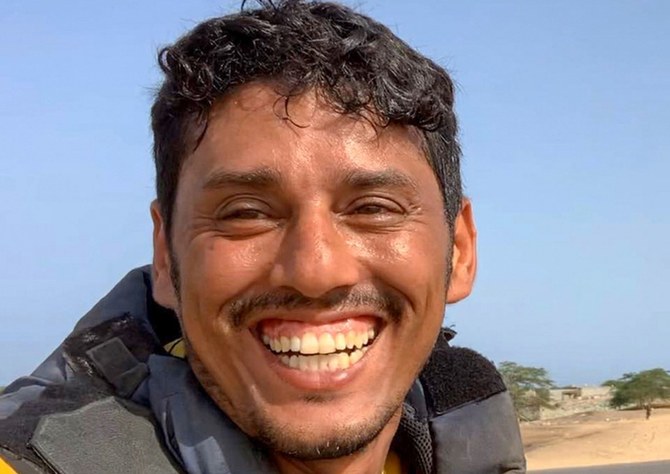
Nabil Hasan Al-Quaety, a 34-year-old Yemeni videographer and photographer, was married with three children and a fourth on the way. (AFP)
Short Url
Updated 03 June 2020
Follow

Yemen government calls for investigation into journalist’s killing

  • Nabil Hasan Al-Quaety was a finalist in Britain’s 2016 Rory Peck Award for his work covering Yemen’s long conflict with an entry the judges described as “rare and outstanding”

DUBAI: The Yemeni government has called for an investigation after a journalist was shot dead in the southern city of Aden.

Nabil Hasan Al-Quaety, a 34-year-old Yemeni videographer and photographer, who contributed to the international news agency AFP, as well as well as other major news organizations in the region, was shot while in his car by unknown assailants shortly after leaving his home on Tuesday.

“Targeting journalist Nabil Al-Quaety in an organized and planned assassination is an attack on the press in Yemen, and it reflects the failures and mistakes of all the warring parties,” Najib Ghallab, undersecretary at Yemen’s information ministry, told AFP.

“We condemn this crime against Quaety, whose work was to cover events and facts in pictures. It seems that his work has caused outrage among some extremist parties.”

Ghallab called for “a clear and transparent” investigation into the killing, and for the internationally recognized government and the southern separatists - who control Aden - to collaborate in the probe.

Quaety was married with three children and a fourth on the way.

Quaety was a finalist in Britain’s 2016 Rory Peck Award for his work covering Yemen’s long conflict with an entry the judges described as “rare and outstanding.”

AFP’s Global News Director Phil Chetwynd said the news network was “shocked by the senseless killing of a courageous journalist doing his job despite threats and intimidation.”

“Through his work with AFP over the past five years, Nabil had helped to show a global audience the full horror of the conflict in Yemen. The quality of his work had been widely recognized,” he said.


BBC slammed for ‘shameful’ cut to ‘free Palestine’ comment at BAFTA Awards

Updated 24 February 2026
Follow

BBC slammed for ‘shameful’ cut to ‘free Palestine’ comment at BAFTA Awards

  • Broadcaster removes from broadcast part of filmmaker Akinola Davies Jr.’s acceptance speech at the British Academy Film Awards
  • Amnesty UK praises filmmaker for speaking up for those ‘facing and fleeing from persecution and mass atrocities’

LONDON: The BBC was accused on Monday of a “shameful” decision after it cut part of an acceptance speech at the previous night’s British Academy Film Awards in which a filmmaker uttered the phrase “free Palestine.”

British-Nigerian director and co-writer Akinola Davies Jr. and his brother, co-writer Wale Davies were collecting the award for outstanding debut by a British writer, director or producer for their film “My Father’s Shadow” when the former made the comment.

The BBC chose not to include the final part of his speech when it broadcast the BAFTAs ceremony later in the evening. However, the corporation did broadcast an inadvertent racist slur shouted by a person with Tourette syndrome while Black actors Michael B. Jordan and Delroy Lindo were presenting an award.

Akinola thanked industry figures and family for their support as he accepted the award, before dedicating it to “all those whose parents migrated to obtain a better life for their children.”

In the final part of his speech, cut by the BBC, he said: “To the economic migrant, the conflict migrant, those under occupation, dictatorship, persecution and those experiencing genocide, you matter and your stories matter more than ever.

“Your dreams are an act of resistance. To those watching at home, archive your loved ones, archive your stories yesterday, today and forever. For Nigeria, for London, Congo, Sudan, free Palestine. Thank you.”

The BBC, which broadcast the ceremony with a two-hour time delay, said the cut was made for timing reasons.

A spokesperson told Deadline: “The live event is three hours, and it has to be reduced to two hours for its on-air slot. The same happened to other speeches made during the night, and all edits were made to ensure the program was delivered to time. All winners’ speeches will be available to watch via BAFTA’s YouTube Channel.”

Human rights campaign group Amnesty UK described the decision by the BBC to cut part of the speech as “shameful.”

It added: “Thank you Akinola Davies Jr. for using your platform to speak out for the rights of migrants and people facing and fleeing from persecution and mass atrocities, from the Congo to Sudan to Palestine.”

In June last year, the BBC was at the center of a row after it broadcast a Glastonbury Festival performance by the duo Bob Vylan, during which the lead singer chanted “death to the IDF” in protest against the Israeli Defense Forces’ assault on Gaza.