


KHARTOUM: Sudanese protesters took to the streets of Khartoum on Wednesday, angrily demanding justice for scores of pro-democracy demonstrators killed a year ago in a bloody crackdown.
The popular mass movement had already brought down long-time ruler Omar Bashir but was still on the streets demanding further reforms when it was attacked by men in military fatigues on June 3, 2019.
“We won’t forget and we won’t forgive,” read one Arabic-language protest sign held up by a mask-clad Sudanese woman as scores of other protesters rallied and the smoke of burning car tires blackened the sky.
At least 128 people were killed and hundreds more wounded in the attack outside Khartoum’s army headquarters, according to doctors linked to the protest movement. Official figures say at least 87 died.
The attackers in military fatigues perpetrated “murder, torture, rape, sexual violence, enforced disappearance of persons and potentially other inhumane acts,” says a March report by the US-based group Physicians for Human Rights.
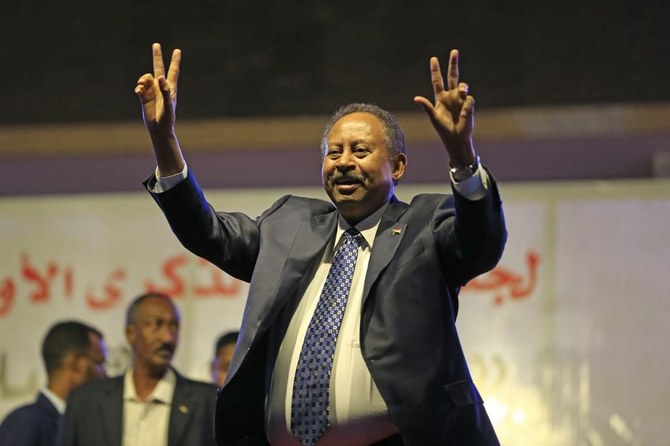
Sudan’s Prime Minister Abdalla Hamdok, under post-Bashir civilian-military transition authority, pledged justice for the pro-democracy protesters killed.
“I assure you all, that achieving comprehensive justice and retribution for the souls of our hero martyrs ... and for the wounded and missing is an inevitable and irreversible step,” Hamdok said in a televised speech on Wednesday.
“We are awaiting the completion of the independent investigation committee’s work, which will be followed by referring all those found guilty of participating in the massacre that dispersed the sit-in to fair and public trials.”
Protesters on Wednesday hung up effigies of soldiers of the Rapid Support Forces (RSF), the paramilitary group they blame for the bloodbath — a charge firmly denied by Sudan’s military leaders.
One protester held up a large photo of Abdulsalam Kisha, a 25-year-old protester who was killed in the attack last year in the capital’s eastern Riyadh district.
The dead man’s father, Kisha Abdulsalam, told AFP days ago that he still held out hope the killers would be brought to justice by post-revolution authorities.
“We demand an international probe to ensure justice for those killed,” said Kisha, a leading member of a campaign group for the families of protest victims.
A memorial portrait of his slain son has been painted on the Khartoum house of the bereaved father, who has two other sons and a daughter.
He recalled the day he heard the shocking news.
“I rushed to the protest site after receiving multiple random phone calls saying my son had died,” he said, only to find out later the young man was killed by multiple gunshots.
Sudan’s transitional authorities, which came to power in August last year, with Bashir behind bars, have formed a committee to probe the violence, but it has yet to announce its findings.In July last year, an initial probe by Sudan’s military officials and prosecutors showed that some members of the RSF and other security forces were involved in the killings.
Military officials insist the operation had been planned to purge an area near the protest camp where people were allegedly selling drugs.
Hamdok in October tasked veteran lawyer Nabil Adib with leading the investigations and to present findings within three months.
Adib told AFP that three months was “not enough, especially given that this is a crime with political overtones and involves a large number of defendants. “It may even involve powerful figures,” he said.
He said the investigation had been further hampered by the coronavirus pandemic which has so far infected more than 5,000 people and killed over 300 in Sudan.
International rights groups, which have documented multiple witness accounts, have called for a transparent investigation.
Physicians for Human Rights said the violence “could rise to the level of international crimes for which there should be no immunity, including crimes against humanity.”
Adib said the committee has so far received many testimonies but did not elaborate.
“We gave them assurances that their identities will remain anonymous,” he added.
But families of the victims remain skeptical.
“I don’t believe this committee will bring justice to the martyrs,” said Amna, Abdulsalam’s mother, as she tearfully showed an album of photos of her son.
“We will not forgive those who shed blood and we will not give up on the martyrs’ rights.”


