Saudi Arabia’s Ministry of Islamic Affairs reopens at 30% capacity 

1 / 3
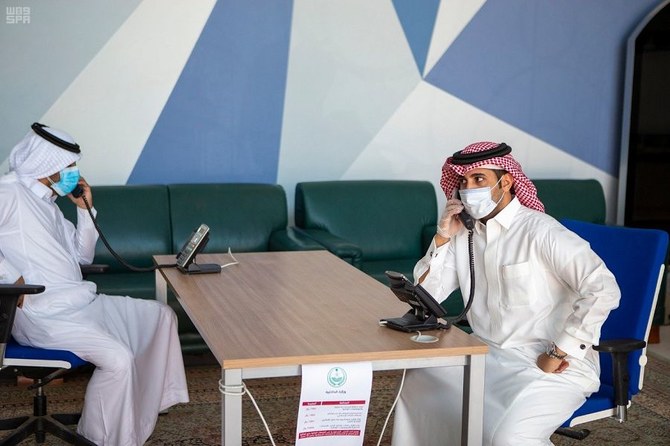
The ministry announced that it had prepared workplaces in the ministry’s office and its branches for recommencement of work. (SPA)
2 / 3
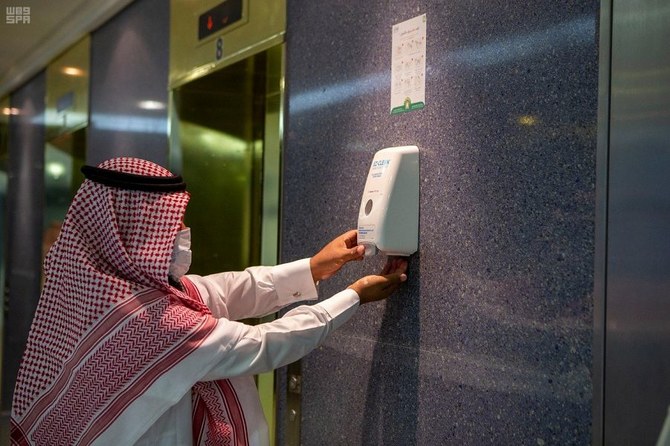
The ministry announced that it had prepared workplaces in the ministry’s office and its branches for recommencement of work. (SPA)
3 / 3
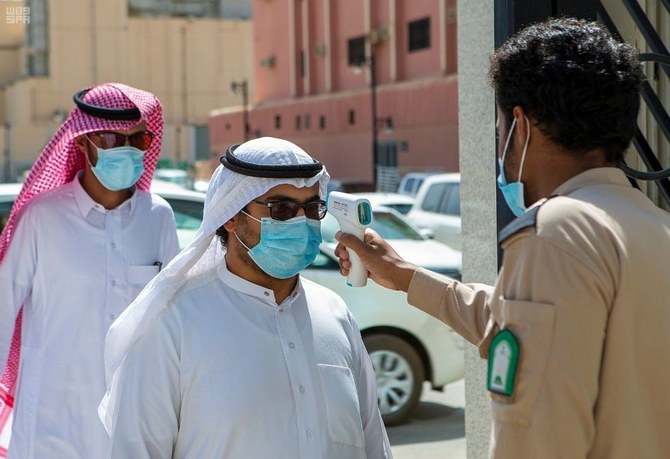
The ministry announced that it had prepared workplaces in the ministry’s office and its branches for recommencement of work. (SPA)
Short Url
Updated 31 May 2020
Follow

Saudi Arabia’s Ministry of Islamic Affairs reopens at 30% capacity 

  • Employees will be required to communicate via email and telephone and use remote video calling

Saudi Arabia’s Ministry of Islamic Affairs reopened its offices across the Kingdom on Sunday with strict measures in place to keep the spread of the coronavirus under control, Saudi state agency SPA reported.  
Offices within the ministry will be working at a 30% capacity where employees will be required to have a minimum of a two-meter distance from each other, wear face masks, wash their hands regularly and not share office tools. 
Employees will be required to communicate via email and telephone and use remote video calling for meetings and workshops.  
The ministry announced that it had prepared workplaces in the ministry’s office and its branches for recommencement of work. 
The ministry and its branches have also completed sterilization, cleaning and maintenance operations. 
Upon entering the offices, employees will have their temperatures checked and those with a high temperature will be referred to the ministry of health immediately. 
Those who violate the measures will not be permitted entry.


Economic growth and resilience at heart of 2nd AlUla Emerging Market Economies Conference

Updated 03 February 2026
Follow

Economic growth and resilience at heart of 2nd AlUla Emerging Market Economies Conference

  • Event on Feb. 8 and 9 will bring together ministers, governors of central banks, policymakers, economic experts and international financial institutions
  • Emerging-market economies a ‘pivotal element’ in global economic system due to effect they have on growth and stability, says Saudi Finance Minister Mohammed Al-Jadaan

RIYADH: The second annual AlUla Conference for Emerging Market Economies, which Saudi Arabia will host next week, offers a platform to exchange views on global developments and discuss policies and reforms that support inclusive growth and strengthen economic resilience, the Kingdom’s finance minister said.

The event on Feb. 8 and 9 will bring together finance ministers, governors of central banks and policymakers, alongside economic experts and representatives of international financial institutions.

Organized by the Saudi Ministry of Finance in partnership with the International Monetary Fund, it takes place as emerging-market economies face mounting challenges amid rapid global economic change.

Finance Minister Mohammed Al-Jadaan said the decision to host the conference reflects Saudi Arabia’s ongoing commitment to efforts that support global financial and economic stability, and highlights the growing influence of emerging economies on worldwide growth.

Emerging-market economies represent a “pivotal element” in the global economic system due to the direct impact they have on economic growth and stability, he added.

“The AlUla Conference for Emerging Market Economies provides a unique platform for exchanging views on global economic developments, and discussing policies and reforms that will support inclusive growth and enhance economic resilience, in light of broader international cooperation that contributes to confronting common challenges,” Al-Jadaan said.

Kristalina Georgieva, managing director of the IMF, said the event would help emerging economies deal with growing uncertainty driven by technological change, demographic shifts and geopolitical tensions.

“The AlUla conference provides a vital platform for emerging economies to discuss how they can navigate the risks and embrace the opportunities ahead,” she said.

“In these times of sweeping transformations in the global economy, policymakers face a more challenging and uncertain environment. Countries should work together to strengthen resilience through sound macroeconomic and financial policies.”