

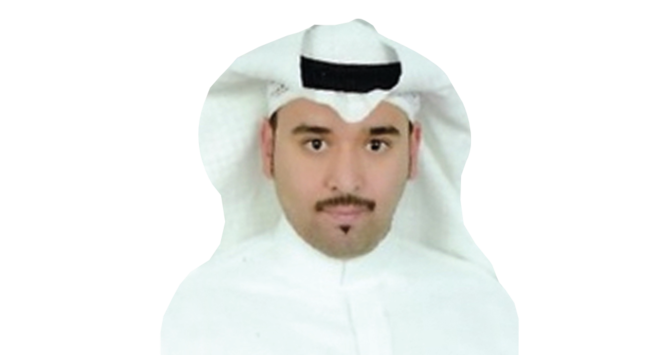
Ahmed bin Mohammed Al-Dukhail, executive director of the Saudi Federation of Sports Medicine

Ahmed bin Mohammed Al-Dukhail
Short Url
Updated 29 May 2020
Follow

Ahmed bin Mohammed Al-Dukhail, executive director of the Saudi Federation of Sports Medicine

Ahmed bin Mohammed Al-Dukhail has been executive director of the Saudi Federation of Sports Medicine since March 2017.

He received his bachelor’s degree in physiotherapy from the Riyadh-based King Saud University in 2004 and went on to obtain a Ph.D. in sports rehabilitation sciences in 2016 from the University of Salford, Manchester. His doctorate
thesis was titled: “An investigation into the relationship between strength imbalance, flexibility and anthropometric discrepancy, on right and left legs asymmetry in sport-specific groups of athletes.”

Recently, Al-Dukhail told the Saudi Press Agency that the national, continental and international sports medicine federations were currently working to create regulations for the return of sports events, particularly group ones, such as football.

Al-Dukhail, a psychotherapy researcher and an enthusiast of sports medicine development programs, has had his research published in international sports congresses over the past few years.

He has developed a performance assessment strategy for athletes to help them evaluate their physical capabilities before, during and after sports seasons. The assessment aims to ensure athletes’ readiness for competition as well as to predict risk of injury throughout a competitive season.

Famous international sports teams and entities, such as Al-Shabab FC, Saudi Athletics Federation, Manchester City FC, Sale Sharks Rugby club, LC Cricket Club, Aspire Academy, have all benefited from the assessment during their pre-seasonal screening.


Experimental farm in Al-Lith looks into future of Saudi Arabian agriculture

Updated 01 February 2026
Follow

Experimental farm in Al-Lith looks into future of Saudi Arabian agriculture

  • Research initiative reflects strategic transformation

JEDDAH: An experimental farm in Saudi Arabia’s Al-Lith Governorate is one of the research initiatives reflecting the strategic transformation taking place in the Kingdom’s agricultural sector.

The farm uses highly efficient, sustainable production models that combine scientific research with commercial application, contributing to strengthening the country’s food security system and the sustainability of water resources.

Located in the Ghumaiqa Center on an area of about 10 hectares, the cutting-edge farm is a testing platform for modern agricultural technologies that tackle the challenge of water scarcity.

The farm includes developed open fields and modern greenhouses, supported by smart irrigation encompassing drip and sprinkler irrigation alongside surface and subsurface technologies.

All the systems operate via smart controls that enable the monitoring of water consumption and ensure improved efficiency, thereby achieving a balance between agricultural production and water conservation.

The farm also uses treated and diluted low-salinity seawater.

It aims to diversify agricultural water sources, reduce reliance on freshwater, and open new horizons for agriculture in coastal and semi-arid environments.

The project represents a promising investment opportunity in the field of smart agriculture, enabling the development of commercially scalable production models, particularly for high-value vegetables and fruits, while reducing operational costs associated with water and energy, enhancing the economic feasibility of future agricultural projects.

In addition, the project contributes to transferring and localizing agricultural expertise, supporting local food supply chains, and creating an attractive environment for agricultural investment.

This aligns with Sustainable Development Goals and enhances the efficiency of the private sector in adopting innovative agricultural solutions.

Yahya bin Abdulrahman Al-Mahabi, the director of the Ministry of Environment, Water and Agriculture office in Al-Lith Governorate, told the Saudi Press Agency that the project represented the future of agriculture in the Kingdom.

He explained that the vision was based on investing in technology, enhancing the return on water per unit, and integrating scientific research with investment opportunities.

Al-Mahabi spoke of the experimental farm as a modern, scalable and replicable model applicable in several regions of the Kingdom, particularly in coastal environments.

Al-Mahabi highlighted the Ministry of Environment, Water and Agriculture’s commitment to supporting distinctive projects that contributed to achieving food security while developing rural areas and enhancing agricultural production efficiency, in line with the objectives of the Kingdom’s Vision 2030.