RIYADH: The King Abdul Aziz Center for World Culture (Ithra) is marking the festive season this year with a parade passing through different cities in the Eastern Province that people can watch from their homes.
As the Eid celebration coincides with a lockdown due to the coronavirus pandemic, many events on the Saudi calendar have been either canceled or postponed.
“In a time of social distancing, the initiative offers the public comfort, a sense of unity and remote enjoyment from the comfort of their own homes,” an Ithra spokesperson told Arab News.
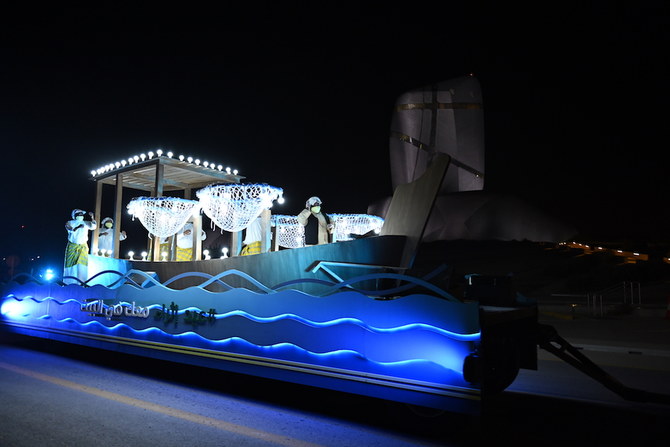
The celebratory parade features wagons adorned with elements demonstrating Eastern Province’s culture as it passes through neighborhoods in Alkhobar, Dhahran and Dammam during its six-hour duration, from 5 p.m. to 12 a.m.
The three-day parade started on the first day of Eid, Sunday, in Alkhobar — and will continue on Monday in Dammam and Tuesday in Dhahran, the spokesperson said.
As Saudis are staying at home this Eid, Ithra advises people to view the parade from their windows while the performers cheer and greet them with colorful lights and music.
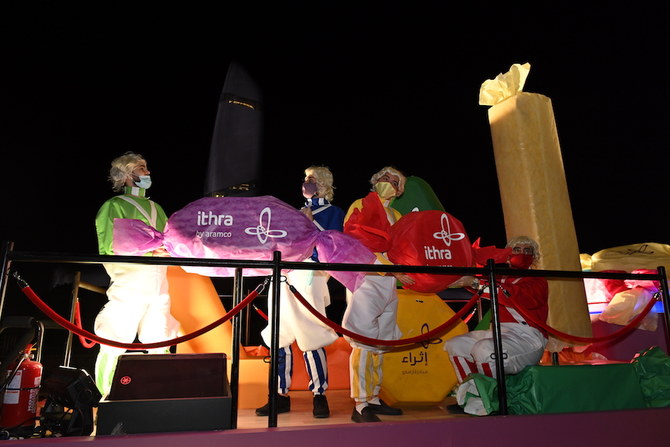
The program includes a candy wagon with performers — four cheerful mascots with colorful costumes, smiling and waving at the audience.
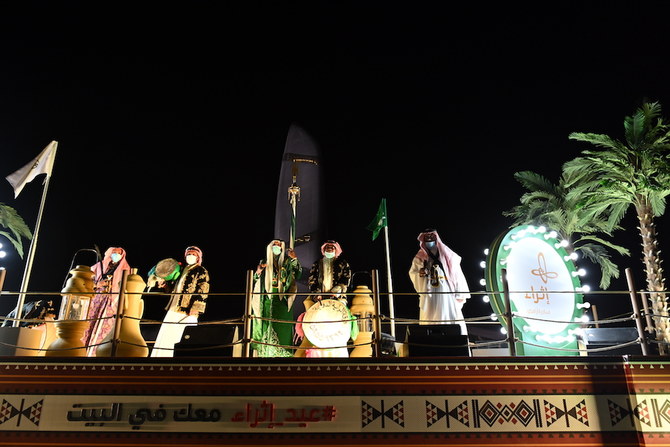
There will also be an Ardha (traditional Saudi dance) Wagon with eight performers from the Saudi National Ardha group.
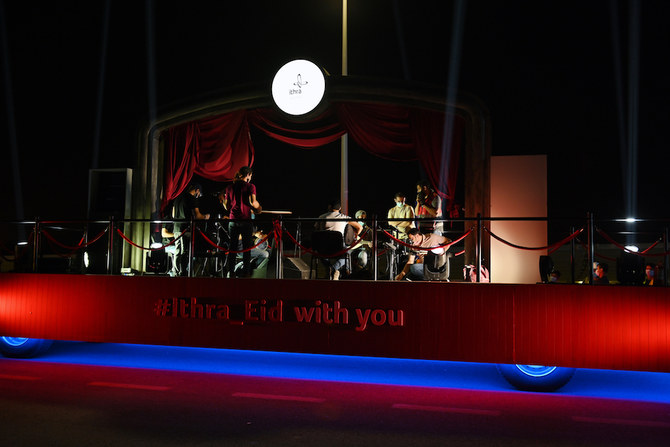
The parade includes a Theatre Wagon offering solo, duo and band performances of Sharqi style (Eastern Province music) with a western twist.
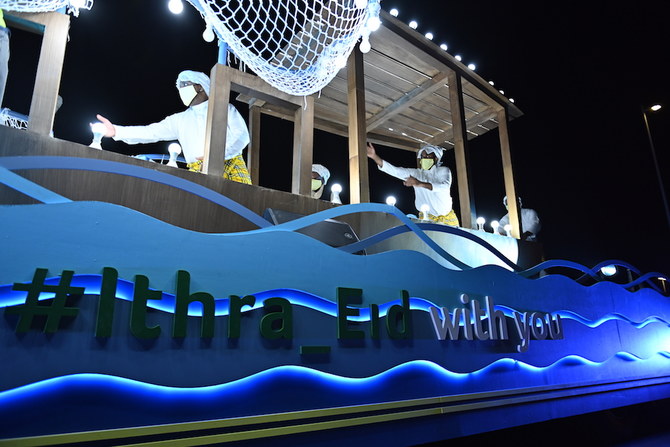
The Fisherman Wagon is also part of the diverse program, consisting of five members performing the fishermen arch show atop a carnival float. The show represents an old tradition where locals used boats for pearl diving before the discovery of oil in the Eastern Province. The performers will sing traditional songs for their audience.
The parade’s route passes through Al-Olaya, Al-Aqrabiya, Al-Heza Alakhdar Al-Hizam Thahabi, Corniche, Al-Rawabi, Al-Raka and Al-Jesr neighborhoods in Alkhobar.
In Dammam, the parade covers Al-Fakhriya, Al-Faisaliyah, Al-Jameyen, Abdullah Fouad, Al-Tabeshi, Al-Mazroeya, Al-Shate, Al-Hamra and Al-Mohamdiya.
Residents in Dhahran should stay tuned in the following neighborhoods: Rabiyah, Aramco Camp, Al-Jamaa, Danah, Dawhah North, Dawhah South and Telal Dawha and Qusoor.
For those whose neighborhoods are not covered, Ithra promises a live streaming of the celebratory parade.


![]()
![]()
![]()
![]()
![]()
![]()
![]()

Ithra marks Eid Al-Fitr with parade in Saudi Arabia's Eastern Province


Short Url
https://arab.news/jgx4e
Ithra marks Eid Al-Fitr with parade in Saudi Arabia's Eastern Province
- Many events on the Saudi calendar have been either canceled or postponed


Latest updates




Recommended


© 2026 SAUDI RESEARCH & PUBLISHING COMPANY, All Rights Reserved And subject to Terms of Use Agreement.