



With no congregational prayers or family gatherings, Salsabiel Mujovic has been worried that this year’s Eid Al-Fitr celebration will pale. Still, she’s determined to bring home holiday cheer amid the coronavirus gloom.
Her family can’t go to the mosque, but the 29-year-old New Jersey resident bought new outfits for herself and her daughters. They are praying at home and having a family photo session. The kids are decorating cookies in a virtual gathering, and popping balloons with money or candy inside — a twist on a tradition of giving children cash gifts for the occasion.
“We’re used to, just like, easily going and seeing family, but now it’s just like there’s so much fear and anxiety,” she said. “Growing up, I always loved Eid. ... It’s like a Christmas for a Muslim.”
Like Mujovic, many Muslims in America are navigating balancing religious and social rituals with concerns over the virus as they look for ways to capture the Eid spirit this weekend.
Eid Al-Fitr — the feast of breaking the fast — marks the end of Ramadan, when Muslims abstain from food and drink from sunrise to sunset. Just like they did during Ramadan, many are resorting to at-home worship and relying on technology for online gatherings, sermons and, now, Eid entertainment.
This year, some Muslim-majority countries have tightened restrictions for the holiday which traditionally means family visits, group outings and worshippers flooding mosques or filling public spaces.
The Eid prayer normally attracts particularly large crowds. The Fiqh Council of North America, a body of Islamic scholars, encouraged Muslims to perform the Eid prayer at home.
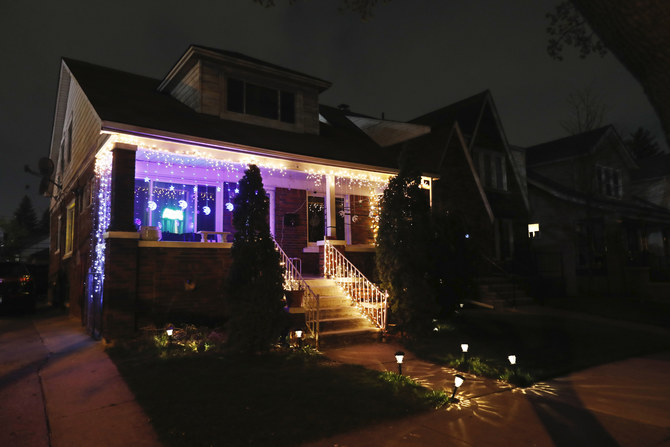
“We don’t want to have gatherings and congregations,” Sheikh Yasir Qadhi, who prepared the council’s fatwa, or religious edict, said in an interview. “We should try to keep the spirit of Eid alive, even if it’s just in our houses, even if we just decorate our houses and wear our finest for each other.”
We should try to keep the spirit of Eid alive, even if it’s just in our houses, even if we just decorate our houses and wear our finest for each other.
Sheikh Yasir Qadhi
Qadhi, resident scholar at East Plano Islamic Center in Texas, has been “dreading” delivering an Eid sermon broadcast online with no worshippers.
“It’s going to be very strange to dress up in my Eid clothes and to walk to an empty place and to deliver a sermon to an empty facility,” he said before the start of the holiday. “It’s going to be very, very disheartening.”
But, he said, it’s the wise decision.
Even as restrictions have eased, the mosque is still closed to worshippers, he said. Like a few others, it is holding a drive-by Eid ceremony to safely distribute thousands of bags of sweets and goodies to children in cars.
While some are eager for mosques to re-open, Qadhi said, “We don’t want to be a conduit for the situation exacerbating. We need to think rationally and not emotionally.”
The North Texas Imams Council, of which he is a member, has recommended mosques remain closed. He said he expected the majority of mosques to stay closed to the public, though he worries about smaller mosques re-opening.
In Florida, the Islamic Center of Osceola County, Masjid Taqwa is holding the Eid prayer outdoors in the parking lot with social distancing rules in place.
Guidelines posted online include worshippers bringing their own prayer rugs, wearing mandatory masks and praying next to their cars while staying at least six feet apart. Participants are told not to hug or shake hands and to listen to the sermon from their cars.
“Eid is important but more important is the health of the people,” said Maulana Abdulrahman Patel, the imam. “We’ve been taking a lot of precautions,” and not acting on “sentiments or emotional feelings,” he said, adding they have been consulting with health and other officials.
Major Jacob Ruiz, the major of administration at Osceola County Sheriff’s Office, said he and the sheriff met with Patel before the celebration.
“They wanted to have something and they felt it was important but they wanted to do it with pretty much the blessing and the guidance of the sheriff’s office and the sheriff,” he said. “Everybody was in agreement that it’s going to be something that’s gonna be successful for them.”
The Muslim community in the county “has been very receptive and proactive in ensuring that they keep safety guidelines,” he said.
The Masjid Taqwa prayer is for men only, the mosque said, citing “constraints.” Plans for men-only prayers announced by at least one other mosque prompted objections by some about excluding women. For Masjid Taqwa, the decision to include just men was taken because having families together would make crowd control more difficult, Patel said.
In Michigan, the Michigan Muslim Community Council is organizing a televised Eid ceremony. It will include the Eid sermon, greetings from local elected officials and members of Muslim communities. “People will be at home seeing each other instead of gathering in large numbers,” said council chairman Mahmoud Al-Hadidi.
“It’s just to keep people connected,” he said, adding that “we’re trying to avoid any spread of the coronavirus.”
Normally, Eid is an all-day celebration with large gatherings over meals and a carnival for kids, he said. “Eid is a huge thing here.”
Back in New Jersey on the holiday’s eve, Mujovic and two of her daughters joined friends and others online to decorate cookies. Squeezing icing out and spreading it on cookies shaped like Ramadan lanterns or spelling out the word “EID,” the girls stopped to lick their fingers or munch on the treats.
As children waved, squealed and showed off their creations, it started to feel like Eid for Mujovic. “It was nice seeing happy faces,” she said.


