

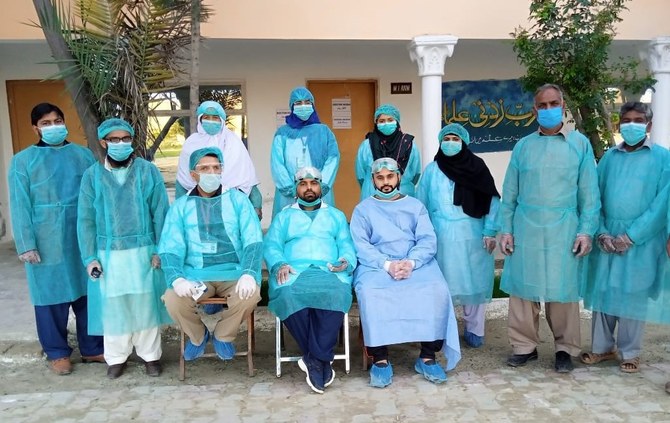

ISLAMABAD: Dr. Fazal Noor reaches his hospital in the heart of Islamabad city at 7:45 pm every evening.
Donned in his protective suit, he takes a round of coronavirus isolation ward to check on the COVID-19 patients adn will remain with them in the ward until eight in the morning even on the day of Eid Al-Fitr.
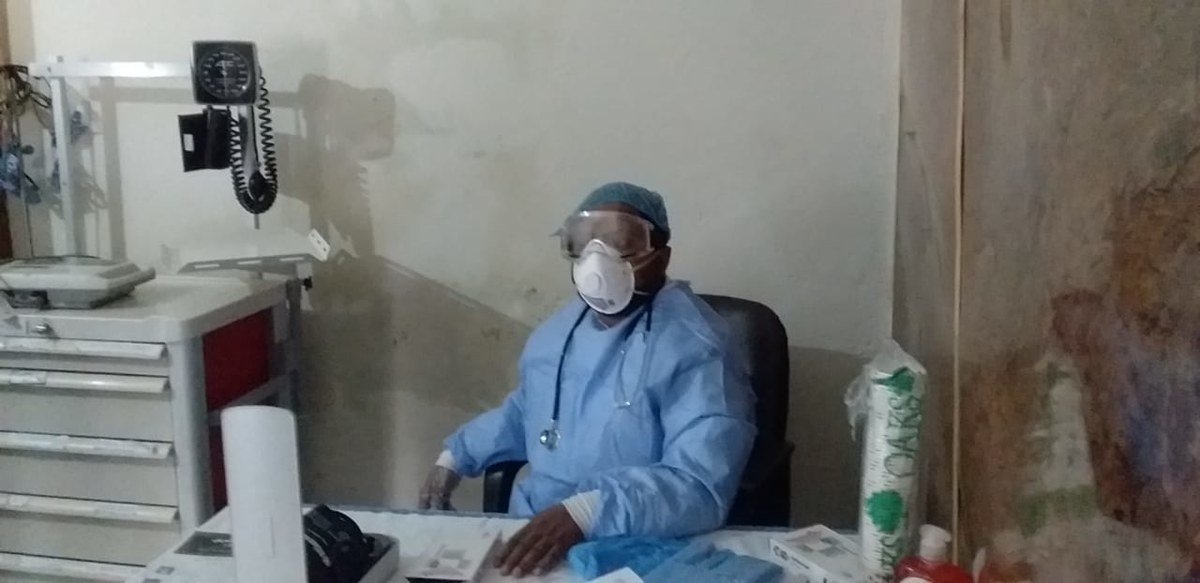
In this undated photo, Dr. Abrar Hussain Malik, who is a deputy medical superintendent at district headquarters hospital in Chakwal, is sitting in his office wearing full protective suit. (Photo courtesy: Supplied by Dr. Abrar)
“I am spending this Eid with my patients and happy to do it,” Noor, a public health specialist at Pakistan Institute of Medical Sciences (PIMS) in Islamabad, told Arab News in an interview Saturday night.
He works a twelve-hour shift at the hospital and takes rest during the day. “At the moment my whole life is revolving around coronavirus patients, for I haven’t been giving time even to my family,” he said.
Noor hails from South Waziristan, a tribal district bordering Afghanistan, with a big family living there. They all remain in touch through video calls, but won’t be celebrating the Eid together for the first time in decades.
“If there were no pandemic, I’d have gone to my ancestral village to rejoice the occasion with my friends and family in the lap of the beautiful mountains,” he said.
Pakistani healthcare workers -- the frontline warriors against the deadly respiratory disease -- have been going through a tough routine since the outbreak of coronavirus in late February.
“Everyday is an Eid for us when a COVID-19 patient is discharged after full recovery,” he said. “The joy which we get at the time can’t be described in words …. and this also keeps our passion alive.”
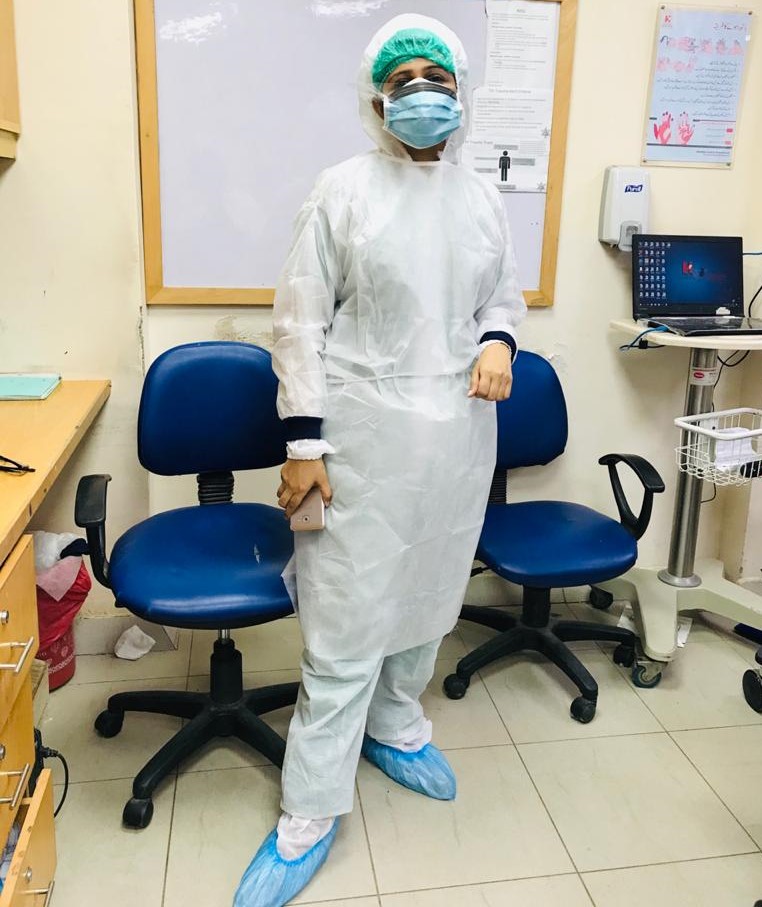
Dr. Natasha Khalid wears special protective suit at Jinnah Postgraduate Medical Center [JPMC] in Karachi before visiting the coronavirus isolation ward in the hospital. (Photo courtesy: Supplied by Dr. Natasha)
Pakistan witnessed a sharp spike in coronavirus cases after the government eased lockdown restrictions in the second week of May. Doctors warned that a health crisis could develop in the next few days if people fail to follow social distancing and take other precautionary measures to stem the spread of virus.
The South Asian nation with an estimated population of 210 million has reported 52,353 positive cases with 1,101 deaths to date.
“We anticipate the virus will spread in families during the Eid holidays and influx of patients will further increase in hospitals,” Dr. Natasha Khalid, resident physician currently working at Jinnah Postgraduate Medical Center (JPMC) in Karachi, told Arab News.
She said that asymptomatic people were posing a great risk to others in the society and healthcare workers who have been testing positive in different health facilities.
“The doctors who test positive are quarantined for 14 days, and this increases work burden on healthy practitioners,” said Dr. Khalid who will be on duty during the Eid holidays.
Talking about her preparations for Eid, she said that she didn’t get a chance for shopping and was planning to celebrate it with simplicity. “We get so involved in our work that we tend to forget that it is an Eid day.”
She said that her family remained apprehensive about her safety but, at the same time, they were all proud of her to be a useful citizen during the pandemic.
“I fear to get infected, but at the same time I think that if we doctors won’t work, then who will take care of the patients,” she said, adding the Intensive Care Unit [ICU] and other beds allocated for COVID-19 patients in her hospital were full to the capacity.
“Most of the patients don't have a proper concept of the disease. They create hurdles, but we treat them patiently,” she said.
More than 1,200 healthcare workers including over 600 doctors have tested positive for coronavirus so far across the country, according to the Ministry of National Health Services and Regulations.
“We have been working with minimum exposure of doctors and paramedics to the coronavirus patients,” Dr. Abrar Hussain Malik, Deputy Medical Superintendent, at District Headquarters Hospital in Chakwal, told Arab News.
“I’ll be on duty during the Eid holidays, and will go home after a week to meet my family,” he said. “This Eid is different and tough for me due to the pandemic.”
Malik said that doctors and paramedics would expect “full cooperation” from the public to avert this novel disease while enjoying EID festivities with necessary precautions.
“My devotion and commitment to the profession keeps me going,” he said. “We will be celebrating next Eid with full national fervor and zeal after becoming a COVID-19 free nation,” said Dr Malik.


