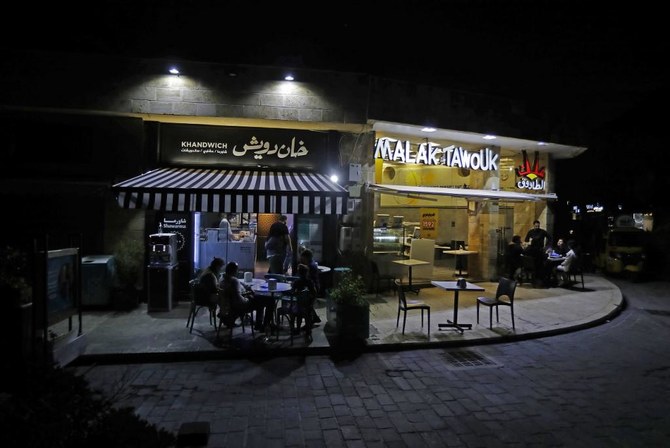
Lebanon at risk of major food crisis, PM warns

Hassan Diab also warned of a global food security emergency triggered by the pandemic. (File/AFP)
Short Url
Updated 22 May 2020
Follow

Lebanon at risk of major food crisis, PM warns

  • Imported food prices had more than doubled since the start of 2020
  • Eighty percent of Lebanon’s wheat had been coming from Ukraine and Russia

BEIRUT: Lebanon is at risk of a major food crisis and many Lebanese may soon find it hard to afford bread because of an acute financial crunch and the fall-out of COVID-19, the prime minister warned.
Writing in the Washington Post, Hassan Diab also warned of a global food security emergency triggered by the pandemic. He said attempts to restrict food exports must be resisted and called on the United States and the European Union to set up an emergency fund to help the Middle East avoid a severe crisis.
Otherwise, “starvation may spark a new migration flow to Europe and further destabilize the region,” he wrote.
Lebanon was in deep crisis even before COVID-19. The local currency has more than halved in value since October amid a hard currency liquidity shortage. Inflation and unemployment are soaring. Lebanon defaulted on its sovereign debt in March.

Opinion

This section contains relevant reference points, placed in (Opinion field)

Imported food prices had more than doubled since the start of 2020, Diab wrote. More than half of Lebanon’s food is imported.
“Once the breadbasket of the Eastern Mediterranean, Lebanon is facing a dramatic challenge that seemed unimaginable a decade ago: the risk of a major food crisis,” Diab wrote.
“A few weeks ago, Lebanon witnessed its first ‘hunger protests.’ Many Lebanese have already stopped buying meat, fruits and vegetables, and may soon find it difficult to afford even bread.”
Diab, who took office this year with backing from the Iran-backed Shiite group Hezbollah and its allies, also blamed decades of political mismanagement and corruption for a lack of investment in agriculture.
COVID-19 and lockdowns had “dramatically worsened the economic crisis and profoundly disrupted the food supply chain.”
Eighty percent of Lebanon’s wheat had been coming from Ukraine and Russia, but last month, Russia suspended wheat exports, while Ukraine is considering a similar move, he said.



Jordan-India partnership expanding across trade, technology and energy, says envoy

Updated 6 sec ago
Follow

Jordan-India partnership expanding across trade, technology and energy, says envoy

  • Indian Ambassador to Jordan Manish Chauhan described ties between the two countries as longstanding and built on mutual trust

AMMAN: Jordan and India are deepening cooperation across a wide range of sectors including trade, digital technology, renewable energy and infrastructure, Indian Ambassador to Jordan Manish Chauhan said Saturday.

Speaking to Jordan News Agency, Chauhan described ties between the two countries as longstanding and built on mutual trust, adding that relations span political, economic, defense, security, cultural and educational cooperation.

He said regular political dialogue continues between the two countries, and highlighted the fourth round of foreign ministry consultations held in Amman in April 2025 and a fifth round due to take place in New Delhi.

Chauhan also highlighted Indian Prime Minister Narendra Modi’s recent visit to Jordan as a major milestone, coinciding with the 75th anniversary of diplomatic relations.

During the visit, Modi praised the leadership of King Abdullah II and said Jordan and India share a “strong” contemporary partnership rooted in deep cultural ties.

The Indian premier also commended Jordan’s growing role as a regional bridge connecting markets and fostering business and economic growth.

The ambassador said discussions between King Abdullah II and Modi highlighted a shared commitment to expanding cooperation, particularly in renewable energy, water management, digital transformation, cultural exchange and heritage.

India is Jordan’s third-largest trading partner, with bilateral trade valued at about $2.8 billion, JNA reported.

Chauhan said both sides are now working toward doubling trade to $5 billion over the next five years.

He added that opportunities for business collaboration are emerging in several sectors, including digital public infrastructure, fintech, health-tech and agri-tech, as well as sectors such as pharmaceuticals, medical devices, green mobility, agriculture, food processing and heritage tourism.

On regional issues, Chauhan highlighted India’s longstanding support for Palestine, adding that New Delhi was among the first non-Arab states to recognize the Palestine Liberation Organization in the 1970s and the Palestinian state in 1988.

The ambassador said that the Indian Embassy in Amman remained committed to advancing the growing partnership in close coordination with Jordanian counterparts.