LONDON: Britain’s economy shrank by a record 5.8 percent in March from February as the coronavirus crisis escalated and the government ordered a shutdown of much of the country to stop the spread of the virus, official data showed on Wednesday.
In the first three months of the year, gross domestic product contracted by 2.0 percent from the last three months of 2019, the Office for National Statistics said.
That was the largest quarter-on-quarter fall since the end of 2008, during the depths of the financial crisis, though slightly smaller than the average 2.5 percent forecast in a Reuters poll of economists.
Figures for April are likely to show an even bigger fall because the entire month was spent under lockdown by British companies and consumers.
Last week, the Bank of England said Britain’s economy could be heading for its sharpest annual slump in GDP in more than 300 years, saying a 14 percent fall was possible, followed potentially by a 15 percent rise in 2021.
The ONS said output in Britain’s giant services sector fell by a record 1.9 percent in the first quarter and there were also significant contractions in production and construction.


UK economy shrinks 5.8% in March, most on record

https://arab.news/g4384
UK economy shrinks 5.8% in March, most on record

- Figures for April are likely to show an even bigger fall


Education spending surges 251% as students return from autumn break: SAMA
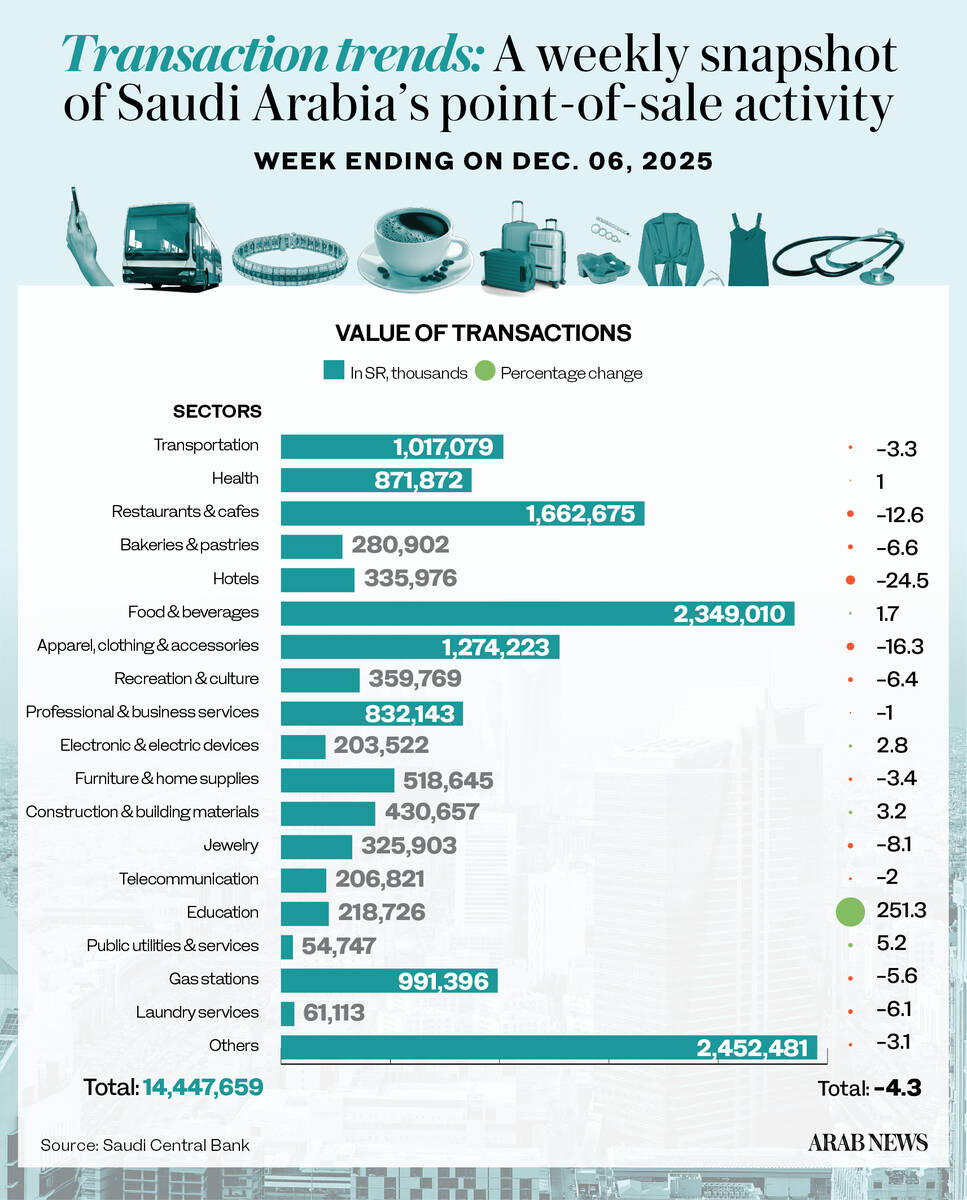
RIYADH: Education spending in Saudi Arabia surged 251.3 percent in the week ending Dec. 6, reflecting the sharp uptick in purchases as students returned from the autumn break.
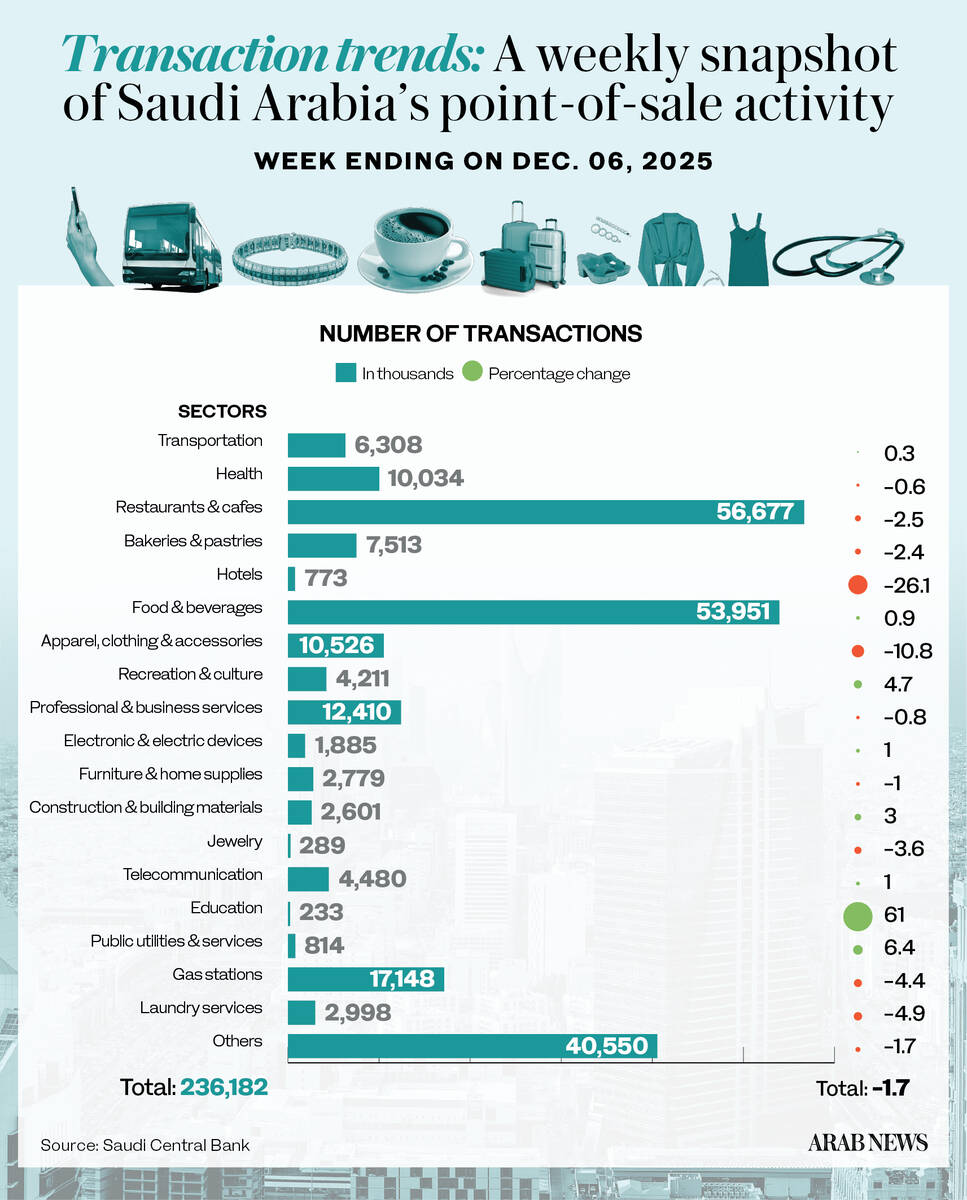
According to the latest data from the Saudi Central Bank, expenditure in the sector reached SR218.73 million ($58.2 million), with the number of transactions increasing by 61 percent to 233,000.
Despite this surge, overall point-of-sale spending fell 4.3 percent to SR14.45 billion, while the number of transactions dipped 1.7 percent to 236.18 million week on week.
The week saw mixed changes between the sectors. Spending on freight transport, postal and courier services saw the second-biggest uptick at 33.3 percent to SR60.93 million, followed by medical services, which saw an 8.1 percent increase to SR505.35 million.
Expenditure on apparel and clothing saw a decrease of 16.3 percent, followed by a 2 percent reduction in spending on telecommunication.
Jewelry outlays witnessed an 8.1 percent decline to reach SR325.90 million. Data revealed decreases across many other sectors, led by hotels, which saw the largest dip at 24.5 percent to reach SR335.98 million.
Spending on car rentals in the Kingdom fell by 12.6 percent, while airlines saw a 3.7 percent increase to SR46.28 million.
Expenditure on food and beverages saw a 1.7 percent increase to SR2.35 billion, claiming the largest share of the POS. Restaurants and cafes retained the second position despite a 12.6 percent dip to SR1.66 billion.
Saudi Arabia’s key urban centers mirrored the national decline. Riyadh, which accounted for the largest share of total POS spending, saw a 3.9 percent dip to SR4.89 billion, down from SR5.08 billion the previous week.
The number of transactions in the capital settled at 74.16 million, down 1.4 percent week on week.
In Jeddah, transaction values decreased by 5.9 percent to SR1.91 billion, while Dammam reported a 0.8 percent surge to SR713.71 million.
POS data, tracked weekly by SAMA, provides an indicator of consumer spending trends and the ongoing growth of digital payments in Saudi Arabia.
The data also highlights the expanding reach of POS infrastructure, extending beyond major retail hubs to smaller cities and service sectors, supporting broader digital inclusion initiatives.
The growth of digital payment technologies aligns with the Kingdom’s Vision 2030 objectives, promoting electronic transactions and contributing to the nation’s broader digital economy.