

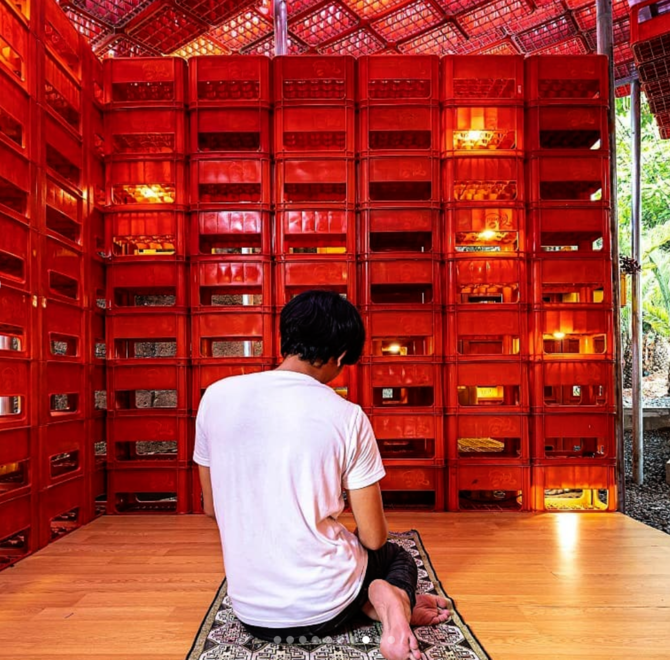

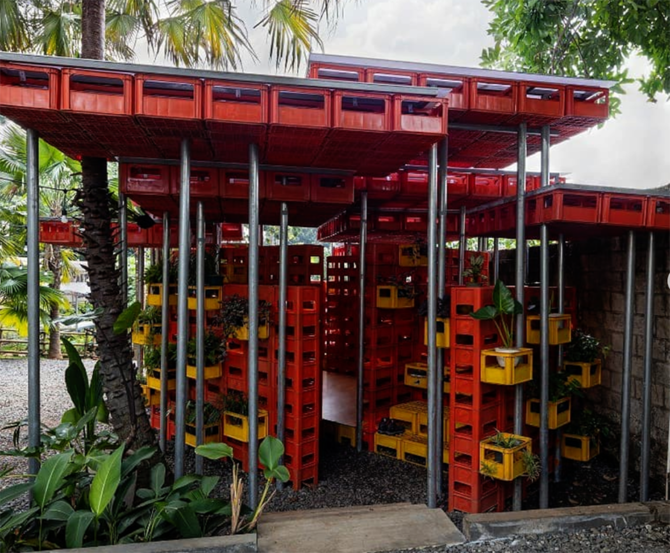

JAKARTA: Under normal circumstances, the small mosque on the outskirts of Jakarta constructed from 1,208 used plastic bottle crates would have been abuzz with the sound of people praying and reciting the Quran during Ramadan.
It would be the first Ramadan since the 42-meter-square mosque was built in late 2019, following the establishment of Kebun Ide (Garden of Ideas) — a restaurant with a back-to-nature theme — which houses the facility.
The coronavirus pandemic might have prevented communal prayers, but the mosque’s plastic recycling design is still attracting attention.
“Since we have this prayer room, many residents around here have expressed interests to organize gatherings such as group Quran recitations there. But unfortunately, we cannot do that now as we have to close the restaurant due to social distancing rules,” Handoko Hendroyono, the owner of Kebun Ide, told Arab News.
The pavilion, named Kotakrat, was initially constructed to be part of a local architectural exhibition in Bintaro township.
“The project concept was good because it reused discarded material, and there was a need for a praying room for our guests and employees, so I agreed to have the Kotakrat to be constructed in our space. Now we have a very good place to pray. Many visitors didn’t realize that it is actually a prayer room,” he added.
Designed and constructed by architect firm PSA Studio, Kotakrat is part of an architectural project to build a multi-purpose “space of kindness” to meet the community’s social needs.
“This space of kindness can be in the form of a kiosk, place of worship, shelter, bus stop, security post and many other places. It is built from plastic crates that we can easily find and install to form a space for various architectural shapes and purposes. The crates can be arranged to function as a roof, a partition and a wall,” Ario Wirastomo, a principal architect in the firm, told Arab News.
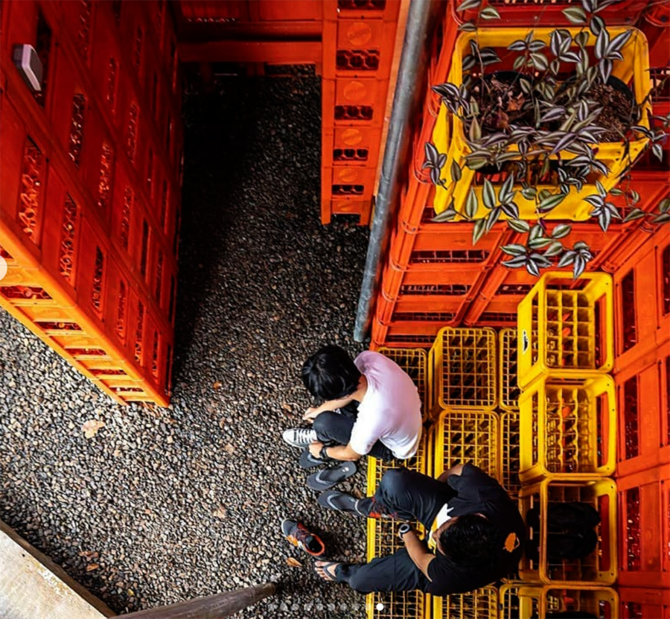
This construction used 1,208 used plastic bottle crates to form the prayer room’s walls and roof, and benches for the visitors to remove their shoes before entering.
It also provides water faucets for congregants to perform ablutions.
The architects used bolts to join the crates. They also used a polycarbonate roof supported by hollow metal frames.
The mosque has two separate entrances for men and women, although it does not separate men and women in the 8.64-meter-square praying space that can accommodate three rows of nine worshippers. The first row is for the imam, while the other two rows are for men and women respectively.
“As a prayer room is a public place that Muslims would look for to perform the five daily prayers everywhere they go, we expect the Kotakrat space would be durable and functional for a long time,” Wirastomo said.
Despite reusing discarded material, Wirastomo said he could not claim this project was environmentally friendly but he hoped people would be more aware about recycling waste.
Indonesia is one of the world’s top plastic waste producers with 5.05 million tonnes of plastic rubbish generated annually, out of which 81 percent is mismanaged and contributes 10 percent to the global total of mismanaged plastic waste. Our World In Data projected that Indonesia would contribute almost 11 percent of global mismanaged plastic waste by 2025.
The country’s chief maritime affairs and investment minister, Luhut Pandjaitan, recently said that Indonesia has come up with an action plan that aims to reduce 70 percent of its plastic pollution by 2025, hoping to be free of plastic waste by 2040.


