

Anger rises in Kabul over alleged drowning of Afghan migrants by Iranian authorities

Afghanistan said on Saturday that it had opened an investigation into the deaths of Afghan migrants who survivors said were forced by Iranian authorities to jump into the Harirud River at gunpoint last week. (Reuters/File Photo)
Short Url
Updated 10 May 2020
Follow

Anger rises in Kabul over alleged drowning of Afghan migrants by Iranian authorities

  • Team to probe incident that took place in Herat on May 1

KABUL: Afghanistan said on Saturday that it had opened an investigation into the deaths of Afghan migrants who survivors said were forced by Iranian authorities to jump into the Harirud River at gunpoint last week. The incident has sparked anger in Kabul.

“The initial phase of the investigation involves talking to provincial officials, families of the victims, and survivors in western Herat,” Javid Faisal, spokesman for the office of President Ashraf Ghani’s National Security Council (NSC), told Arab News on Saturday.

Faisal added that after the first phase of the probe, the team — tasked and dispatched by Ghani from Kabul — would speak to Iranian officials as well.

“They have had meetings [with local officials and survivors], but there are no clear findings yet,” he said.

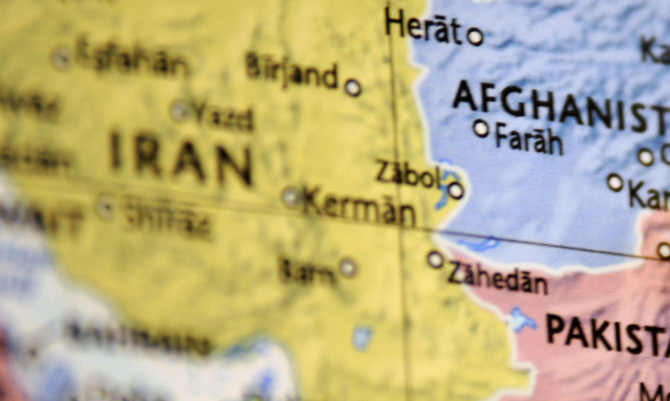
The Harirud River in the Herat province in Afghanistan, along the border with Iran, is where the alleged incident took place on May 1. Nearly 50 migrants were thrown into the river after being severely beaten by Iranian officials, survivors Azizullah and Hamidullah told Arab News on Thursday.

They added that border forces detained the group after they entered Iranian soil illegally.

Confirming the reports, Acting Minister of Foreign Affairs Mohammed Haneef Atmar said on Wednesday that he had a “tense interaction” with Iranian officials following the incident.

Later in the day, however, his ministry said that the Iranian government had agreed to a joint probe into the incident.

Atmar’s office and his spokesman did not respond to an email or calls by Arab News on Saturday to discuss the details of the interaction.

“What Iranian Border Guards did to innocent Afghans goes against all norms & human rights standards,” Abdul Moqim Abdulrahimzai, a senior official of the NSC tweeted on Saturday.

“We will never do this to any Iranian citizen. But we will also never forget!” he added.

Iran has denied the reports.

“We extend our condolences to their families, but we should remember that some are seeking to damage the (Kabul-Tehran) relations,” Sayed Abbas Musavi, a spokesman for Iran’s Ministry of Foreign Affairs was quoted as saying by Afghan TOLOnews. 

“Dismissing the murderous abuse of dozens of Afghan migrants in the face of increasing evidence is becoming more untenable,” Ahmad Shuja, another official of the NSC, tweeted on Friday.


Youth voters take center stage in Bangladesh election after student-led regime change

Updated 38 min 40 sec ago
Follow

Youth voters take center stage in Bangladesh election after student-led regime change

  • About 45% of Bangladeshis eligible to vote in Thursday’s election are aged 18-33
  • Election follows 18 months of reforms after the end of Sheikh Hasina’s 15-year rule

DHAKA: When he goes to the polls on Thursday, Atikur Rahman Toha will vote for the first time, believing that this election can bring democratic change to Bangladesh.

A philosophy student at Dhaka University, Toha was already eligible to vote in the 2024 poll but, like many others, he opted out.

“I didn’t feel motivated to even go to vote,” he said. “That was a truly one-sided election. The election system was fully corrupted. That’s why I felt demotivated. But this time I am truly excited to exercise my voting rights for the first time.”

The January 2024 vote was widely criticized by both domestic and international observers and marred by a crackdown on the opposition and allegations of voter fraud.

But the victory of the Awami League of ex-Prime Minister Sheikh Hasina was short-lived, as a few months later the government was ousted by a student-led uprising, which ended the 15-year rule of Bangladesh’s longest-serving leader.

The interim administration, led by Nobel laureate Muhammad Yunus, took control in August 2024 and prepared a series of reforms to restructure the country’s political and institutional framework and organize the upcoming vote.

About 127.7 million Bangladeshis are eligible to cast their ballots, according to Election Commission data, with nearly a third of them, or 40.4 million, aged 18-29. Another 16.9 million are 30-33, making it a youth–dominated poll, with the voters hopeful the outcome will help continue the momentum of the 2024 student-led uprising.

“We haven’t yet fully transitioned into a democratic process. And there is no fully stable situation in the country,” Toha said. “After the election we truly hope that the situation will change.”

For Rawnak Jahan Rakamoni, also a Dhaka University student, who is graduating in information science, voting this time meant that her voice would count.

“We are feeling that we are heard, we will be heard, our opinion will matter,” she said.

“I think it is a very important moment for our country, because after many years of controversial elections, people are finally getting a chance to exercise their voting rights and people are hoping that this election will be more meaningful and credible. This should be a fair election.”

But despite the much wider representation than before, the upcoming vote will not be entirely inclusive in the absence of the Awami League, which still retains a significant foothold.

The Election Commission last year barred Hasina’s party from contesting the next national elections, after the government banned Awami League’s activities citing national security threats and a war crimes investigation against the party’s top leadership.

The UN Human Rights Office has estimated that between July 15 and Aug. 5, 2024 the former government and its security and intelligence apparatus, together with “violent elements” linked to the Awami League, “engaged systematically in serious human rights violations and abuses in a coordinated effort to suppress the protest movement.”

It estimated that at least 1,400 people were killed during the protests, with the majority shot dead from military rifles.

Rezwan Ahmed Rifat, a law student, wanted the new government to “ensure justice for the victims of the July (uprising), enforced disappearances, and other forms of torture” carried out by the previous regime.

The two main parties out of the 51 contesting Thursday’s vote are the Bangladesh Nationalist Party and Jamaat-e-Islami. Jamaat, which in 2013 was banned from political participation by Hasina’s government, heads an 11-party alliance, including the National Citizen Party formed by student leaders from the 2024 movement.

“I see this election as a turning point of our country’s democratic journey … It’s not just a normal election,” said Falguni Ahmed, a psychology student who will head to the polls convinced that no matter who wins, it will result in the “democratic accountability” of the next government.

Ahmed added: “People are not voting only for their leaders; they are also voting for the restoration of democratic credibility. That’s why this election is very different.”