150 Pakistani nationals in Saudi Arabia contracted COVID-19, says envoy

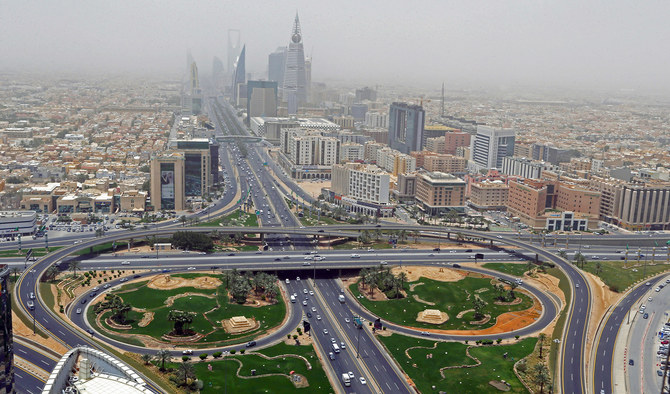
The photograph taken on May 7, 2020, shows a general view of Riyadh after the Saudi government eased a curfew, following the outbreak of the coronavirus disease (COVID-19. (REUTERS)
Short Url
Updated 07 May 2020
Follow

150 Pakistani nationals in Saudi Arabia contracted COVID-19, says envoy

  • Pakistani foreign minister hold virtual meeting with citizens in the Kingdom, says Pakistan likely to hit COVID-19 peak by May end
  • Qureshi thanks Saudi authorities for showing patience with foreign nationals during the pandemic

ISLAMABAD: Pakistan’s Ambassador to Saudi Arabia Raja Ali Ejaz revealed on Thursday that 150 Pakistani nationals in Saudi Arabia had been infected by coronavirus and 30 of them had lost their lives to the infectious disease.
According to an official handout shared by foreign ministry, he made the statement while briefing Foreign Minister Shah Mahmood Qureshi who was invited to interact with the Pakistani citizens in the Kingdom through a video link.
The virtual town hall meeting was also attended by members of the country’s diplomatic mission in the Arab state.
The Pakistani envoy informed that Saudi authorities had taken strict lockdown measures to prevent virus spread, adding that they were also offering best medical facilities to those who were suffering from the disease.
The foreign minister shared Pakistan’s national tally in response, pointing out that more than 22,000 people had suffered from the infectious respiratory illness since the beginning of its emergence in the country during the last week of February. However, he said that the country had a low coronavirus mortality rate.
Qureshi maintained that Pakistan was likely to hit the COVID-19 peak toward the end of May and beginning of June, saying it was a major consideration that needed to be taken into account by the government while devising a strategy to deal with the issue.
He noted that it was not possible for a country like Pakistan to remain in lockdown indefinitely since it had limited resources and its economy was dwindling.
The foreign minister said that the government wanted to devise a mechanism through national consensus that not only arrested the virus spread but also allowed the national economy to remain functional.
He said that any extension in the lockdown situation would result in greater unemployment in the country, making the daily wage earners suffer the most.
Discussing the overall economic strategy of the country, Qureshi said the government was striving for debt relief on the instruction of Prime Minister Imran Khan.
Qureshi also praised Saudi Arabia for patiently dealing with foreign nationals in the Kingdom and not forcing them out of the country.
He also lauded overseas Pakistanis for always stepping forward to help their country in times of crisis.


Islamabad steps up vehicle checks to boost security as 166,000 cars get electronic tags

Updated 4 sec ago
Follow

Islamabad steps up vehicle checks to boost security as 166,000 cars get electronic tags

  • Authorities say over 3,000 vehicles registered in past 24 hours as enforcement intensifies
  • Extended service hours introduced to push full compliance with digital monitoring system

ISLAMABAD: Authorities in the Pakistani capital have intensified enforcement against vehicles without mandatory electronic tags with more than 166,000 cars now registered, according to data released on Sunday evening, as Islamabad moves to strengthen security and digital monitoring at key entry and exit points.

The Islamabad Capital Territory (ICT) administration introduced the electronic tagging system late last year as part of a broader effort to regulate traffic, improve record-keeping and enhance surveillance in a city that hosts the country’s main government institutions, foreign missions and diplomatic enclaves.

Under the system, vehicles are fitted with electronic tags that can be read automatically by scanners installed at checkpoints across the capital, allowing authorities to identify unregistered vehicles without manual inspections. Vehicles already equipped with a motorway tag, or m-tag, are exempt from the requirement.

“A total of 166,888 vehicles have successfully been issued M-Tags so far, including 3,130 vehicles in the last 24 hours,” the ICT administration said, according to the Excise Department.

Officials said readers installed at checkpoints across Islamabad are fully operational and are being used to stop vehicles still without tags, as enforcement teams carry out checks across the city.

To facilitate compliance, authorities have expanded installation facilities and extended operating hours. The Excise Department said m-tag installation is currently available at 17 booth locations, while select centers have begun operating beyond normal working hours.

According to Director General Excise Irfan Memon, m-tag centers at 26 Number Chungi and 18 Meel are providing services round the clock, while counters at Kachnar Park and F-9 Park remain open until midnight to accommodate motorists unable to visit during daytime hours.

Officials said the combination of enforcement and facilitation was aimed at achieving full compliance with minimal disruption, adding that operations would continue until all vehicles operating in the capital are brought into the system.

The enforcement drive builds on a wider push by the federal government to integrate traffic management, emergency response and security monitoring through technology-driven “safe city” initiatives. Last month, Interior Minister Mohsin Naqvi reviewed Islamabad’s surveillance infrastructure and said reforms in monitoring systems and the effective use of technology were the “need of the hour.”

Authorities have urged motorists to obtain electronic tags promptly to avoid delays and penalties at checkpoints as enforcement continues across the capital.