
Ethical iftar offers Londoners an online challenge for Ramadan amid coronavirus outbreak

1 / 4
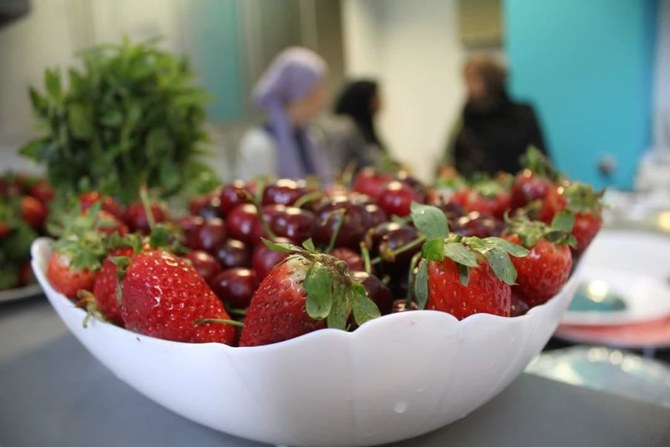
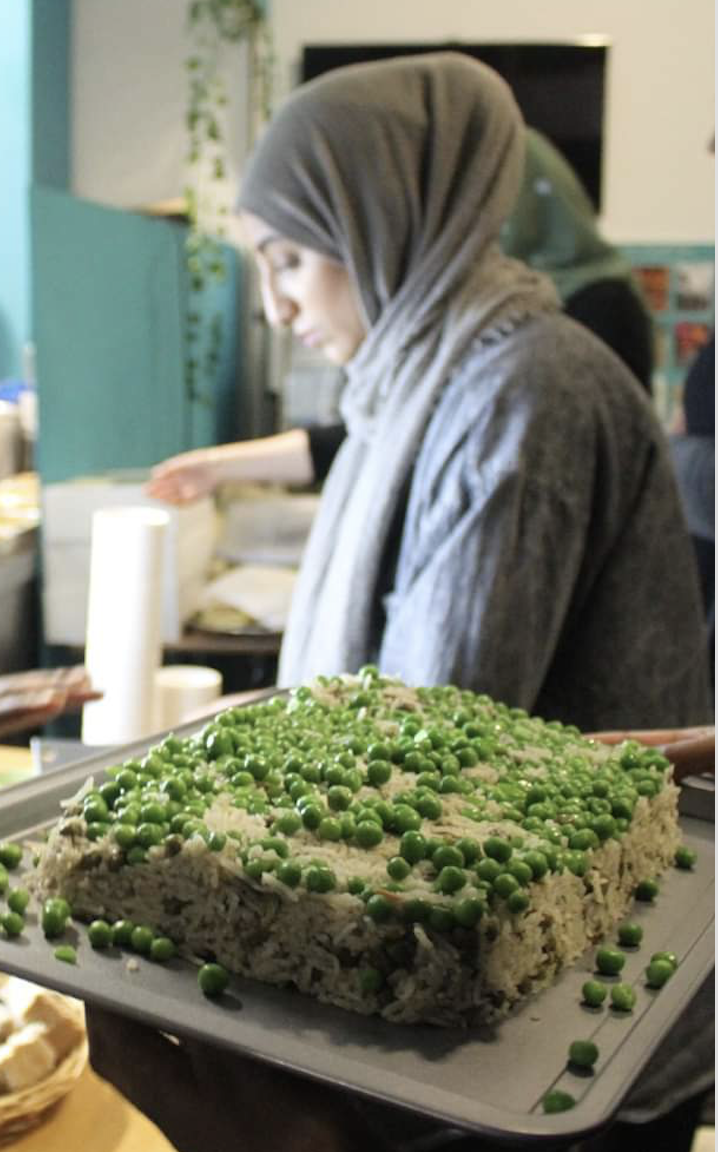
A green iftar usually held in London is going online to help make the meals more ethical. (Supplied)
2 / 4
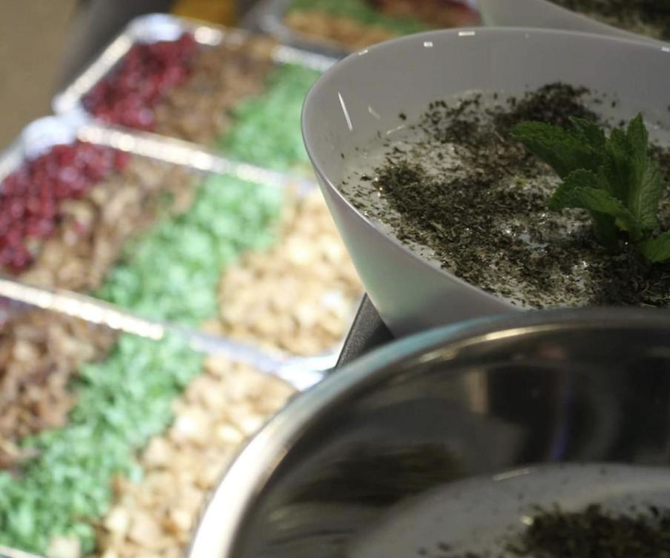
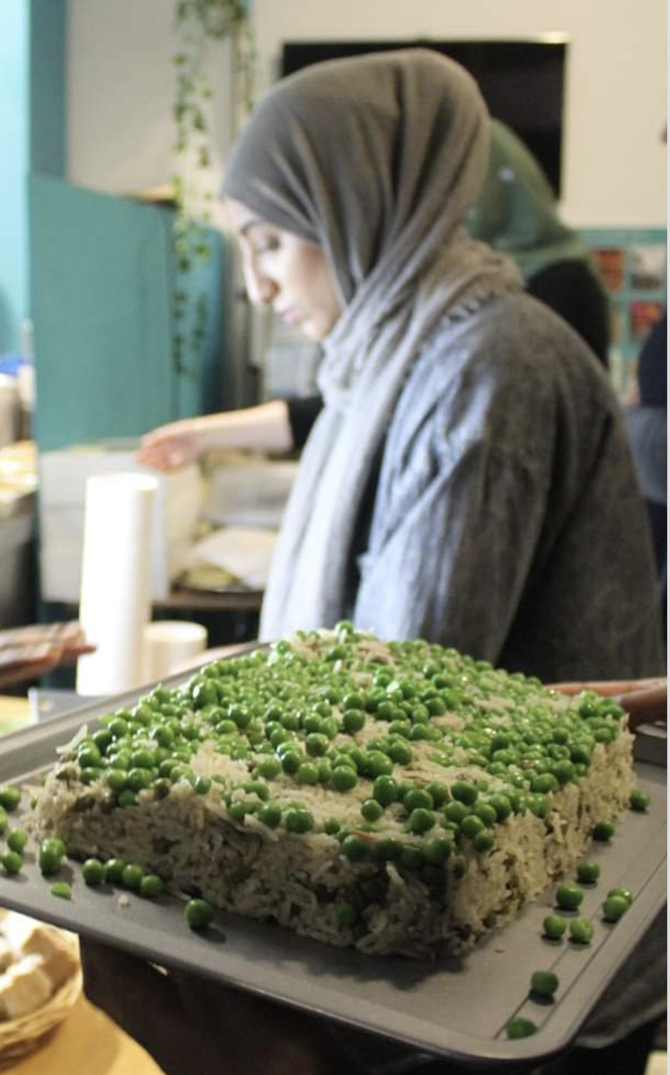
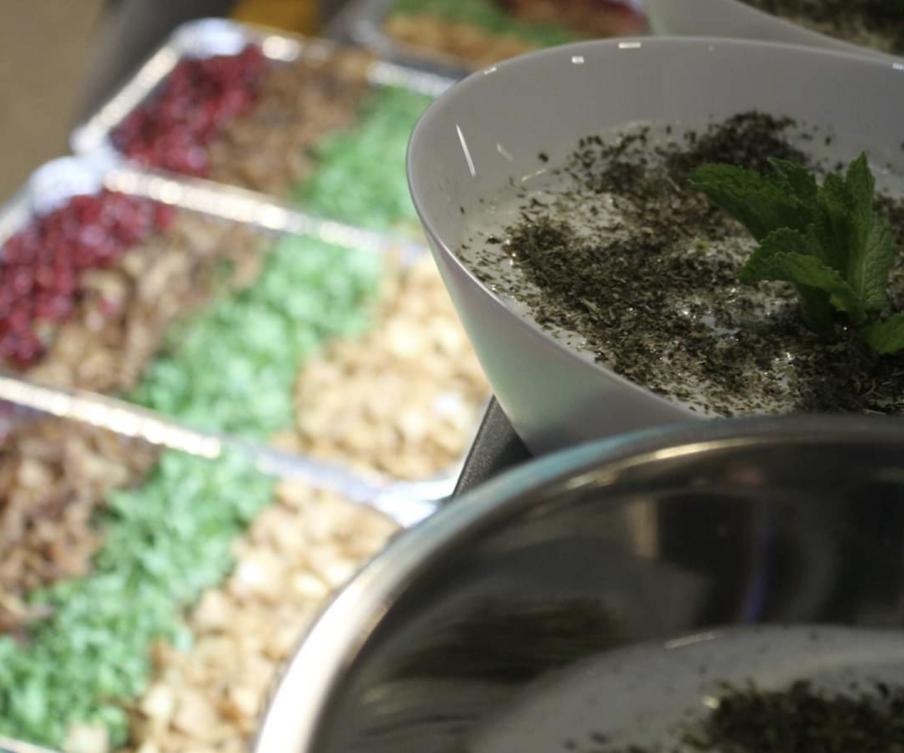
Food is served at the green iftar at Rumi’s Cave in London during Ramadan 2019. (Supplied)
3 / 4
Singers Sakinah Le Noir (R) and Rabiah Mali (L) — sisters who perform as Pearls of Islam — came up with the idea for the ethical challenge. (Supplied)
4 / 4
Food is served at the green iftar at Rumi’s Cave in London during Ramadan 2019. (Supplied)
Short Url
Updated 01 May 2020
Follow

Ethical iftar offers Londoners an online challenge for Ramadan amid coronavirus outbreak

  • Muslims will be encouraged to share iftar meals with family and friends in a safe environment as part of the ethical iftar challenge 2020 between May 4-10
  • Reducing food waste, minimizing plastic use and eating less meat are on the ethical iftar menu

LONDON: A green iftar usually held in London is going online to help make the meals Muslims eat after fasting more ethical.
The week-long challenge also aims to keep Muslim Londoners connected during Ramadan amid the coronavirus pandemic.
Muslims will be encouraged to share iftar meals with family and friends in a safe environment as part of the ethical iftar challenge 2020 between May 4-10.
Participants can also gift food to neighbors and donate to food banks.
Reducing food waste, minimizing plastic use and eating less meat are also on the ethical iftar menu. The challenge encourages participants to incorporate nature into their iftar meals.
Having iftar in the garden and using home-grown herbs are recommended.

The ethical iftar challenge is a response to the coronavirus lockdown in Britain that has left Muslims unable to host communal iftar meals or eat at their local mosques during Ramadan.
The challenge will encourage people to share iftar safely by observing social distancing, while also urging them to make their meals more ethical.
Organizers of the challenge normally host a green iftar during Ramadan for around 150 people at Rumi’s Cave, a center at the heart of northwest London’s Muslim community.
Participants bring their own tableware and enjoy a plastic-free, three-course vegetarian meal with herbal teas and drinks.
Singers Sakinah Le Noir and Rabiah Mali — sisters who perform as Pearls of Islam — came up with the idea for the ethical challenge.


The pair sing and compose religious-inspired music in Arabic and English, and run community projects that aim to connect creativity and spirituality.
The two performers, along with their team, developed the idea after asking their Instagram followers how they were approaching Ramadan 2020 with COVID-19 restrictions in full force.
Le Noir said that they were saddened by the number of people who were worried about having iftar alone or lacking motivation during the holy month because their loved ones were not with them.
“I felt guilty because I’m at home with my family,” she said.
“Every Ramadan we think of the people who are by themselves, but this year so many more people are going to be in that position. As someone who is so community oriented, this makes me sad.
“People will share pictures and they will be reminded of the prophetic tradition of breaking bread with people — whether that be virtually, or donating money and helping out at food banks,” she said.


India’s prime minister says it has reached a free trade deal with the EU

Updated 4 sec ago
Follow

India’s prime minister says it has reached a free trade deal with the EU

  • It touches a whopping 2 billion people and is one of the biggest bilateral engagements on commerce
  • The timing comes as Washington targets both India and the EU with steep import tariffs
NEW DELHI: Prime Minister Narendra Modi said Tuesday that India and the European Union have reached a free trade agreement to deepen their economic and strategic ties.
The accord, which touches a whopping 2 billion people, was concluded after nearly two decades of negotiations. It was dubbed the “mother of all deals” by both sides.
It is one of the biggest bilateral engagements on commerce. The timing comes as Washington targets both India and the EU with steep import tariffs.
“This agreement will bring major opportunities for the people of India and Europe. It represents 25 percent of the global GDP and one-third of global trade,” Modi said while virtually addressing an energy conference.
The deal comes at a time when Washington is targeting both India and the EU with steep tariffs, disrupting established trade flows and pushing major economies to seek alternate partnerships.
Modi was scheduled to meet with European Commission President Ursula von der Leyen later Tuesday to jointly announce the agreement.
India has stepped up efforts to diversify its export destinations as part of a broader strategy to offset the impact of higher US tariffs.
The tariffs include an extra 25 percent levy on Indian goods for its unabated purchases of discounted Russian oil, bringing the combined tariffs imposed by the United States on its ally to 50 percent.
The deal gives the EU expanded access to one of the world’s fastest-growing major economies, helping European exporters and investors to reduce their reliance on more volatile markets.
Bilateral trade between India and EU stood at $136.5 billion in 2024-25. The two sides hope to increase that to about $200 billion by 2030, India’s Trade Ministry officials said.
“Ultimately, the agreement is about creating a stable commercial corridor between two major markets at a time the global trading system is fragmenting,” said Indian trade analyst Ajay Srivastava.
The EU is still reeling from the aggressive approach of its once-stalwart ally across the Atlantic. There’s a widespread sense of betrayal across the 27-nation bloc from US President Donald Trump’s onslaught of higher tariffs, embrace of far-right parties, and belligerence over Greenland.
Brussels has accelerated its outreach to markets around the world: Over the past year, von der Leyen has signed deals with Japan, Indonesia, Mexico, and South America under the catchphrase “strategic autonomy,” which in practice is akin to decoupling from a US seen by most European leaders as erratic.
“We are showing a fractured world that another way is possible,” she posted on X after arriving in India on Sunday.