

Egypt mental health doctors demand cancelation of Ramez Galal’s prank show after backlash

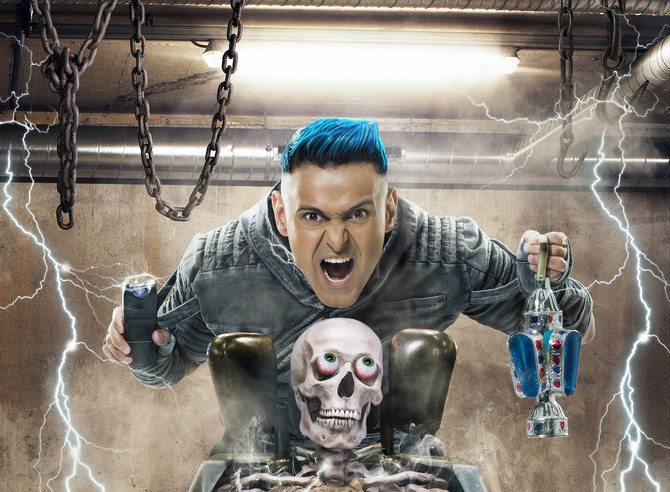
The star has been presenting hidden camera shows during Ramadan since 2011. (Supplied)
Short Url
Updated 29 August 2022
Follow

Egypt mental health doctors demand cancelation of Ramez Galal’s prank show after backlash

  • Egyptian actor Ramez Galal faced criticism on social media after his popular annual prank show aired over the weekend
  • Doctors warned the show's scenes of “violence, torture and bullying” could be a mental health trigger for viewers already suffering from the coronavirus pandemic

DUBAI: Doctors at a mental health hospital in Cairo called on Egyptian officials to stop airing the controversial “Ramez Magnoun Rasmy” Ramadan prank show, following a social media backlash over the weekend.

Egyptian actor Ramez Galal faced criticism on social media after his popular annual prank show aired on Friday. 

Since 2011, the star has been presenting hidden camera shows during Ramadan in which he pranks some of the biggest stars from the world of entertainment, sport and media.

However, doctors from the mental health hospital in Abbasiyah warned, in a statement issued the hospital’s board of directors, of the dangers of violence and torture that the program includes on the mental health of the viewers.

In the statement published by state-owned daily Ahram, the doctors called on the Public Prosecutor and the Supreme Media Regulatory Council to take action and cancel the show.

The statement said the show’s scenes of “violence, torture and bullying” could be a mental health trigger for viewers already suffering from a “state of anxiety, fear and tension” due to the coronavirus global outbreak.

Each year, viewers criticize Galal for his extreme, humiliating pranks. But this year, the audience did not seem impressed.

His show, which translates to “Ramez is officially crazy,” invites guests who think they are going to be interviewed by Yemeni TV presenter Arwa.

The celebrities sit on a “confession chair” and midway through the interview Galal appears and takes over the show. 

He starts by rotating the stars, who are locked in what turns out to be a rollercoaster chair, 360° around the set.

Galal then puts the celebrities in a water tank where he throws in animals, like snakes and crabs, to scare the guests. 

Once the stars think this is all over, they are set free. But before they can make another move, they fall into another water tank.

“It seems fake and the stars seem to be in on the prank,” Palestinian viewer Sarah Khader told Arab News.

“To be honest, I usually watch his shows every year, but this year it was disappointing. I was expecting much more,” Egyptian fan Kareem Nagy said.

“It is very humiliating and it is not a prank,” said another Egyptian viewer Logeen Abdelal.

On social media, one user created memes that read: “Where is the prank in the show?”

Another user wrote: “This show should be really stopped. I only watched the first two mins and I couldn’t support to watch more! This isn’t funny at all.”


Riyadh to install 25 new public artworks after conclusion of Tuwaiq Sculpture symposium

Updated 09 March 2026
Follow

Riyadh to install 25 new public artworks after conclusion of Tuwaiq Sculpture symposium

  • Move will extend the impact of the annual art event beyond its conclusion, bringing large-scale contemporary artworks into the city’s streets and parks
  • Artworks produced during the symposium will now become part of Riyadh Art’s permanent collection

RIYADH: Some 25 sculptures created during the seventh edition of the Tuwaiq Sculpture symposium and exhibition will soon be installed across public spaces in Riyadh.

The move will extend the impact of the annual art event beyond its conclusion, organizers said, bringing large-scale contemporary artworks into the city’s streets and parks.

Organized by the Royal Commission for Riyadh City through the Riyadh Art Program, the 2026 edition has ended after nearly two months of live sculpting, exhibitions and public programming.

The artworks produced during the symposium will now become part of Riyadh Art’s permanent collection and will appear across the capital as part of a broader effort to integrate art into everyday urban life.

This year’s symposium began in January and took place along Prince Mohammed bin Abdulaziz Road, widely known as Tahlia Street.

The site was transformed into an open-air studio in which visitors could observe artists carving, welding and assembling sculptures.

The live sculpting phase, which was held between Jan. 10 and Feb. 5, brought together leading Saudi and international artists to produce 25 large-scale works.

The sculptures were created using locally sourced granite and reclaimed metal, highlighting both the region’s natural materials and the creative reuse of industrial elements.

Visitors were able to follow the process of each artwork’s development, from raw materials to finished sculptures, while also interacting with the artists and learning about their techniques and concepts.

The event also featured a wide-ranging community engagement program designed to deepen public understanding of contemporary art.

The program included 10 panel discussions, 105 training workshops and 15 masterclasses exploring sculptural techniques, materials and the role of public art in cities.

Educational outreach formed another key component of the symposium. Organizers hosted 25 educational visits for more than 600 students, while daily guided tours enabled visitors to explore the artworks and gain insight into the creative processes behind them.

After the live sculpting phase, the completed sculptures remained on-site until March 8, giving visitors the opportunity to experience the works in their original setting before their distribution across Riyadh.

The symposium was curated by Lulwah Al-Homoud, Sarah Staton, and Rut Blees Luxemburg, who guided the artistic direction around the theme “Traces of What Will Be,” exploring how sculpture can reflect future possibilities while responding to the city’s evolving identity.