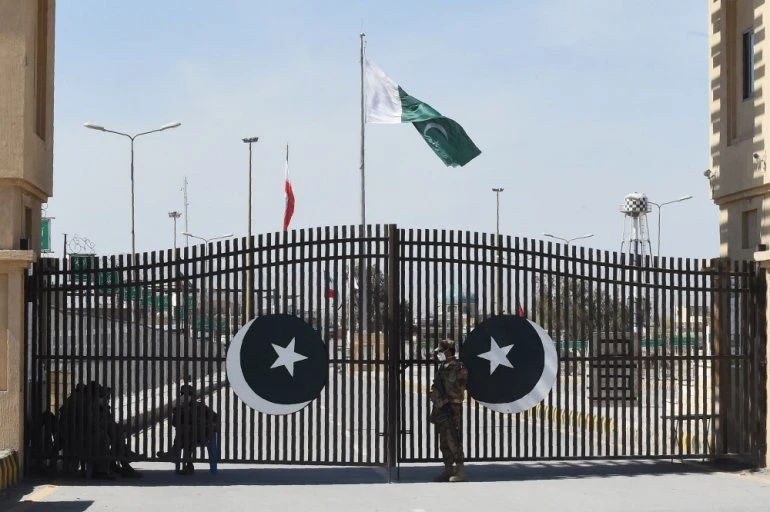
- By March, 78 percent of all cases in Pakistan had a travel history to Iran
- Letter says Dr. Zafar Mirza eased quarantine restrictions at Taftan on Feb. 27 ‘for no sound reason’
KARACHI: The Prime Minister’s special assistant on health, Dr. Zafar Mirza, ordered the easing of quarantine restrictions along the Pak-Iran border in February which led to hundreds of cases of the virus entering Pakistan, it has emerged in an official letter that raises serious concerns about mistakes made by the federal government in the fight to contain coronavirus.
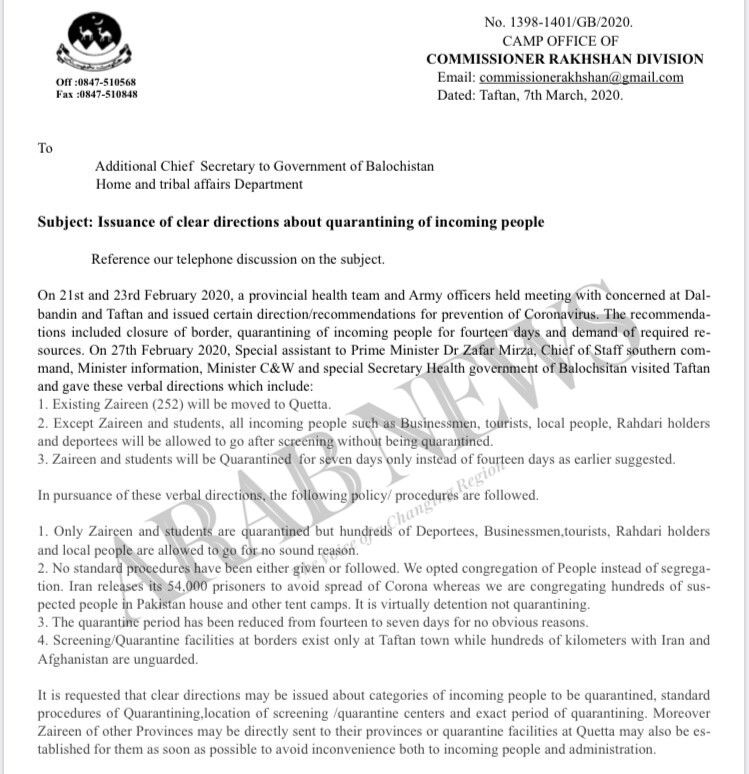
The verified document dated March 7 and obtained by Arab News on Sunday, is the official correspondence between a former regional commissioner at Taftan, Ayaz Mandokhel, and the additional chief secretary of the government of Balochistan. In the letter, Mandokhel said that on Feb. 27, Mirza had ordered an ease in quarantine restrictions at the border “for no sound reason.”
Over 6,000 people, a majority of the pilgrims, went on to enter the western province of Balochistan once the restrictions were eased. In March, the federal government reported that 78 percent of all coronavirus cases in the country had travel histories to Iran, one of the countries worst affected worldwide by the virus.
The government has since then been criticized for mishandling the Taftan border quarantine, and in a media briefing on March 27, PM Imran said the Balochistan government did not have enough funds to provide adequate facilities for travelers arriving from Iran.
But the letter, verified by Balochistan’s focal person for COVID-19, Umair Hasni, carries wide-ranging implications for the central government, and outlines Mandokhel’s concerns regarding Dr. Mirza’s directives.
“Only Zaireen and students are quarantined but hundreds of deportees, businessmen, tourists, Rahdari holders and local people are allowed to go for no sound reason,” the letter reads.
“No standard procedures have been either given or followed... We are congregating hundreds of people in Pakistan house and other tent camps. It is virtually detention and not quarantining,” he continues.
The letter goes on to say: “The quarantine period has been reduced from fourteen to seven days for no obvious reasons.”
The document also said that screening and quarantine measures were only being implemented at Taftan while hundreds of kilometers with Afghanistan and Iran remained unguarded.
According to the correspondence, earlier in February, provincial health teams and army officers at Dalbandin and Taftan had issued directions and recommendations which included the closure of the border and quarantining of incoming people for 14 days. These recommendations were overturned by the Prime Minster’s health adviser.
Dr. Mirza did not respond to repeated requests for comment.
According to the letter, 252 pilgrims were moved to Quetta contrary to earlier recommendations, and anybody who was not a student or pilgrim was allowed to enter Pakistan after screening but without being quarantined.
Balochistan’s focal person on coronavirus, Hasni, told Arab News that Dr. Mirza’s directives had made the situation at the Pak-Iran border worse.
“I have raised voice over the federal government’s handling of issue at Taftan,” he said.