



LONDON: Open Iftar, the UK’s largest community event during Ramadan, will go online this year to allow people to connect over iftar while adhering to social distancing restrictions that aim to curb the spread of coronavirus.
Volunteers from the Ramadan Tent Project, the social enterprise group that hosts Open Iftar, will launch a virtual My Open Iftar to keep the iftar tradition alive amid the virus outbreak.
Amad Afzal, the project’s head of operations, told Arab News: “Under normal circumstances, Open Iftar is a free event held at a venue where people of all backgrounds and faiths come together to break bread.
“As a Muslim organization, we use Ramadan and the iftar meal as a way to bring communities together. We encourage people to sit together, have a meal and get to know each other. That is our key mission — to bring communities together and help people understand each other better,” he said.
In 2019, Open Iftar was held at locations across London, including Trafalgar Square, Westminster Abbey, the British Library and Wembley Stadium. Gatherings also took place in major English cities including Sheffield, Newcastle, Leicester, Bradford, Manchester and Birmingham.
“Last year was a big year for us and we had a very positive reception,” Afzal said. “It was our intention to replicate that this year, and at the end of February, 2020, all 50 of our locations in London and across the UK had been finalized for Ramadan.”
However, the coronavirus pandemic means that iftar this year will be different not only in the UK but also around the world as mosques, markets, cafes and restaurants remain closed to limit the spread of the virus.
“The suspension of services in mosques and social distancing measures will make Ramadan 2020 feel very different for Muslims. Ramadan is usually a time for Muslims to gather with friends and family and in mosques to break the fast and pray together,” the Muslim Council of Britain said on Monday as part of its guidance to Muslims observing Ramadan in the UK.
The council has advised Muslims to host and attend virtual iftar events and tune in to their local mosque’s live streamed services to keep the communal spirit of Ramadan alive.
My Open Iftar will allow Muslims and non-Muslims to stay connected at a time when people are “feeling lonely and anxious due to the coronavirus pandemic,” Afzal said.
“That is our contingency plan for this year and essentially means we are going digital. We will host a virtual My Open Iftar and we are trying to spread as much positivity around as possible,” he added.
Volunteers at the Ramadan Tent project have created 1,000 packs with information on Ramadan, Islam, and how to protect physical and mental health during the holy month and the lockdown.
“We want to cater to all ages, and have made the packs child friendly and fun,” Afzal said. “We added decorations, balloons and coloring paper so children can make their own decorations at home.
“I’m proud to say that all 1,000 packs were signed up for within a week of us launching. So now we are releasing electronic packs, 500 of which were signed up for within 48 hours,” he said.
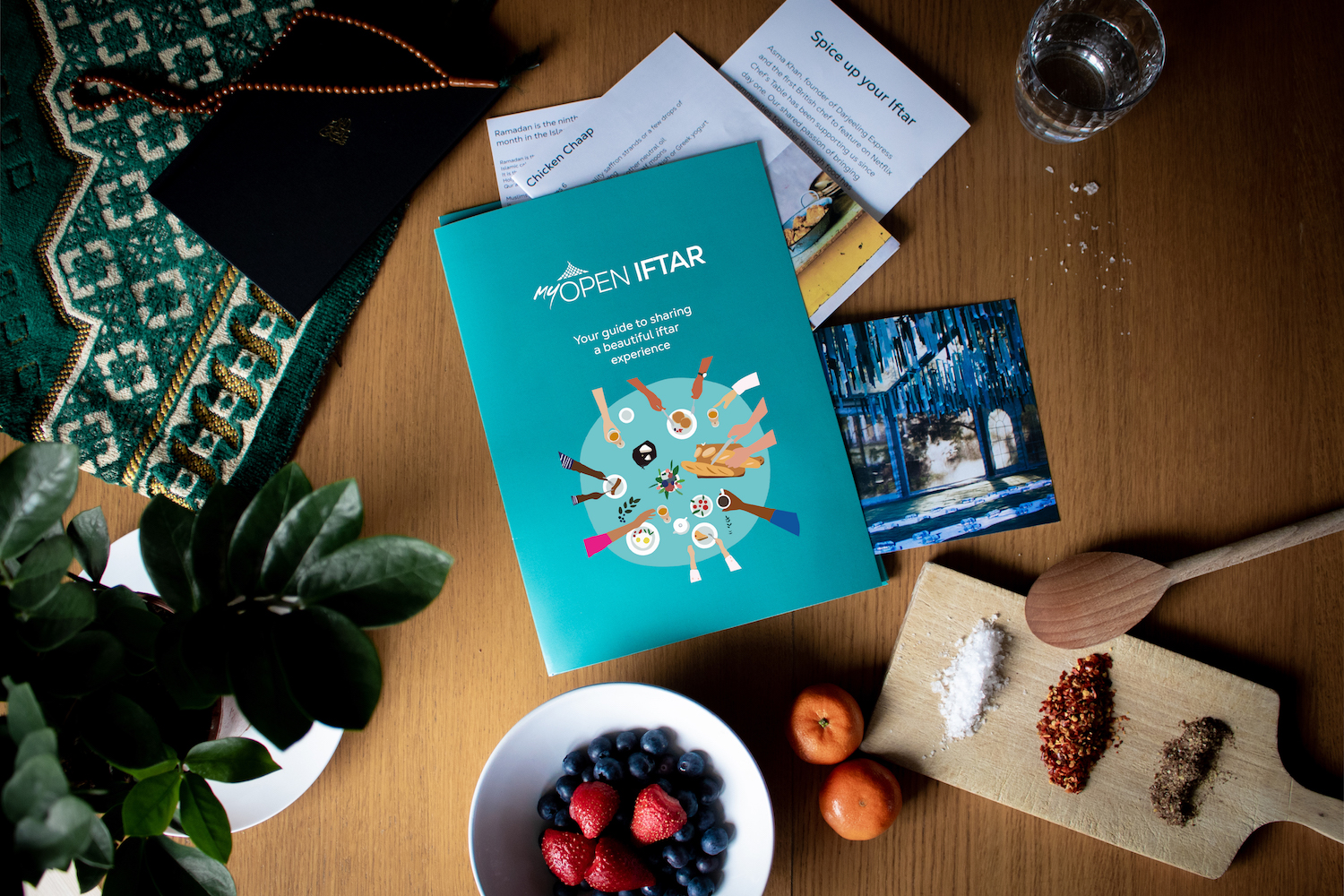
Once Ramadan begins, the Ramadan Tent Project will use its social media platforms to host a virtual Open Iftar every day.
“People can sign up and there will be a few members of the team who will speak to everyone and ask people how they are getting on. Each night, we will have a guest speaker who will speak for between 20 and 30 minutes about topics that are not only relevant to Ramadan but also to the situation we are in, the community and society in general,” he said.
“Once the guest speaker finishes, people can ask questions and interact with each other. So although we are observing social distancing, we are making the most of the technology available and all the work that we have done over the years to ensure that the community can still come together, share a virtual iftar and stay connected spiritually,” Afzal said.
The video conferencing platform Zoom will be used to host My Open Iftar, but the event will also be live streamed on Facebook and YouTube.
“We’ll have a hundred people on Zoom along with one of the team and the guest speaker. People on Zoom can ask questions, interact with each other and communicate using the chat feature,” Afzal said.
“People will interact with each other until the Adhan, which will be live streamed, is given and then we’ll encourage people to have iftar with their families or connect with loved ones online. After that, people are being encouraged to join the virtual community by sharing pictures and videos of their iftar using the hashtag #MyOpenIftar.”
The Ramadan Tent Project is a social enterprise that relies on donations for much of its income.
“We usually have sponsors, but unfortunately we have lost out on that this year due the pandemic,” Afzal said.
LaunchGood, an online platform connecting Muslims to charitable causes around the world, has been Ramadan Tent Project’s official fundraising partner for the last few years. This year, donations are being used to help people share the Ramadan spirit locally.
“Through the continued support from LaunchGood, we aim to provide iftar meals to frontline NHS workers, the elderly and vulnerable communities in lockdown this Ramadan. We are working with local mosques, restaurants and housing associations to ensure these meals are delivered on time for iftar and in a safe way that aligns with social distancing measures,” Afzal added.
The coronavirus pandemic has seen a surge in Muslim-led community initiatives across the UK and the Muslim Council of Britain is encouraging all Muslims to use the holy month to give back to their communities.
“It is important to use this time to reconsider, to reflect on the way we live our lives and the way we relate to our creator, our communities and those in need,” Harun Khan, the council’s secretary general, said on Monday.
Afzal reiterated this message by saying: “As human beings and Muslims, we have an obligation to protect the most vulnerable people in our societies. We want to keep the Ramadan spirit alive while also making sure we comply with social distancing measures.
“We want to bring communities together regardless of background and beliefs as we all have something in common — we are all human.”


