

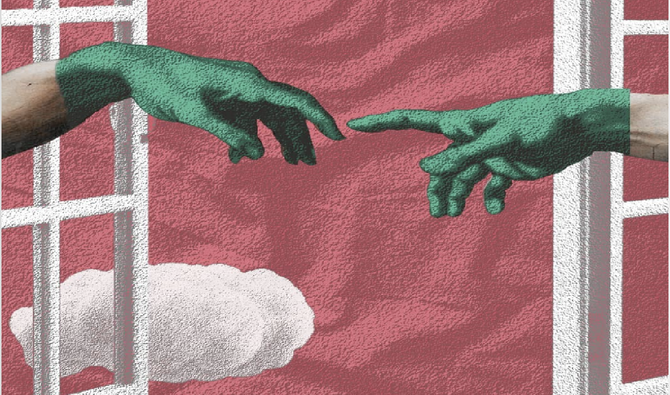

RAWALPINDI: Through photography, animation, digital illustrations and more, Pakistani artists are adjusting to life in a world upended by COVID-19.
Stylized to resemble a Mughal miniature painting, Mariam Ibraaz’s illustration shows a doctor donning protective wear, which has become a symbol of this point in time.
The choice was deliberate “to show respect and honor,” the Lahore-based artist Ibraaz told Arab News, “People of great significance were the subject matter of traditional miniature paintings.” She wanted to recognize the efforts of medical workers who are at the front lines of the ongoing health crisis. “An illustration is a small gesture to show appreciation,” she said.
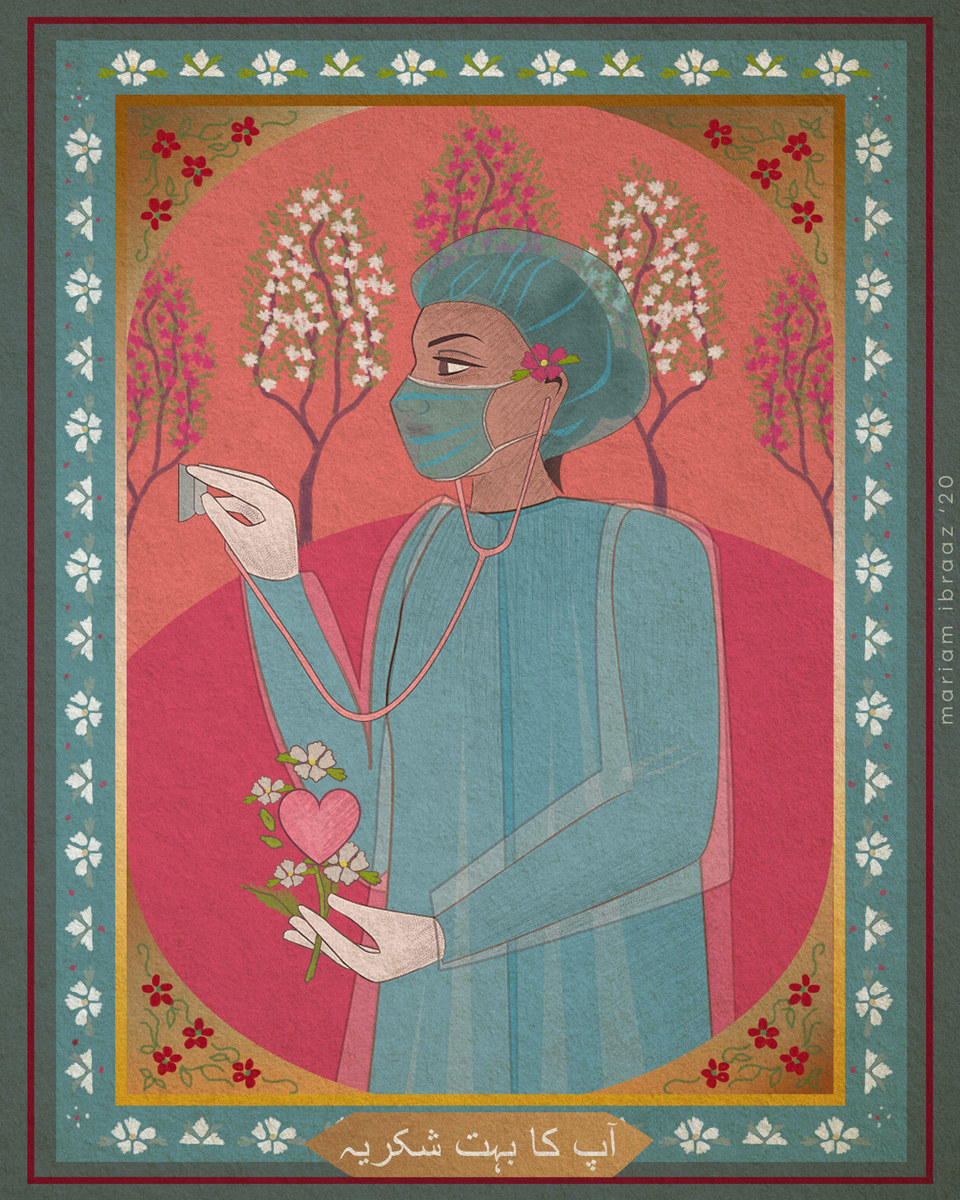
Mariam Ibraz pays homage to Pakistani doctors in a miniature-style illustration. (Photo courtesy: Mariam Ibraaz Instagram)
Digital artist and freelance illustrator Mahnoor Ahmad who hails from Lahore, produced a series depicting life as it is now, with a strong focus on how women, who have been disproportionally affected by lockdown regulations, are living through and coping with quarantine.

“Queens of Quarantine” by Mahnoor Ahmad. (Photo courtesy: Mahnoor Ahmad Instagram)
An illustration showing a woman in a t-shirt and shalwar — the unofficial at-home-uniform of urban Pakistani women — standing in front of piles of folded clothes with a broom in her hand, is titled “Queens of Quarantine.” Ahmad said, “For me this quarantine time emphasizes that our women are queens, warriors and wonder women, and I wanted to show them as such.”
Digital pop-artist Digink draws inspiration from what is happening around him, which these days has been isolation, he told Arab News over the phone from Istanbul. When calls for social distancing began, he created a series juxtaposing modern backgrounds against old photographs of women from South Asia.

Dignik’s work shows a woman from a vintage photograph pasted into a modern setting. (Photo courtesy: Dignik Instagram)
Social isolation and having to stay apart from one another has been a challenge for creatives in industries such as fashion and photography. But even there Pakistanis have found their way.
Fashion and travel photographer Areesh Zubair has been cruising around Lahore to create a series of portraits he is calling “Duur Se Portrait,” which means far-away portraits. He takes photos of other Lahori creatives posing from the safety and distance of their home balconies. “I wanted to do something during this unusual time,” Zubair told Arab News, “I wanted to make memories.”
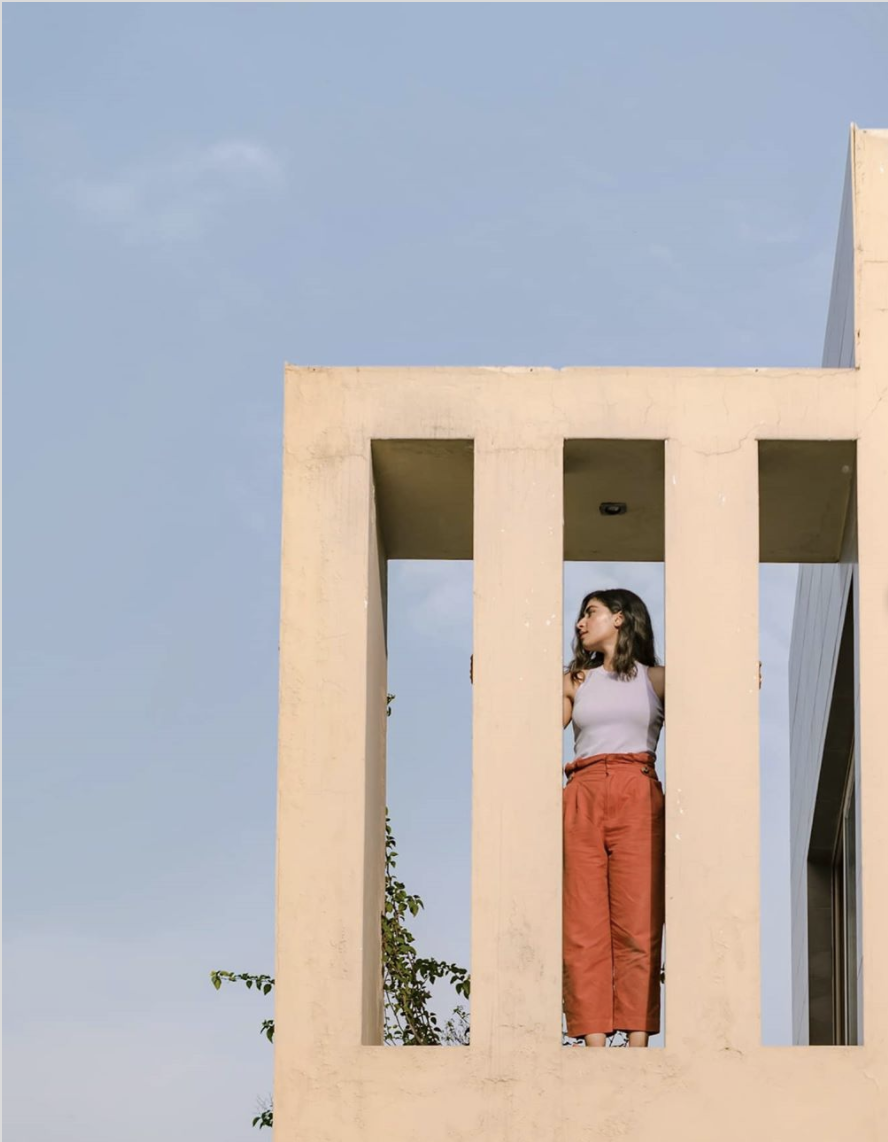
Stylist Mehek Saeed is photographed from the safe distance of her balcony by Areesh Zubair who came up with the idea of far-away portraiture to respect social distancing while documenting this moment in history. (Photo courtesy: Areesh Zubair Instagram)
Freelance artist, designer and illustrator Aamina Hashmi of Rawalpindi has created striking portraits through materials at her home and garden. Since social distancing and isolation began, Hashmi has focused a series of portraits, utilizing masks. Titled “Desperate Gardner,” the series starts with a gas mask.

Aamina Hashmi’s “Desperate Gardner” starts with a gas mask. (Aamina Hashmi Instagram)
“It is a satire based on a modern terrace gardener running out of supplies like soil and pots during this quarantine,” Hashmi said. “All of this happening at the start of the Spring season is all the more troubling, and I thought I could do something a bit dark and funny with it.”
When asked what role art would play, if any, to get people through this pandemic, she said, “Fear is a big part of any epidemic, and it’s our job to bring some form of comfort to the audience as artists and entertainers, it’s also a time to spread awareness and caution as well.”


