

How one startup is creating a sustainable Saudi Arabia

1 / 7
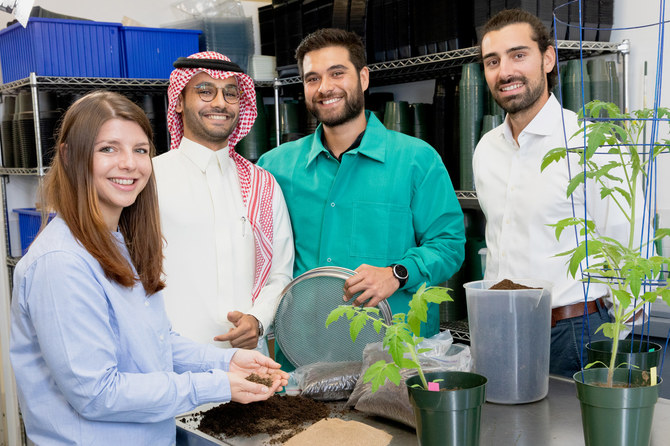
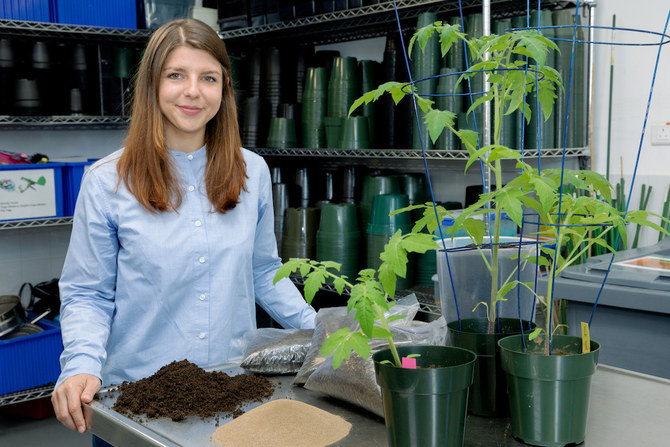
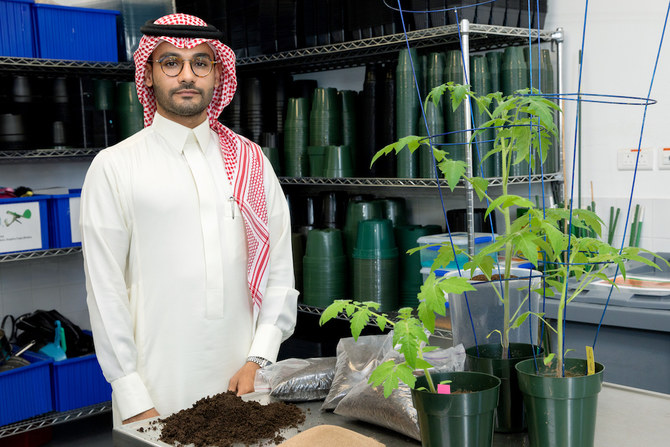
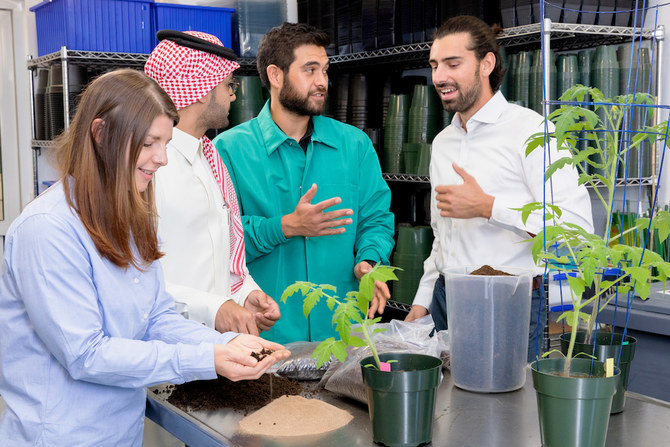
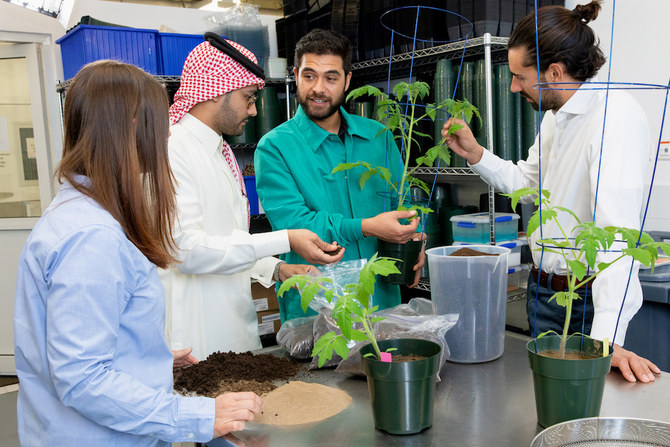
The Edama Organic Solutions Startup based at the King Abdullah University of Science and Technology (KAUST) in Thuwal is an example of one of the region's innovative composting service providers. (Supplied/KAUST)
2 / 7
3 / 7
4 / 7
5 / 7
6 / 7
7 / 7
Short Url
Updated 13 April 2024
Follow

How one startup is creating a sustainable Saudi Arabia

  • Total waste generated in the MENA region is expected to approximately double by 2050

JEDDAH: Throughout the world, organic waste generation is posing serious challenges, threatening food security and water purity and availability. Saudi Arabia is no exception.

Rapid population growth and urbanization in the MENA region are generating large amounts of organic waste, resulting in environmental pollution, declining urban aesthetic, and rising greenhouse emissions. These conditions are also compromising human health. 

If the present circumstances persist, the total waste generated in the MENA region is expected to approximately double by 2050. 

Advanced organic waste disposal management services are quickly becoming indispensable. The Edama Organic Solutions Startup based at the King Abdullah University of Science and Technology (KAUST) in Thuwal is an example of one such innovative composting service provider in the region.


The startup was found in 2017 with the goal of turning 65 percent of the total municipal solid waste in Saudi Arabia — which mainly consists of organic waste that usually ends up in landfills — into a precious resource. 

“We transform organic waste such as food and vegetation from landscaping or farming into rich soil that improves desert agriculture, helping to increase yields and reduce water consumption,” Dr. Sabrina Vettori, CEO at Edama, told Arab News.

The Edama team work to face multiple challenges at a time, including waste disposal hazards, food security, and water scarcity by adopting a circular economic approach.

“In a traditional economy, these challenges are neither connected nor resolved,” Vettori explained. 

But Edama’s team of plant science experts have specifically designed their products for the desert environment by composting organic waste, which saves water and planting nutrients while improving food security and mitigating climate change.

Their business model offers two operations. Edama both produces soil-improving products and offers waste recycling services by removing waste from municipalities and communities.

“Waste collectors bring organic waste to our facilities instead of dropping them in landfills," Vettori explained. “People usually assume that we pay for our resources, but they forget that waste providers pay to dispose their waste. Therefore, we get paid for offering them a cheaper option.”

Edama’s journey began three years ago when Vettori was a data science Ph.D. student at KAUST.

“I was really interested in knowing where my trash was going and how I could incorporate more sustainable practices in my everyday life here,” she said. 

Vettori realized that, at the time, there was no option to recycle organic waste. Instead, all organic waste was sent to a landfill where it became a source of pollution as it mixed with other types of trash, producing greenhouse gases that damage the ecosystem and leeching harmful chemicals that seep into the ground and pollute the soil and water.

Edama was established on the concept that such waste has precious nutrients that, if treated and transformed into soil-improving products, could help solve the challenges that desert agriculture faces. 

“Because of low fertility and water-holding capacity of local sandy soils, desert agriculture is very inefficient. By applying organic matter, we can regain soil structure and restore a healthy ecosystem, helping local farmers to increase yields and save water,” Vettori said.

Organic waste contains materials that originate from living organisms (human beings and plants). It is usually made up of vegetable and fruit debris, paper, bones, and human waste. Despite the regional food security challenges, Saudi Arabia ranks among the top food wasters with 427 kg of food wasted per capita per year.

Edama offers two products. The Edama Desert Compost was their first soil improver, which is already in production now and in the phase of scaling up.

“It is mixed with local sandy soils to improve its water retention, thus reducing irrigation needs. It also increases soil fertility, providing nutrients that help plants grow,” Dr. Mitchell Morton, Edama CTO told Arab News. 

The other product is the Edama Palm Peat.

“It is a growth medium for plants and hydroponic farming, where we use date palm waste,” Morton explained. “It uses a material that is otherwise wasted in the Kingdom because there is no commercial use for it.”

The effect of the product on the plants’ growth is tested in the local environment with different crops.

“Using our product usually results in crops that are not only bigger but that consume less water,” Morton said.

The Edama team is proud of their products’ ability to increase local yields up to 40 percent, reduce water use by 50 percent, and improve long-term soil health.

“Our main goal is to support desert agricultural systems, and it is a dream of mine to help reduce the effects of desertification and try to reclaim some of the lands that used to be green around here,” Morton said.  

Applying science to tackle real-world problems is what distinguishes Edama from potential competitors in the market.

“Edama benefits from having a team with scientific expertise,” Rowan Jandu, Director of Finance and Operations, told Arab News.

“We have done a lot of work in the last two years to adapt composting processes and techniques that are well established in Europe and the US to the local environment,” Jandu said. “It was very different and required a lot of research and testing.”  

At the moment, the team is looking to have their main facility at KAUST soon. It will be the first of its kind in the Kingdom and will recycle 5,000 tons of organic waste per year. 

In 2018, Edama participated in the KAUST Taqadam startup accelerator program and was selected for funding for promoting innovative and sustainable solutions from over 200 startups across the country. 

“Transitioning from academia to the business environment, we had a lot learn. It was a tough experience, but we benefited greatly with the help of the KAUST mentorship,” said Vettori.


Saudi House kicks off Davos with push on Vision 2030, AI platform and ‘humanizing’ tourism

At Saudi House, ministers and executives set out how the Kingdom sees the next phase of its transformation. (Supplied)
Updated 20 January 2026
Follow

Saudi House kicks off Davos with push on Vision 2030, AI platform and ‘humanizing’ tourism

  • Saudi ministers dominate pre-summit spotlight at Saudi pavilion, touting Vision 2030’s next phase and human capital as key to global edge
  • Ministry of Economy and Planning announced the SUSTAIN Platform which aims to accelerate AI-enabled, cross-sector collaboration for sustainable development

DAVOS: For regulars at the World Economic Forum, Monday in Davos is usually a chance to ease into the week, a time to reconnect, plan meetings and prepare for the intense schedule ahead.

This year, Saudi Arabia moved quickly to fill that lull, taking center stage with a packed program of panels ahead of Tuesday’s official opening.

At the Saudi House — the Kingdom’s official pavilion on the Promenade, returning after its debut as a standalone venue at the 2025 WEF Annual Meeting — Saudi ministers and global executives set out how the Kingdom sees the next phase of its transformation.

Monday’s speakers at the Saudi House included Minister of Finance Mohammed Al-Jadaan, Minister of Investment Khalid Al-Falih, Minister of Tourism Ahmed Al-Khateeb, and President and Vice Chairman of Meta Dina Powell McCormick. (Supplied)

Established by the Ministry of Economy and Planning, the venue is pitched as a platform for international thought leaders to tackle the challenges, opportunities and solutions shaping the global economy.

Opening a session on the Kingdom’s role at this year’s Forum and the next phase of Vision 2030 — now in its 10th year and roughly two-thirds complete — Princess Reema bint Bandar, Saudi Arabia’s ambassador to the US, said human capital “is the actual driver if you want a competitive, modern economy.”

She described one of the biggest achievements of the past decade as the emergence of a highly qualified cohort of young Saudis who could work anywhere in the world but “choose to come home, choose to build at home and choose to deliver at home,” calling this “the biggest symbol of the success of Vision 2030.”

Who can give you optimum access to opportunities while addressing risks? I contend that Saudi Arabia has been able to provide that formula.

Khalid Al-Falih, Saudi minister of investment

On the same panel, Minister of Finance Mohammed Aljadaan said this success is rooted in a “behavioral change” that has strengthened the Kingdom’s credibility with both international partners and its own citizens.

“Credibility comes from being very pragmatic, making sure that you maintain your fiscal policy discipline, but at the same time refocus your resources where it matters,” he said, warning that “markets will call your bluff if you’re not serious.”

The Saudi House, a cross-ministerial initiative led by the Ministry of Economy and Planning, is intended to underscore the Kingdom’s “commitment to global cooperation” by offering “a platform where visionary ideas are shared and shaped,” while showcasing opportunities and lessons from its “unprecedented national transformation.”

Lubna Olayan, Chair of the Corporate Board, Olayan Group

Echoing earlier comments to Arab News, Economy and Planning Minister Faisal Alibrahim said the Kingdom’s role as an anchor of stability has helped unlock its potential, stressing that while the objective is to decouple from reliance on a single commodity, “2030 is not the finishing line.”

Khalid Al-Falih, Saudi minister of investment, said Saudi Arabia has been able to enable access to opportunities while addressing major risks, arguing that few countries can match the Kingdom’s overall mix.

“No country has all of those to 100 percent,” he said. “But who can give you the mix that gives you optimum access to opportunities while addressing all of those risks?

Dr. Bedour Alrayes, Deputy CEO, Human Capability Development Program, Saudi Arabia

“I contend that Saudi Arabia has been able to provide that formula and the proof is in the pudding,” noting that local investment has doubled in recent years to reach levels comparable with India and China.

While societal transformation dominated the morning discussions, the afternoon turned to technology, tourism, sport and culture, four strategic sectors expected to spearhead Vision 2030’s next phase.

The Ministry of Economy and Planning used the day to announce the SUSTAIN Platform, due to launch in 2026, which aims to accelerate AI-enabled, cross-sector collaboration for sustainable development.

The ministry said SUSTAIN will translate the Kingdom’s public and private-sector coordination mandate into a practical national tool to help government entities, businesses, investors, academia and civil society identify credible partners, form trusted coalitions and move initiatives “from planning to implementation more efficiently,” addressing a global challenge where fragmented partnerships often slow delivery and blunt impact.

“We are in a moment in time where technology may well impact the face of humanity,” said Dina Powell McCormick, recently appointed president and vice chairman of Meta, welcoming the Kingdom’s “desire” to partner with technology companies and its embrace of innovation.

Minister of Tourism Ahmed Alkhateeb, discussing how technology is being deployed in his sector, underlined that “in travel and tourism, people are very important. We learn about other people’s culture through interacting with people. We digitalize the unnecessary and humanize the necessary.”

He added that while technological transformation is a priority, “we don’t want to replace this big workforce with technology. I think we need to protect them in Saudi Arabia, where we’re being a model. I’m an advocate of keeping the people.”

Throughout the week, Saudi House will host more than 20 sessions, including over 10 accredited by the WEF, across six themes: Bold Vision, Insights for Impact, People and Human Capability, Quality of Life, Investment and Collaboration, and Welcoming the World.

The pavilion will also launch “NextOn,” a new series of influential and educational talks featuring leading global voices.