

Itching to travel? Visit the wonders of AlUla … from home

The vast digital library comprising 3D experiences of AlUla sites and ancient rock art. (Supplied)
Short Url
Updated 16 April 2020
Follow

Itching to travel? Visit the wonders of AlUla … from home

  • AlUla residents receive training to create digital record of local rock art

DUBAI: When Saudi Arabia’s ancient heritage site of AlUla announced it would open to the world in late 2020, it was on the bucket list of every fervent traveller. Who wouldn’t want to visit Hegra, the impressive Maraya Concert Hall or watch the sunset at Elephant Rock? As we approach the International Day for Monuments and Sites on April 18, it is worth commemorating these ancient lands with their 200,000 years of history — an area once pivotal for trade and the transmission of cultures, which connected Asia, Africa and Europe.

In December 2018, a new Art Jameel project was launched, training a group of 15 men and women from AlUla to learn photogrammetry, a digital mapping technique, in order to digitally record and document the heritage of the rock carvings in the area. Hosted by the Royal Commission for AlUla (RCU), the initiative took place over two weeks of intensive training led by Art Jameel, with the Factum Foundation for Digital Technology in Conservation, and supported by the Rothschild Foundation.


Yet no one could have foreseen the effects of the current coronavirus. The work done by these AlUla residents now seems to have been undertaken at just the right time. Individuals from their varying degrees of quarantine around the world will soon be able to admire and learn of the wonders of these most mystical ancient lands in Saudi Arabia.

The vast digital library comprising 3D experiences of AlUla sites and ancient rock art, due to be ready for public viewing in the next several months, will allow viewers momentary escape amidst the beauty of AlUla from the confines of varying degrees of lockdown.

“Photogrammetry allows the team to reconstruct accurate digital copies and 3D models of small immoveable heritage items like inscriptions as well as large monuments and buildings, from this we can build models of the historical sites that are not open to the public,” explained Annette Gibbons-Warren, cultural planning director at the RCU.
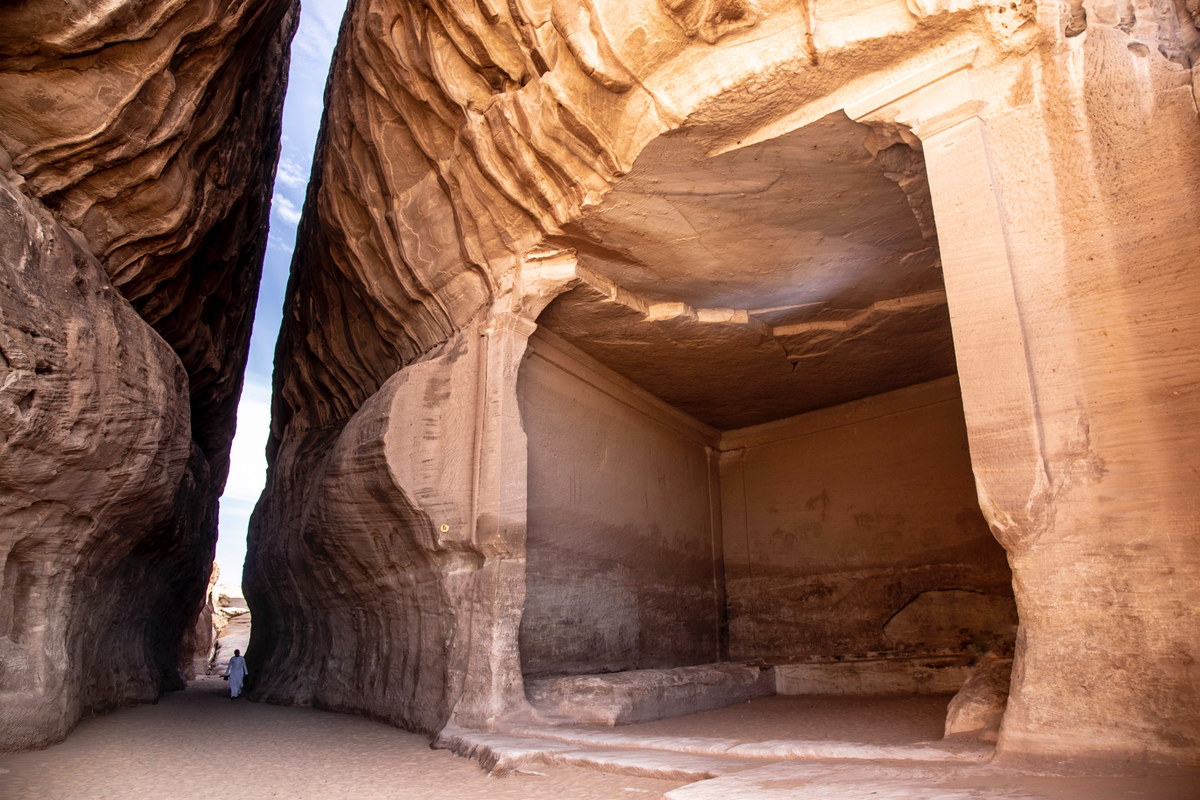


Over 9,000 sites of rock art and inscriptions have been located in AlUla. (Supplied)

The technology then enables viewers the ability to experience such heritage sites digitally. “We are moving towards this virtual experience with our Living Museum website and use of digital lenses and 360 videos,” she added.

The benefits of using this technology are twofold: It helps to preserve and protect the heritage of AlUla by aiding its conservation and research through high resolution digital document and it provides training to the local populace, fostering the growth of a heritage economy in AlUla.

“I am looking forward to continuing to develop within the field, and expanding the practice of photogrammetry in AlUla for the benefit of everyone interested in contributing to the preservation of heritage in Saudi Arabia,” said Jawharah Albalawi, one of the first phase students.
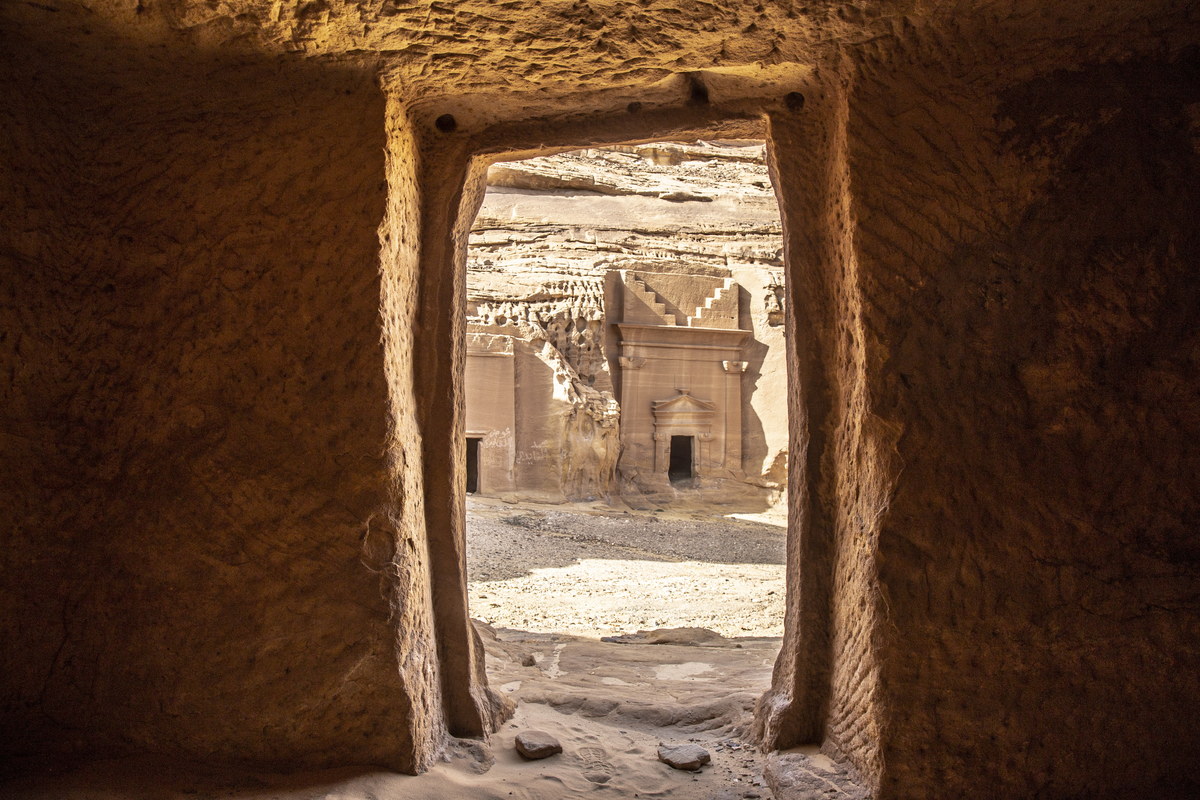


Thus far the initiatives have reached 3,500 people in the AlUla community and created more than 900 jobs. (Supplied)

The project demonstrates the RCU’s commitment to serving the local communities of AlUla through a series of community-based programs that prioritize human development. Thus far the initiatives have reached 3,500 people in the AlUla community and created more than 900 jobs.

Over 9,000 sites of rock art and inscriptions have been located in AlUla. Building the capacity to digitally document these sites is thus key to the long-term project of documenting them.

“RCU is revealing, protecting, sharing and celebrating AlUla’s extraordinary cultural heritage with the world,” said Rebecca Foote, director of archaeology and cultural heritage preservation. “Through the archeological programs we are undertaking, we are making this heritage globally accessible, shining a spotlight on AlUla’s ancient cultures and kingdoms, and demonstrating their relevance through the far-reaching cultural exchange that has taken place over millennia.”


Russian cyclist finds warm welcome on Saudi Arabia’s roads 

Updated 20 January 2026
Follow

Russian cyclist finds warm welcome on Saudi Arabia’s roads 

  • Anna Rodnishcheva’s ride through Kingdom is defining chapter in solo expedition
  • Rodnishcheva cycled to Aqaba, crossed the border into Saudi Arabia, and has since traveled through Tabuk, AlUla, Madinah, Jeddah, and Taif on her way to Riyadh

MAKKAH: Solo adventurer Anna Rodnishcheva, 27, has undertaken an ambitious journey that spans countries, climates and cultures — on a bicycle. 

Born and raised in Moscow and trained as a biologist before becoming an event photographer, she now finds herself pedaling thousands of kilometers across unfamiliar landscapes in pursuit of discovery, connection, and the simple joy of movement.

In her conversation with Arab News, Rodnishcheva offered a detailed account of her ongoing route in Saudi Arabia, describing how the expedition is her third major cycling adventure.

After previously riding from Moscow to Sochi and later from Vladivostok to Sochi — a route that stretches across the entirety of Russia — she felt compelled to explore foreign lands by bicycle.

She set off from Moscow heading south last June, passing through Russia, Georgia, and Turkiye before flying from Antalya to Amman. She cycled to Aqaba, crossed the border into Saudi Arabia, and has since traveled through Tabuk, AlUla, Madinah, Jeddah, and Taif on her way to Riyadh.

Rodnishcheva explained that physical preparation played only a small role in her planning. She began slowly and allowed her body to adapt naturally over the first month. 

The true challenge, she said, was in the mental and financial preparation. She spent a year and a half planning the journey, even though she originally intended to postpone it for several more years. 

Ultimately, her belief that “life is short” convinced her to start with the resources she already had. Although she sought medical evaluations and additional vaccinations, she was unable to complete them all and decided to continue regardless.

Her journey through Georgia and Turkiye presented unexpected difficulties. Simple tasks such as finding groceries or locating bicycle repair shops became more challenging outside of Russia, where she knew how to navigate on a budget. 

She also encountered language barriers, though the situation improved when a local cyclist joined her in Georgia. The intense midsummer heat added another layer of difficulty, but she had prepared herself for such conditions.

One of the most striking moments of her trip occurred as she crossed from Jordan into Saudi Arabia. She described the experience as surreal and emotionally overwhelming, likening it to the adventures of a literary hero traveling across the Arabian Peninsula. 

Her anxiety eased unexpectedly when she got a flat tire at the border, bringing her back to the present. 

Despite being warned that crossing by bicycle would be prohibited, the process went smoothly, and she was struck by the friendliness of both Jordanian and Saudi officials. She expressed particular surprise at meeting a female Saudi passport officer, an encounter that challenged her previous assumptions about women’s roles in the Kingdom.

Rodnishcheva said the hospitality she had experienced in Saudi Arabia surpassed anything she had encountered on previous journeys. Drivers frequently stop to offer her water, fruit, or sweets, and several families have generously hosted her in their homes or guest flats. 

She emphasized that she feels completely safe traveling across the Kingdom, especially on the open roads between cities, noting the strong and visible security presence.

She has also observed significant differences in weather. While the stretch from the border to Jeddah was hot despite being winter, the climate changed dramatically after climbing Al-Hada in Taif, turning cooler and windier — a climate she compared to Russian summers.

Rodnishcheva documents her travels primarily through Russian-language platforms such as VK and Telegram. Although she maintains YouTube and Instagram accounts, she explained that her schedule left little time for frequent updates.

Offering a message to women around the world who dream of embarking on similar adventures, she said such journeys were “not as scary as they seem before you start,” though they may not suit everyone.

Her closing advice? “Listen to your heart.”