

On Easter Sunday, Pakistani Christian health workers continue frontline role against pandemic

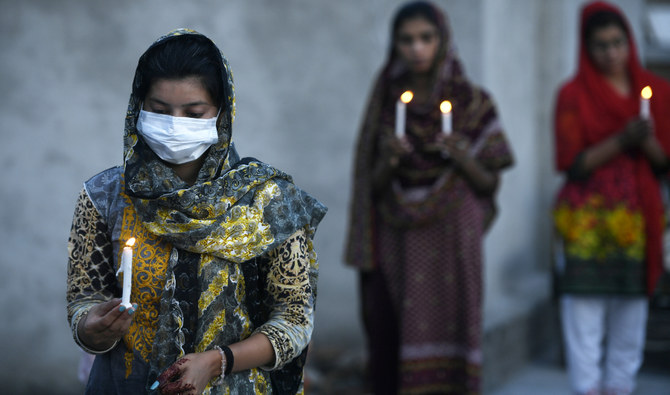
Christians hold candles as they offer prayers during an Easter service in the rooftop of their house during a government-imposed nationwide lockdown as a preventive measure against the COVID-19 coronavirus, in Islamabad on April 12, 2020. (AFP)
Short Url
Updated 12 April 2020
Follow

On Easter Sunday, Pakistani Christian health workers continue frontline role against pandemic

  • Hundreds of Christian health workers showed up to work on one of the biggest holidays of their religious calendar
  • Churches around the country remain closed, with many joining online prayer services

KARACHI: Every Easter, Panzy Gulnaz Hanook, a 52-year-old nurse from Karachi, gives special blessings to her children before proceeding to church for morning prayer services.
But not this year. 
Hanook is spending this Easter in a remote Balochistan town, serving some 685 km away from her native city, her friends and family. After giving her blessings to her children over the telephone, she proceeded to a field health unit outside Sui city for screening and testing suspected coronavirus patients.
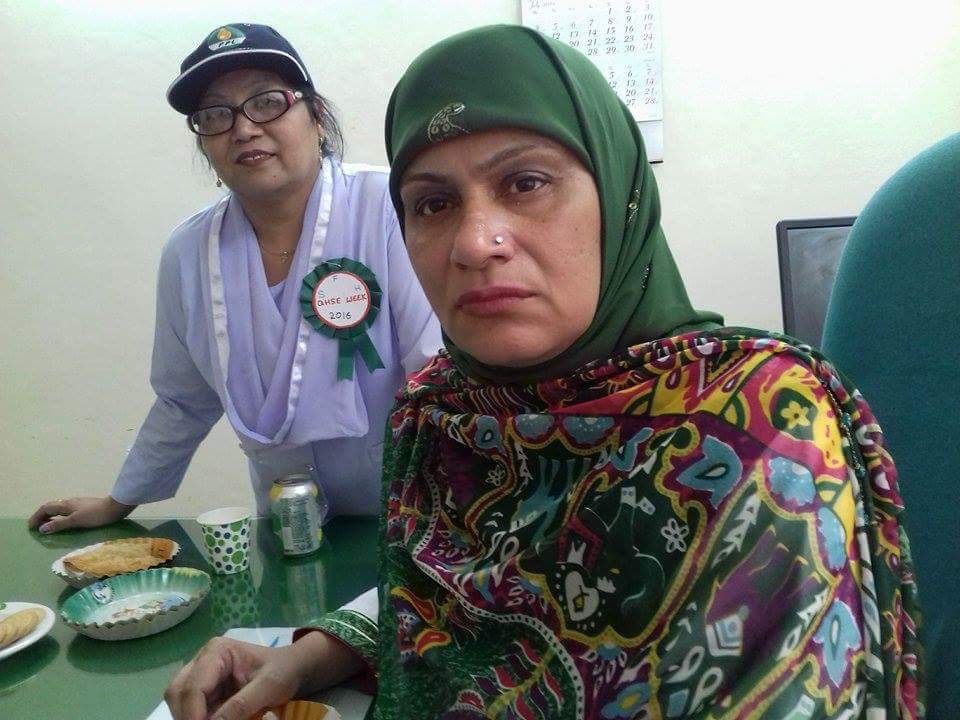


In this undated photo, Panzy Gulnaz Hanook (left) poses with a doctor in a Karachi hospital where she was posted before moving to Balochistan (Photo Courtesy: Panzy Gulnaz Hanook)

“This is the first Easter in my 52 years that I am not with my family,” Hanook told Arab News via telephone and said she had said a special Easter prayer for humanity to be saved from the fatal disease ravaging the world.

The global coronavirus pandemic has so far killed over 110,000 people and affected 1.7 million, with figures rising by the hour. In Pakistan, 5,170 cases have been reported with 88 deaths as of Saturday.

This is not the first time Christians in Pakistan are celebrating Easter marred by darkness. In 2016, a bomb ripped through one of Lahore’s largest parks at the height of Easter day celebrations, killing at least 75 people and injuring over 300.
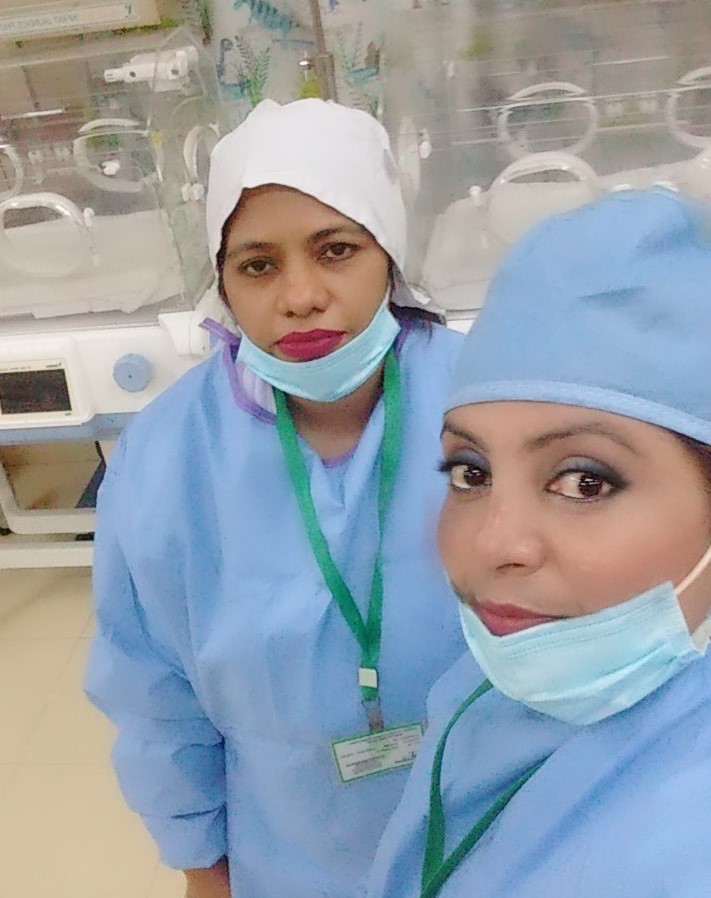


Tehmina Abdul (left) takes a selfie with a colleague in Karachi’s Sobhraj hospital on March 27, 2020 (Photo Courtesy: Tehmina Abdul) 

Four years on, hundreds of Christian healthcare professionals around Pakistan are choosing to work on one of two biggest holidays of their religious calendar because of pressing responsibilities. Christians and Hindus are two of Pakistan’s largest minority groups, and are estimated to make up two percent of the country’s 210 million strong population.

Churches around the country remain closed as part of containment measures against Covid-19, with thousands joining in on online prayer services instead.
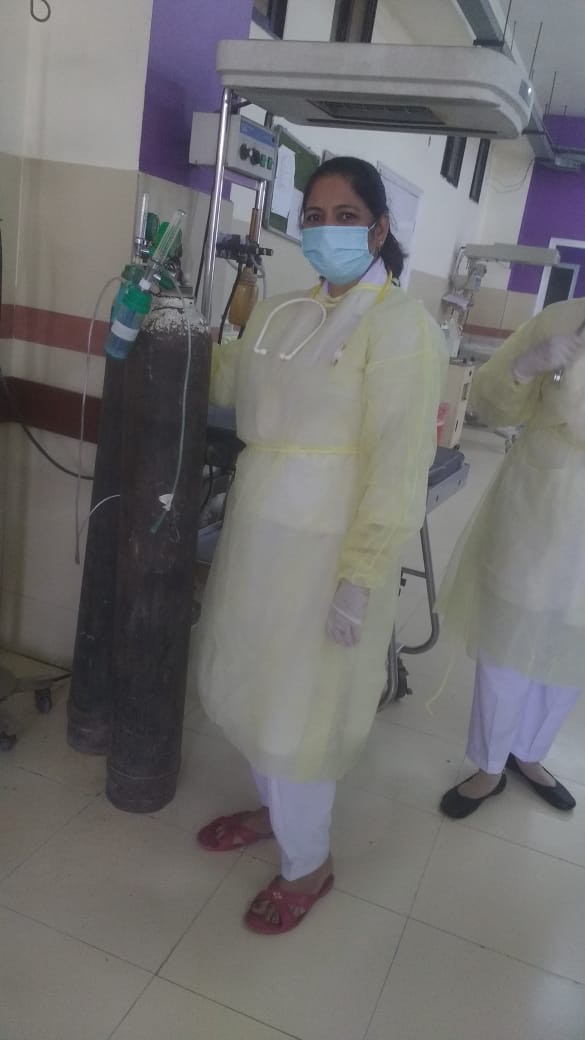


Tehmina Abdul (left) takes a selfie with a colleague in Karachi’s Sobhraj hospital on March 27, 2020 (Photo Courtesy: Tehmina Abdul) 

Tehmina Abdul, a 50-year-old medical staffer at Karachi’s Sobhraj hospital, said she was happy to be with those offering medical services to sick people on an important day.
“I had never thought I would be working on Easter. But I am happy today that I am at the front lines,” she told Arab News.
According to official data, 111 healthcare professionals have been infected by Covid-19 in Pakistan, a number largely blamed on the lack of personal protective equipment for doctors, nurses and paramedics.
“We have arranged masks of our own but we will not give up,” Hanook said, and added she was praying the world would be free of the virus by the time Christmas rolled around.


In Peshawar, 76-year-old artist struggles to keep near-extinct Mughal wax art alive

Updated 51 min 10 sec ago
Follow

In Peshawar, 76-year-old artist struggles to keep near-extinct Mughal wax art alive

  • Craft involves intricate process using heated wax, oil, pigments, limestone to create textured, miniature artworks
  • Riaz Ahmad, who has trained his son in wax art, says he hopes to train more people to preserve traditional craft 

PESHAWAR: Riaz Ahmad, 76, stirs wax in a small plastic can with a long chopstick, takes it out on the palm of his left hand and adds natural color before drawing designs on a piece of cloth.

Surrounded by several such pieces of black cloth with unique art, Ahmad strives every passing day to keep the 500-year-old, Mughal-era wax art alive at his home near the Lahori Gate in the northwestern Pakistani city of Peshawar.

Ahmad comes from a well-known family of wax artists who were based in Shillong and Darjeeling in present-day India and had migrated to Peshawar during the 1947 partition of the sub-continent.

His work remains rooted in tradition, faithfully repeating patterns passed down through generations and winning Ahmad several awards both at home and abroad in recognition of his dedication.

“I have been making the same Mughal era designs that my forefathers used to make,” he told Arab News last week.

Art pieces of Mughal wax art made by artist Riaz Ahmad in Peshawar on February 8, 2026. (Photo by AN)

“I went to India in 2004, where I received the UNESCO Seal of Excellence [for Handicrafts] award... On 23 March, 2012, the Government of Pakistan awarded me the Tamgha-i-Imtiaz.”

The near-extinct traditional craft, which is believed to have originated in Central Asia and refined under the Mughal patronage, particularly in Peshawar, involves an intricate process using heated wax, linseed oil, powdered pigments, and limestone to create detailed, textured and often colorful miniature artworks by hand.

Ahmad learnt wax art from his father, Miran Bakhsh, nearly six decades ago.

“My parents used to do this work in Shillong and Darjeeling [in present-day India]. They had a shop there, and after the Partition, they migrated to Peshawar, Pakistan,” he said. “When they came here, they started doing the same work.”

A basic piece of his work costs around Rs3,000 ($10.7). A larger piece made on order can fetch between Rs5,000 and Rs15,000 ($17-$53), but such orders are rare.

“Wax and colors have become expensive. When I sell a piece for Rs3,000, around Rs1,000 goes into expenses, and Rs2,000 is my daily wage,” Ahmad said.

But the 76-year-old worries more about the future of the art form, which he insists cannot be learned quickly and requires “love and dedication.”

“Some people say they want to come, some from Karachi and some from Lahore, but it becomes difficult for me to go there or for them to come here,” he said.

Riaz Ahmad, 76, prepares wax by stirring it in a small plastic can before adding natural color and drawing designs on cloth in Peshawar, on February 6, 2026. (Photo by AN)

Most wax artists in Peshawar have abandoned the art due to a lack of institutional support, according to Ahmad, who relies primarily on exhibitions to earn a living.

“The reason [for the decline of this art form] is that the government does not pay attention. They are caught in their own conflicts, and the culture is suffering,” Ahmad said.

“Other artists have left this art. Some are selling rice and some are driving rickshaws,” he added. “I have been doing this work inside my house. If there is any event, we go there and sell our art.”

A 76-year-old artist practices the near-extinct Mughal wax art in Peshawar, on February 6, 2026. (AN Photo)

Saad Bin Awais, a spokesperson for the Khyber Pakhtunkhwa Culture and Tourism Authority (KPCTA), said the government has engaged artisans in several projects. He said some of these projects have come to an end while others are ongoing.

“Riaz Ahmad is the only wax artist in Khyber Pakhtunkhwa and the authority is serious about facilitating him,” he said, adding that the KPCTA facilitates Ahmad’s participation in exhibitions across the country to showcase his art.

“We have also been collecting data of artists in Khyber Pakhtunkhwa for an upcoming project to facilitate them in any way possible.”

Ahmad has trained his son, Fayyaz, in wax art who now practices it in Islamabad. The septuagenarian says he wishes to train more people to preserve the dying art form.

“I cannot leave this work,” he said. “I will continue this art even though my hands shake.”