DUBAI: It has been said time and again in the course of the global pandemic that things will never be the same again, and nowhere more so than in the world of finance.
Stock markets are a rollercoaster, with some of the biggest crashes on record followed by big recoveries. Nobody can say with any certainty that the worst is over in financial markets, or whether they will go through another round of savage downgrades.
But some investment experts are already planning for the post-COVID world, and Noor Sweid is one of them. As founder of the Dubai-based venture capital (VC) business Global Ventures, she sees investment opportunities that she believes will make money for her limited partners — the people backing her investment judgement.
But she also believes the current crisis offers an opportunity to spark innovation in sectors that have been at the forefront of the pandemic - healthcare, work lifestyles, education and food security.
“You have a lot of investors with a lot of money sitting on the sidelines waiting for things to unfold and then they’ll take it from there. But investors need to be active at this time, because you’ll see lower valuations and real innovation from incredibly strong founders,” she told Arab News, pointing to an estimated $189 billion of pent-up VC potential waiting in the wings. “There is a lot of dry powder.”
Sweid’s background is the perfect CV for a venture capitalist. Educated on the US East Coast, a spell in biopharma strategy consulting, team leader for one of Dubai’s biggest IPOs, and former chief investment officer for the Dubai Future Foundation.
BIO
BORN: Boston, US, 1980
EDUCATION
- Boston College — BSc finance and economics
- MIT, Sloan School — MBA
CAREER
- Strategy Consultant, Accenture
- Associate Strategy and Planning, Dubai International Financial Center
- Managing Director Strategy, Depa
- Managing Partner, Zen Yoga
- Director, Middle East Investor Relations Society
- General Partner, Leap Ventures
- Director, Endeavor UAE
- Chief Investment Officer, Dubai Future Foundation
- Board Member, MIT Sloan School
- Chair, Middle East Venture Capital Association
- General Partner and Founder, Global Ventures
In between she found time to launch, build and exit her own chain of yoga studios in Dubai called Zen Yoga. She came back from the US, where she had been a dedicated yogi, to find there were no studios in Dubai. “The answer to every problem is to fix it if you can,” she said. By the time she sold Zen to private equity buyers four years later, it had six locations, 72 teachers, and 5,000 students.
Global Ventures has a strong health and wellbeing investment slant, and she sees this as one of the main areas that will be transformed by the pandemic.
“We’re very excited about health technology, what we call ‘health-tech.’ The way we see it is similar to what happened to fintech (financial technology) over the past five years when there was a massive emphasis on financial inclusion. It was all about how you turn a mobile device into the opportunity to bank the unbanked. Healthcare will experience the same thing over the next five years — how you provide access to healthcare using remote access to diagnostics, telemedicine, remote pharmaceuticals and medical deliveries, rather than going out to build more hospitals. Yes, there may be more clinics built, but I don’t think that’s the endgame. If you want to provide medical access to a couple of billion people across emerging markets as a priority, the question is how do you leapfrog, in the same way that fintech leapfrogged. That is a massive opportunity,” she added.
But she does not necessarily see the VC business as getting involved in the capital-intensive search for a vaccine against COVID-19. A better use of VC funds is to back companies that offer innovative ways to strengthen peoples’ immune systems, for example. “That is a better outcome for most people than to try to find a cure in a short period of time.”
The ‘working from home’ conditions imposed by the pandemic shows another way that change is being accelerated. “People have been talking about this for years but now we are beginning to see the technologies that will enable us to have a different kind of work outlook,” she said.
Education is another sector — “edtech” in VC jargon. “It’s about distance learning. We had the technology, but the bottleneck in edtech has always been content — there is not enough of it. I think that now institutions worldwide — schools, universities and governments - are improving and developing that content so you no longer have that bottleneck. So all of a sudden distance-learning, education, home-schooling can all become something that has a higher consumer adoption.”
Then there is “agritech” or agricultural technology. “it’s a food security perspective. People no longer want to be as dependent on global supply chains. I think we’ll see a boom in agricultural technology — whether it’s vertical farms, aquaponics, or hydroponics - across the world,” Sweid said.
The last area that will be transformed in the current crisis will be robotics. “I think a lot of things that already exist in the robotics eco-system will suddenly become a lot more commercial. Think about a cleaning crew, for example. They do not have to be humans, they can be robots, because they provide a much higher bar for safety in terms of virus spreading. I think there will be a massive movement into robotics as well.”
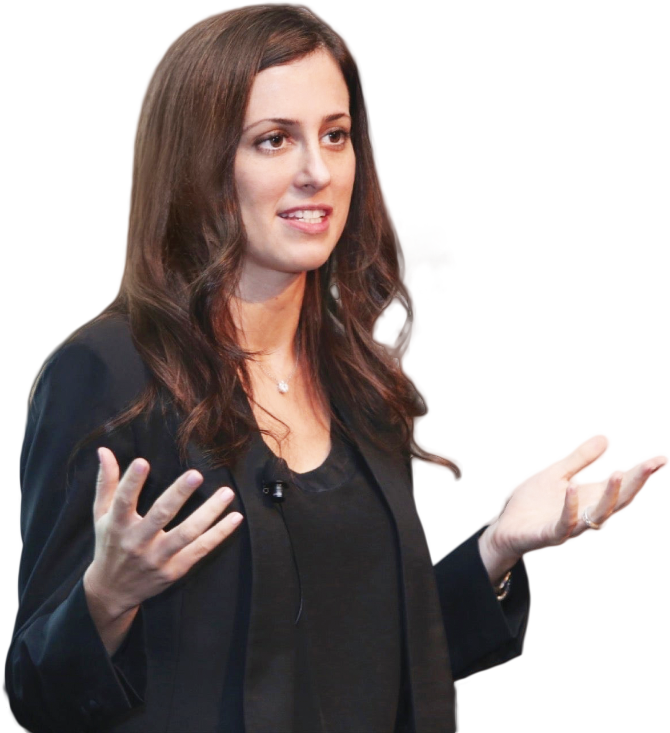
Global Ventures founder Noor Sweid
Global Ventures counts Saudi Arabia’s Public Investment Fund — through its VC unit Jada — as an investor as well as the big UAE investor Mubadala. Sweid estimated that about 60 percent of her investment comes from the US.
With US attitudes toward the Middle East and Saudi Arabia going through a rocky patch, how does she think Americans view the region as an investment scene?
“I think it goes up and down,” she replied. “The VC community is very unique in that it has a very different risk appetite compared to usual investors. You’re backing founders and people and their belief that they can achieve their vision and that they can create value. The general belief is that these founders with this incredible insight and ability to create value can exist anywhere. The next Steve Jobs could come from Turkey or Pakistan or anywhere, it doesn’t matter.”
Global Ventures sees opportunities in Saudi Arabia under the Vision 2030 reform plan. “It’s a really interesting time in Saudi. You’re seeing some really good innovation in healthcare. It’s a large and very unique population and we’ve always believed that local challenges are best addressed with local solutions and then they can be scaled across borders,” she said, highlighting one recent investment in a company with an innovative approach toward regulating medicine dosage.
The direction of investment is in the broad Middle East and North Africa region, in companies that have a minimum $1 million of revenue, but she is really looking for founders with bigger ambitions. “We invest in companies that are scaling globally, and we look for technologies that are applicable everywhere. A lot of countries across the world have legacy issues, but when the Middle East creates something it does not create it from legacy, it is creating it for today’s environment with technology catering for today’s customer,” she said.
Venture capital has traditionally been a male world, with only around 20 percent of fund managers being women. This was especially true in technology, where there was a “boys club” mentality, but Sweid detects a shift.
“I think attitudes are starting to change. The advent of healthtech and edtech, which are industries that historically have more women than men, you will see more females in the health and education innovation space, and therefore more female managers,” she said. An increasing number of her new pipeline investments are coming from female entrepreneurs. Female empowerment is a journey, she added.
Sweid also believed another more subtle change was underway in the VC industry in the COVID era.
“In the Middle East we tend to underestimate the founders. We still have an aptitude to invest more in companies and assets than we do in people and ideas. That’s changing but I wish it would change faster. You can teach people the skills to be founders, but if you ask any investor what are the most important attributes of founders they’ll say grit, resilience and the ability to think outside the box. These are things you learn from a very young age, or your life teaches you.”
She quoted inventor Thomas Edison, who famously stated when another ambitious invention had gone wrong: “I have not failed. I’ve just found 10,000 ways that do not work.”