KARACHI: In these troubling times, when the whole world is fighting the deadly coronavirus pandemic, two of Pakistan’s top fashion designers have taken the initiative of donating Personal Protective Equipment (PPE) suits to doctors and paramedics who are risking their lives while fighting the bruising battle against the elusive pathogen.
Instead of focusing on their summer collection at this time of the year, designers Asim Jofa and Deepak Perwani are using their production facilities to make reusable and disposable PPE suits to equip hospital staff and employees of other relevant departments in Karachi.
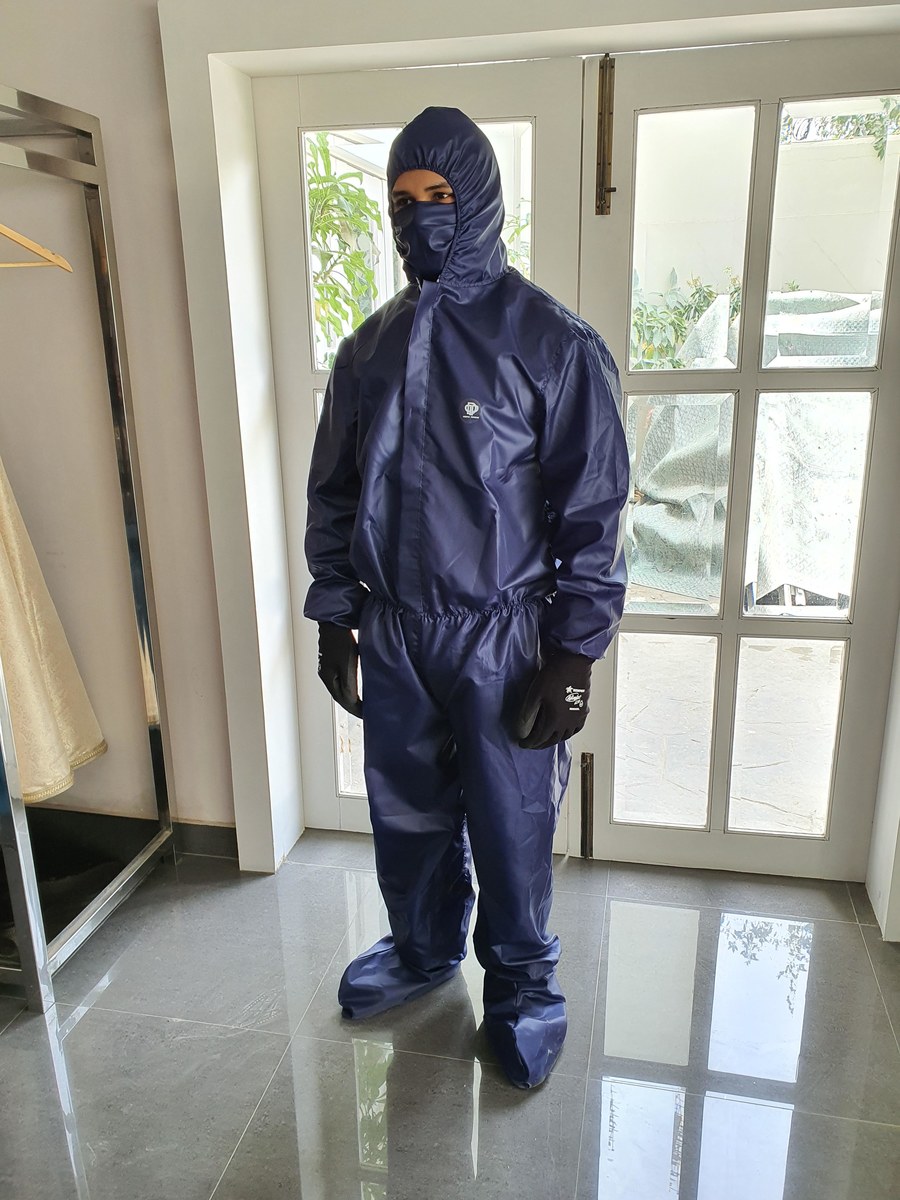
In this undated photo, a man wearing Personal Protection Equipment suit in Karachi. (Photo Courtesy: Deepak Perwani)
“I was thinking about playing my role in the ongoing struggle against the virus while sitting free at home during this lockdown period,” Jofa told Arab News on Thursday. “I wanted to do something for the real heroes fighting this war, such as doctors, physicians and paramedical staff, who are in real danger since they are facing the virus. I also realized that they had very little means to protect themselves in this difficult but most demanding period of their profession. I am a fashion designer so I decided to do something within my field by making and donating these suits.”
He took special certification from the executive director of the Jinnah Post Graduate Medical College and Hospitals, Dr. Seemi Jamali, and her team. They tested and approved the suits for further production.
Jofa himself procured the special fabric required to stitch the PPE suits. Apart from that, he also started producing wiser shields that protect an individual’s face from exposure to virus.
The designer gave the suits to the mayor of Karachi, officials of Sindh Rangers and Police, the province’s health minister, and some non-profit organizations.
“I am not doing it for any financial gain but to assist and play my part in combating the threat,” he continued.
Renowned designer and philanthropist Deepak Perwani echoed the same sentiment as well.
“In these tough times, we at Deepak Perwani have used our skill set to help the real heroes of Pakistan, our doctors, nurses and medical staff by manufacturing both reusable and disposable PPE suit prototypes,” he said while highlighting his brand’s continuous effort to be socially responsible.
Indeed, his work on poverty alleviation among rural women of Pakistan and collaboration with numerous charity organizations have turned him into an inspiration for Pakistanis at home and abroad.
Asked about the rationale behind his new endeavor, he said: “We, as a brand, have always wanted to lend a helping hand to those in need. This is our country and our duty to assist wherever we can.”
“We have been in contact with our medical community regarding their requirements,” he added. “These suits are in line with their specifications as well.”
Currently, Perwani has distributed the PPE suits to The Indus Hospital, Jinnah Postgraduate Medical Center (JPMC), Patients’ Aid Foundation (PAF), Abbasi Shaheed Hospital, and Civil Hospital.
In addition to this, he has received quite a few queries and is looking at the possibility of making these suits for other organizations that also require them.
“This is not a one-time project,” he said. “It is our responsibility as a brand to do whatever we can to assist this country in its struggle against the pandemic.”