

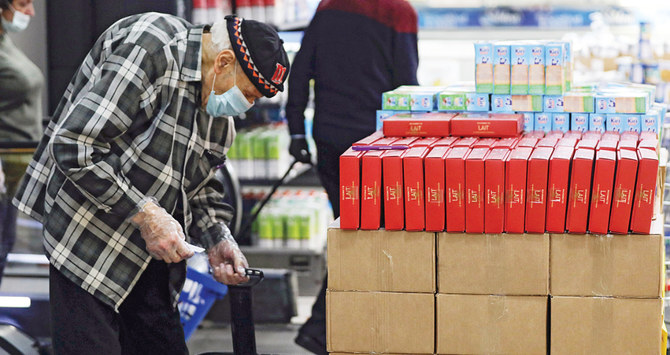

BEIRUT: Lebanon’s food importers, already hit by a dollar crunch, have struggled to book new cargoes as the coronavirus pandemic threatens supplies and sparks fears of even more painful price hikes.
Vendors are delaying shipments and refusing new orders as the spread of the virus slows global food supply chains.
This comes at a grim time for Lebanon. A financial crisis has wiped out about half the value of the currency and sent prices skyrocketing for months.
Supply disruptions, twinned with the currency squeeze, risk fueling more inflation as poverty levels rise. Prices of consumer goods have nearly doubled in the past six months.
Food importers like Hani Bohsali said pressure was piling on stocks, already reduced by banking controls.
Last week, Bohsali was told Moroccan sardines were no longer available after fishermen stopped going out — and even if they did, tins from Spain were running thin. Before that, a cooking oil shipment from Ukraine and lentils from Australia were each postponed a month because of labor shortages.
“Everything is slowing down and I fear that globally, the worst is yet to come,” he said.
As major state buyers from Saudi Arabia to Egypt look to beef up strategic stocks, for the first time in years Lebanon is thinking of importing wheat.
Economy Minister Raoul Nehme told Reuters the Cabinet had authorized importing 80,000 tons.
“It is just a measure to be ready in case we need it,” he said
The government has warned that foreign currency reserves plummeted to “dangerous” levels, pledging to keep them for key goods: Wheat, fuel and medicine.
Buyers of staples like grains worry other countries will hold back shipments as the pandemic drags on or choose not to prioritize the small nation of around six million.
“The interruptions because of the lack of cash dollars, the lockdowns abroad, we’re going to see the impact in two months,” said Nabil Fahed, an importer who heads the supermarket syndicate. “The supplies will not be there...I’m really worried about this.”
With a tiny industrial sector and scant natural resources, Lebanon’s economy produces few goods.
Fahed, who owns a major supermarket chain, said prices for most goods have risen 45-50 percent, with some already running out.
Any harsher shortages could still be a few months off. Importers put stocks of most goods at 1-2 months and supermarkets remain largely full despite some panic shopping during Lebanon’s shutdown.


