


MANILA: The Philippines on Tuesday extended a lockdown in Luzon until April 30 to limit the spread of coronavirus disease (COVID-19) in the country’s largest island.
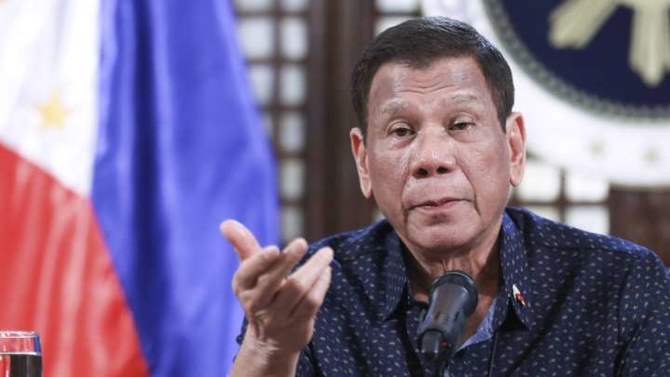
In an address to the nation late on Monday night, President Rodrigo Duterte said he was “inclined to extend” the lockdown and appealed for cooperation as the government grapples with the coronavirus disease (COVID-19) pandemic.
The Enhanced Community Quarantine (ECQ), which came into effect on March 15, was set to end on April 12.
However, on Tuesday morning, Cabinet Secretary Karlo Nograles, spokesperson for the Inter-Agency Task Force on the Management of Emerging Infectious Diseases (IATF MEID), said in a virtual press briefing that the president had accepted the IATF’s recommendation to extend the ECQ by another two weeks.
“That was [the IATF] recommendation to President Duterte, which he accepted and announced last night. After his announcement, we verified it again, and the answer was that the ECQ would be hereby extended until 11:59 pm of April 30,” Nograles said, adding that the extended lockdown “would give the government enough time to increase its public health response.”
Interior Secretary Eduardo Año said he fully supported the move which he described as an “inevitable course of action in the effort of the national government to contain COVID-19.”
Año said the decision was based on the advice of health experts from the Department of Health (DOH) and the World Health Organization (WHO).
He added that to rush the easing of the ECQ in a time when the number of COVID-19 cases is fluctuating is a gamble that the government is not willing to take.
“We all want everything to go back to normal, yet we cannot risk further transmissions or a relapse. This extension is part of the effort of the national government to flatten the curve of COVID-19 transmissions in the country,” Año said.
As of Tuesday, the number of infections rose to 3,764 in the Philippines, with 104 new cases reported.
The latest DOH report also indicated 14 new deaths, bringing the total mortalities to 177, while 84 patients had recovered from the disease.
Año said that reports from both the government and the private sector show that an extension of two weeks would ensure that the pandemic is “contained and manageable by our health care system.”
Senate President Vicente Sotto III also said that the extension until April 30 “seems to be reasonable because the DOH has no clear projection yet of how things are evolving.”
“Better safe than sorry,” Sotto said, emphasizing the need for the government to improve the distribution of emergency subsidies to affected families.
Earlier, the task force had spelled out the parameters that would be considered — such as trends in the COVID-19 epidemiological curve, the capacity of the healthcare system, as well as social, economic, and security factors — before arriving at a decision.
In his message on Monday, Duterte asked for public patience and cooperation, especially from those who were severely impacted by the lockdown.
“Once again, I am asking the utmost cooperation of the public in these trying times,” Duterte said as he urged people to strictly observe home quarantine, wear face masks, and practice social distancing.
He also rallied for national unity and prayer as the country observes the Lenten Season during the pandemic.
“This being the Holy Week, I am calling on the nation to come together this Wednesday afternoon and pay tribute to the indomitable spirit of the Filipino and unite in one prayer to God to fight our common enemy,” Duterte said.
“God is the only one who can really solve the problem for us,” he said.
Recognizing the impact of the crisis on the economy, Duterte reiterated his call to individuals and organizations to help the most vulnerable, stressing the issue of limited government resources.
“Private companies must assist the government during the current health emergency,” Duterte said, adding that “continued uncertainty will impact on everyone.”
On Sunday, Malacañang confirmed that many members of the president’s cabinet had pledged to cut 75 percent of their monthly salaries from April to December this year toward the country’s anti-virus measures.
Others have volunteered for a salary deduction for the entire duration of the lockdown to help in the government’s efforts to halt the spread of the disease.
Malacañang spokesperson Salvador Panelo said the president is also donating his one month’s salary for the cause, while other officials with the rank of secretaries are giving portions of their respective wages to facilitate the initiative. More than 200 members of the House of Representatives, as well as the Senate, are doing the same.


