Saudi consumers are optimistic on recovery

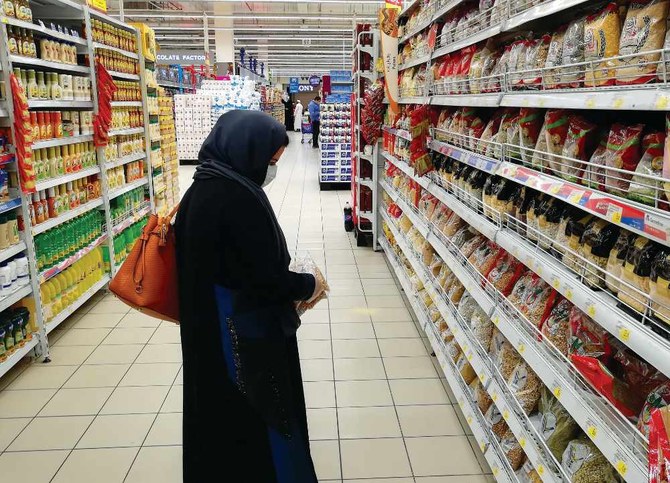
Saudis say the pandemic will change their personal and family spending patterns, with 30 percent expecting to spend more on food and drink. (AFP)
Short Url
Updated 02 April 2020
Follow

Saudi consumers are optimistic on recovery

  • Survey in ten countries finds that Saudis are the most hopeful of a post-virus economic upturn

DUBAI: Consumers in Saudi Arabia are among the most confident in the world that the economy will recover after the slow down because of the coronavirus disease (COVID-19), but they are still reining in spending while the emergency lasts.

That is the main finding of a survey conducted in the Kingdom by international consulting firm McKinsey as part of a global analysis of consumer sentiment in light of the virus’s impact on normal economic life.

There is also a big increase under way in e-commerce and online entertainment as travel restrictions affect everyday activity.

The survey, conducted last week, found that 58 percent of citizens and residents were confident that the economy would rebound within two to three months and would grow just as strong or stronger than before the virus appeared.

That was the highest of ten countries cited by McKinsey. Italy, which has experienced the most severe outbreak in Europe, had the lowest level of optimism, with only 13 percent of Italians believing things would get better quickly after the outbreak.

Only 12 percent of Saudis agreed that COVID-19 would have a “long lasting impact on the economy and show regression or fall into a lengthy recession.” Consumers in the UAE were almost as optimistic as Saudis, with 57 percent confident of a rapid rebound and 15 percent thinking things would get worse.

But a large number of people in the Kingdom said that the outbreak would change their personal and family spending patterns during the crisis. Half of respondents told McKinsey that they worry about the impact of the illness on their overall finances, with 51 percent cutting back spending or saying they have to be careful abut how they sodden their money.

About 36 percent said that uncertainty about the economy was preventing them from making purchases or investments they would otherwise make, but only 16 percent said their income had been negatively affected by the crisis.

There will be a greater focus on essential items. Some 30 percent will increase the amount they spend on food and drink over the next 12 weeks, while beauty and cosmetics sales can expect to see a downturn, with 55 percent saying they will decrease spending on these products.

With widespread curfews in operation in the Kingdom, online consumption is expected to grow significantly. Some 24 percent of those polled said they would buy groceries online over the next two weeks — five times more than before — while 55 percent said they would spend more money on entertainment online. More than 40 percent expect to spend more time using social media and the Internet for education and reading.

Abdellah Iftahy, the McKinsey partner who led the research, said: “The circumstances have required consumers to change their behaviors rapidly, both in terms of consumptions and channels, accelerating the penetration of online industries, such as e-grocery.”

A second survey will be conducted next week to enable comparisons to be made as the outbreak unfolds across the region, McKinsey said.


Saudi minister at Davos urges collaboration on minerals

Global collaboration on minerals essential to ease geopolitical tensions and secure supply, WEF hears. (Supplied)
Updated 20 January 2026
Follow

Saudi minister at Davos urges collaboration on minerals

  • The reason of the tension of geopolitics is actually the criticality of the minerals

LONDON: Countries need to collaborate on mining and resources to help avoid geopolitical tensions, Saudi Arabia’s minister of industry and mineral resources told the World Economic Forum on Tuesday.

“The reason of the tension of geopolitics is actually the criticality of the minerals, the concentration in different areas of the world,” Bandar Alkhorayef told a panel discussion on the geopolitics of materials.

“The rational thing to do is to collaborate, and that’s what we are doing,” he added. “We are creating a platform of collaboration in Saudi Arabia.”

Bandar Alkhorayef, Saudi Minister of Industry and Mineral Resources 

The Kingdom last week hosted the Future Minerals Forum in Riyadh. Alkhorayef said the platform was launched by the government in 2022 as a contribution to the global community. “It’s very important to have a global movement, and that’s why we launched the Future Minerals Forum,” he said. “It is the most important platform of global mining leaders.”

The Kingdom has made mining one of the key pillars of its economy, rapidly expanding the sector under the Vision 2030 reform program with an eye on diversification. Saudi Arabia has an estimated $2.5 trillion in mineral wealth and the ramping up of extraction comes at a time of intense global competition for resources to drive technological development in areas like AI and renewables.

“We realized that unlocking the value that we have in our natural resources, of the different minerals that we have, will definitely help our economy to grow to diversify,” Alkhorayef said. The Kingdom has worked to reduce the timelines required to set up mines while also protecting local communities, he added. Obtaining mining permits in Saudi Arabia has been reduced to just 30 to 90 days compared to the many years required in other countries, Alkhorayef said.

“We learned very, very early that permitting is a bottleneck in the system,” he added. “We all know, and we have to be very, very frank about this, that mining doesn’t have a good reputation globally.

“We are trying to change this and cutting down the licensing process doesn’t only solve it. You need also to show the communities the impact of the mining on their lives.”

Saudi Arabia’s new mining investment laws have placed great emphasis on the development of society and local communities, along with protecting the environment and incorporating new technologies, Alkhorayef said. “We want to build the future mines; we don’t want to build old mines.”