CAIRO: Startups in Egypt have started to gain momentum with several ventures securing funding to boost expansion efforts to the Kingdom.
Following a period of startup funding stagnation, Egyptian founders have made their way back to the regional venture capital space with a flurry of investment deals and expansion strategies already in place.
Egyptian fintech startup Waffarha has secured a seven-figure seed round from Value Makers Studio to expand its footprint.
Founded in 2012 by Tarek Magdy, the platform offers significant discounts, with daily deals ranging from 50 percent to 90 percent.
The new capital will enable Waffarha to enhance its technology, recruit talent, and expand into Saudi Arabia and additional markets.
Moreover, in 2018, Fawry for Banking Technology and Electronic Payments, one of Egypt’s largest financial institutions, acquired a share of 30 percent of the company.
The company claims to boast a network of over 1,000 merchants and over 3,000 stores that cater to more than 5 million customers, without any subscription fees.
Over the last 12 years, Waffarha claims to have emerged as a top-tier lifestyle website and mobile app.
Egyptian HRtech startup Bluworks secures $1m in pre-seed funding
Bluworks, an HR and Software-as-a-Service solutions provider based in Egypt, has raised $1 million in pre-seed funding led by Khawarizmi Ventures and included Camel Ventures, Acasia Ventures, and angel investors.
Founded in 2022 by Farah Osman, Hussein Wahdan, and Nour Ahmadein, Bluworks aims to optimize costs for businesses through data-driven decision-making.

Founded in 2022 by Farah Osman, Hussein Wahdan, and Nour Ahmadein, Bluworks aims to optimize costs for businesses through data-driven decision-making. (Supplied)
“With so many HR softwares on the market, not one is built to manage blue-collar workers,” Wahdan said.
“Since the process of managing this type of workforce is so manual, errors frequently occur, leading to penalties and deducted salaries with no oversight from the workers, causing them to leave and ultimately contributing to high turnover rates,” he added.
“Currently, companies can spend about 7-10 days just closing their payroll accounts, but with Bluworks, this time can be cut down to one day - all while leveraging data and insights on their workforce,” he stated.
The company aims to utilize the funding to support its product development goals, expand its presence, and grow its team.
Egypt-based fintech Bokra closes $4.6m pre-seed funding round
Bokra, an emerging fintech startup from Egypt, has secured $4.6 million in pre-seed funding, led by DisrupTech Ventures and SS Capital.
Founded in 2023 by Ayman El-Sawy, Bokra offers diversified investment solutions for retail and SME investors.
The funds will support the launch of the Bokra app, expansion of its investment products, and scaling operations across the Middle East and North Africa region.
“We are dedicated to accelerating financial inclusion and elevating investment awareness across MENA,” El-Sawy said.
“In a region where financial needs and aspirations are ever-changing, Bokra is poised to become the preferred investment platform for both individuals and small and medium-sized enterprises looking to diversify their fractional ownership portfolio in a simple, trackable and informed way,” he added.
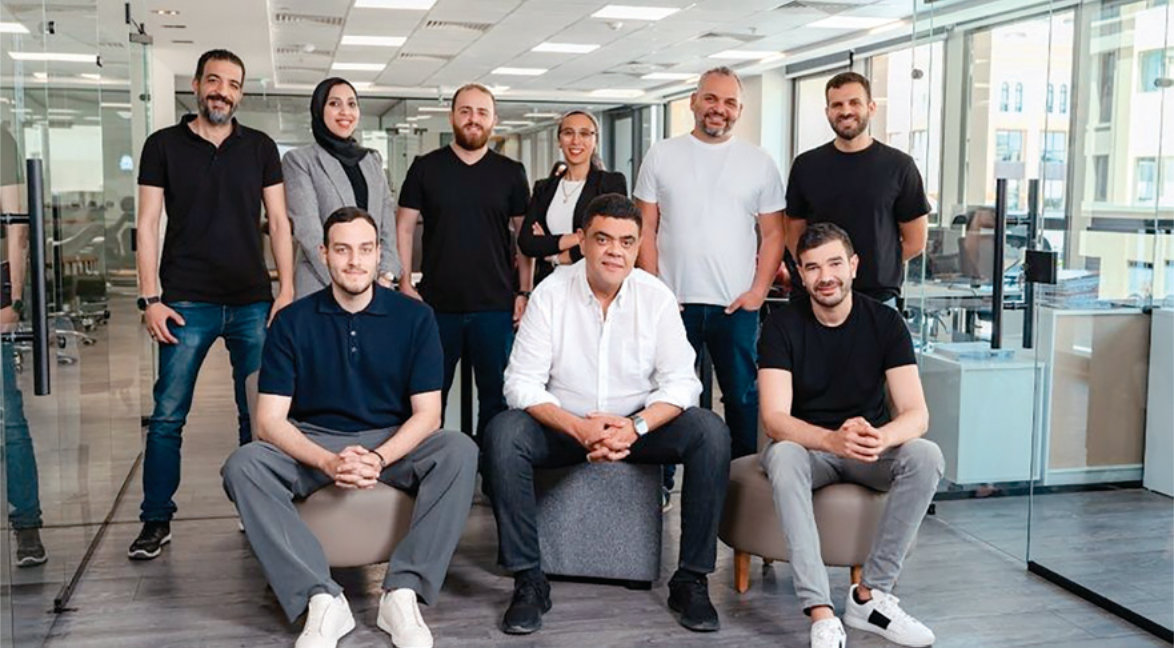
Bokra, an emerging fintech startup from Egypt, has secured $4.6 million in pre-seed funding, led by DisrupTech Ventures and SS Capital. (Supplied)
Egyptian startups win big in Saudi-Egyptian program
Ten Egyptian startups have received awards from the VMS Bridge program, aimed at enhancing connections between Egypt and Saudi Arabia’s entrepreneurial ecosystems.
Winners included Amanleek, Farhy, Sprints, Career180, and Jamaykaa, which will explore investment opportunities during a 4-day visit to the Kingdom.
Other winners, Notchnco and Neqabty, received free company licenses in Saudi Arabia, and AgriCash, ReNile, and ICareer won access to Arweqah’s training programs.
Jordan-based healthtech startup Arab Therapy secures $1m seed funding
Arab Therapy, a Jordan-based mental health platform, has raised $1 million in seed funding, led by Flat6Labs and Vision Health Pioneers, with participation from international angel investors.
Founded in 2021 by Tareq Dalbah, Omar Koudsi, and Hekmat Al-Hasi, Arab Therapy connects users with licensed mental health professionals.
The investment will facilitate the company’s market expansion and the initiation of business to business sales operations.
TVM Capital Healthcare invests $17m in Neurocare Group AG
TVM Capital Healthcare, based in the UAE, has invested $17 million into Neurocare Group AG, a Munich-headquartered healthtech specializing in personalized mental healthcare.
The investment will support Neurocare’s expansion plans in the US and Saudi Arabia and fund the development of new hardware and software innovations, enhancing their clinical solutions.
UAE-based logistics startup Shorages secures $1m for expansion
Shorages, a UAE-based logistics startup, has raised $1 million in a pre-series A funding round led by Joa Capital’s S3 Ventures Fund.
Founded in 2019 by Rayan Osseiran, the company provides fulfillment solutions in the UAE and Saudi Arabia for e-commerce platforms.
The company aims to utilize the funding to help expand its warehouse operations across the Gulf region.
UAE e-commerce startup WEE secures $12m in funding
UAE-based e-commerce startup WEE has concluded a $12 million pre-series A funding round, facilitated by SIG Investment.
Founded in 2021 by Anastasia Kim, Oleg Dashkevich, and Sergey Kolikov, WEE is an online marketplace that offers below 15-minutes delivery services.
The investment will be used to spearhead WEE’s logistics capabilities, accelerate growth, and expand its team.
Turkish fintech app Midas closes $45m funding round to boost MENA expansion
Turkish fintech app Midas closed a $45 million funding round by Portage, a global investment platform, supported by International Finance Corporation, Spark Capital and Earlybird Digital East Fund.
Founded by Egem Eraslan, the company allows users in Turkiye to invest in Turkish and US equities.

Founded by Egem Eraslan, Midas allows users in Turkiye to invest in Turkish and US equities. (Supplied)
The startup is aimed at Turkiye’s retail investor market and claims to have more than 2 million users. The company claims to charge significantly lower transaction and commission fees for Turkish customers who want to invest in US or Turkish stocks.
Midas has plans to expand beyond Turkiye, and aims to target countries in the MENA region, according to a report by TechCrunch.
Midas also plans to use the new funding to roll out three new products in cryptocurrency trading, mutual funds and savings accounts.
UAE’s Maalexi signs agreement with Etihad Credit Insurance
Maalexi, a UAE-based risk management platform focused on SME agri-businesses, has entered into a strategic credit insurance agreement with Etihad Credit Insurance, the UAE’s federal export credit company.
This collaboration will enable Maalexi to utilize ECI’s extensive trade credit solutions and services, enhancing the competitiveness of regional SMEs in the food and agriculture trade sectors, both locally and internationally.
The partnership aims to reduce market entry barriers, support Maalexi’s goal of increasing SME participation in the cross-border trade of agricultural produce, and contribute to food security in the UAE.