


PESHAWAR: It began with a simple sniff.
First, it was heroin and then began to include a concoction of more potent drugs.
Today, Haseena Bibi, 43, is clean from substance abuse but says she cannot recall any of the significant events that transpired in her life since 2014 – when she first became addicted to drug use.
“A time came when, without heroin, my entire body would feel paralyzed, and I would remain on bed for days because of the unbearable pain in my body,” Bibi, a mother of two, told Arab News from her residence in Peshawar’s Pishtakhara Payan village.
She is not alone.
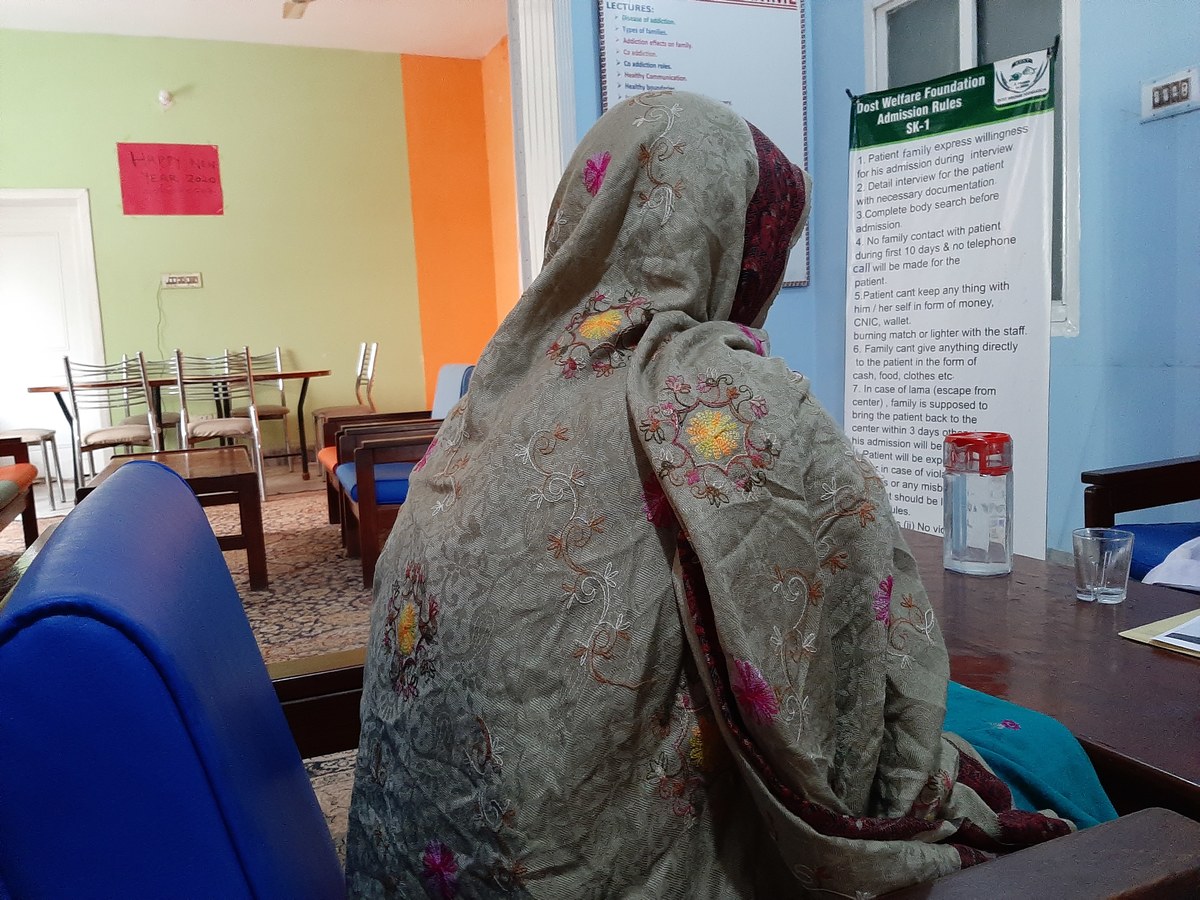
Thousands of women are addicted to drugs in Pakistan, but avoid talking about it due to social stigma. Seen here is Haseena Bibi who was addicted to heroin for several years, but has finally kicked the habit after seeking treatment at the Dost Welfare Foundation in Peshawar, Khyber Pakhtunkhwa province. (AN Photo)
According to a 2013 report published by the United Nations Office on Drug and Crimes (UNODC), and Pakistan’s Ministry of Narcotics Control, 6.7 million have tried various types of drugs in the country, while 4.4 million are addicted and need immediate attention.
The report adds that women account for 22 percent of the total number of drug addicts, with the highest prevalence in the Khyber Pakhtunkhwa (KP) province of which Peshawar is the capital.
“Pakistan’s KP province shares a long and porous border with Afghanistan. A sophisticated network of smugglers use the illegal routes to smuggle drugs into the country,” Mian Iftikhar Husain, a psychiatrist who runs his namesake
Psychiatry and Drugs Rehabilitation Hospital in Peshawar told Arab News.
He added that a majority of women take to drugs because of their addicted partners.
“Easy and cheap availability of drugs attracts young girls and women as it helps them escape the worries and monotony of their lives,” Husain said.
Bibi agrees.
She says she was living a healthy life before her husband became a chain hashish smoker. Addicted and out of work, it meant all of their livelihood responsibilities would eventually fall on Bibi’s shoulders.
When he finally ran away from their family home in 2013, Bibi says she had no choice but to take on menial work to support herself and her two children.
One day, in between jobs where she would work as a domestic help at various houses, she was introduced to heroin with the promise that “one sniff will make you forget all your worries.”
“At the time, I didn’t know it was heroin. Slowly, I became addicted,” Bibi said, adding that she finally decided to seek help after realizing that she had been trapped by heroin smugglers who would not charge her for the drugs, but had made her “so dependable that I couldn’t function normally without taking two to three doses a day.”
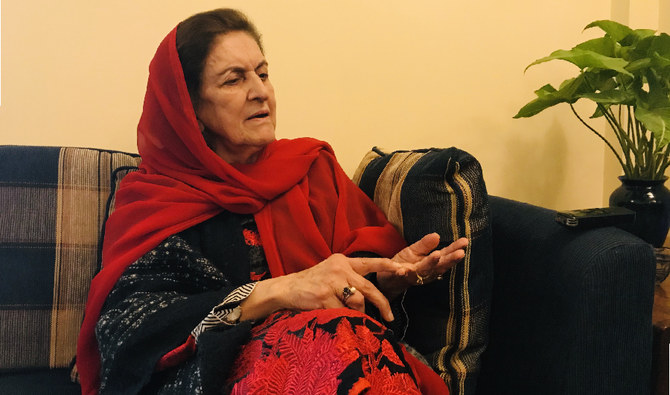
Help came in the form of a local doctor who referred Bibi to Peshawar’s Dost Welfare Foundation (DWF) where she met Dr. Parveen Azam Khan who runs the rehabilitation facility.
“Bibi was one of our most critical and chronic cases with a long history of heroin addiction. Her story touched a chord, and since she was from an impoverished background with no one to visit her, except her son, our team would give her special attention,” the 81-year-old doctor and a recipient of the 2004 “Tamgha Imtiaz”, the country’s highest civilian award, told Arab News.
What followed was 15 days of rigorous treatment, with constant monitoring and support extended by DWF which treated Bibi free of cost.
It didn’t end there.
“We also provided aftercare and follow-up services for almost 18 months after the completion of treatment. The patients attend Relapse Prevention sessions at the center and are contacted by our staff at least twice a month. The idea is to prevent a relapse,” Dr. Parveen said.
Since being established in 1992 as KP’s first drugs rehabilitation center, DWF has been treating 2,000 people every year, out of which only 25-30 are women.
“This is very unfortunate that despite 22% of drug addicts being women, only 1% opt for rehabilitation. This is due to social taboos and the fear of being ostracized by society,” Dr. Parveen said.
As a recourse, she suggests that the government should step in and devise a strategy to limit the spread of this social evil.
Some measures, she suggests, could include, supporting Civil Society Organizations (CSOs) working for drug demand reduction, and allocating funds for the sustainability of CSOs.
“Drugs make individuals powerless. In this part of the world, women are already vulnerable, and drug-related issues are a social stigma, so people avoid talking about it,” she said, adding that it’s essential to support and rehabilitate women drug addicts “as the foundation of an entire family depends on them.”
Bibi, for her part, says the treatment has offered her a new lease of life.
“For years, I kept my addiction a secret, hiding it from my family members for the fear that it might destroy the lives of my children,” she said.
Since getting treated, however, Bibi says her daughter has gotten married, and her son works at a factory to support the family.
The past, however, continues to haunt her.
“I hope I never go back to using drugs. Today, I’m finally free. It seems as if a nightmare has ended.”


