

Dubai property group Limitless seeks advisers for restructuring

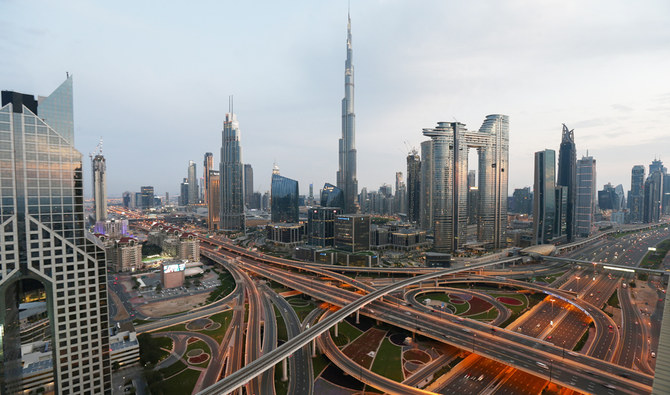
Aerial view of the Sheikh Zayed Road, following the outbreak of coronavirus disease (COVID-19), in in Dubai, United Arab Emirates, March 26, 2020. (REUTERS)
Short Url
Updated 30 March 2020
Follow

Dubai property group Limitless seeks advisers for restructuring

  • S&P Global Ratings said the virus outbreak had exacerbated the supply-demand imbalance in Dubai’s real estate market, where the credit rating agency estimates real estate prices are “approaching levels seen at the bottom of the last cycle in 2010”

DUBAI: Dubai-based property developer Limitless told its creditors last week that it is looking to appoint legal and financial advisers to work on a financial restructuring plan, a company document seen by Reuters showed.
Limitless, along with Nakheel, was among the biggest casualties of Dubai’s property crash and subsequent debt crisis that began in 2009.
The company, formerly owned by state investment vehicle Dubai World, was one of a number of entities in Dubai that were forced to restructure their debts.
“Owing to the liquidity crisis, we are confirming that the company will be unable to pay accrued profit at the end of March 2020,” Limitless said in a letter dated March 23 and sent to Mashreqbank, which works as an agent for a group of the company’s creditors.
A Limitless spokeswoman said: “We have written to our creditors as a first step to finding a solution that will benefit all stakeholders.”
Limitless said in the letter a team from Dubai World was advising the company’s board of directors.
The letter said the company was committed to agreeing “on a restructuring plan for the benefits of the participants and other creditors.”
“To this end, we are in the final stages of engaging legal as well as financial advisers to assist us.”
In 2016, Limitless reached a second restructuring agreement with lenders to pay around $1.2 billion in bank debt in three installments in December 2016, 2017 and 2018, but has only repaid part of it, sources have said.

HIGHLIGHTS

● Limitless, along with Nakheel, was among the biggest casualties of Dubai’s property crash and subsequent debt crisis that began in 2009.

● The company, formerly owned by state investment vehicle Dubai World, was one of a number of entities in Dubai that were forced to restructure their debts.

Dubai — where property prices have been declining for most of the past decade — is bracing for a financial hit as the coronavirus crisis has impacted sectors vital to its economy, such as tourism and construction.
S&P Global Ratings said the virus outbreak had exacerbated the supply-demand imbalance in Dubai’s real estate market, where the credit rating agency estimates real estate prices are “approaching levels seen at the bottom of the last cycle in 2010.”


Gulf emerging as beneficiary amid changing global alliances, says TCW executive

Updated 23 January 2026
Follow

Gulf emerging as beneficiary amid changing global alliances, says TCW executive

DAVOS: As artificial intelligence dominated discussions at this year’s World Economic Forum in Davos, asset managers are exploring how the technology can be deployed at scale without losing the human judgement that underpins investment decisions.

For Jennifer Grancio, global head of distribution at asset management firm TCW, Saudi Arabia’s approach to energy and AI makes it a particularly attractive hub for investors.

“Saudi Arabia has been very forward-leaning in traditional energy,” Grancio said.

“They’ve also invested heavily in grid efficiency and electricity, which positions them to serve the wider region. Combined with AI adoption, it makes them a powerhouse for investment opportunities.”

For TCW, the focus is not on replacing human expertise but on expanding capacity.

“We’re using AI to increase capacity, not to replace investment analysts or people who write commentaries or evaluate securities,” Grancio explained.

The firm continues to rely on deep research, deploying AI selectively across functions such as securitized credit, marketing and investment teams.

TCW’s engagement with AI predates the current wave of enthusiasm and adoption.

“We were actually an early AI investor. In the US, we have the oldest AI fund, launched over eight years ago, focused on both enablers and adopters,” Grancio said.

The dual focus on technology and infrastructure increasingly aligns with developments in the Gulf.

“As an investment manager, we look at both the AI systems being developed and how energy and power infrastructure supports them,” she said, highlighting TCW’s global energy and power strategy, which has consistently outperformed its benchmark.

Geopolitical shifts are also reshaping investment flows to the Gulf.

“Concerns around the US, China or Russia have led global investors to rely more on the Gulf,” Grancio said. “It’s a great time for development and trade there.”

Emerging markets are drawing growing attention from investors.

“In the US, there’s a rotation toward global exposure. Elsewhere, there’s renewed focus on emerging markets and managing through volatility,” she said.

TCW has benefited from this trend, particularly in emerging market debt, with sovereign clients increasing allocations by billions of dollars.

Volatility, Grancio added, can create opportunity. “As a value manager, we do deep research and focus on relative valuation. In fixed income and securitized credit, volatility allows us to increase returns for clients.”

In the Middle East, sovereign wealth funds and pension systems are expanding into private credit and alternative income strategies. Education is key, Grancio said.

“Understanding what’s different about private investments is critical. They offer strong compounding and portfolio diversification.”

Private asset-backed finance is a growing trend in the region. “We’re seeing portfolios shift from public fixed income into private securitized credit, a major growth area.” 

Looking ahead to 2026, Grancio said that shifts will vary by region and investor type. “In the US, the wealth market has moved toward ETFs. We’ve rapidly built out a $6 billion ETF platform to meet demand,” she said.