

S&P cuts Oman rating deeper into junk, trims Bahrain’s outlook

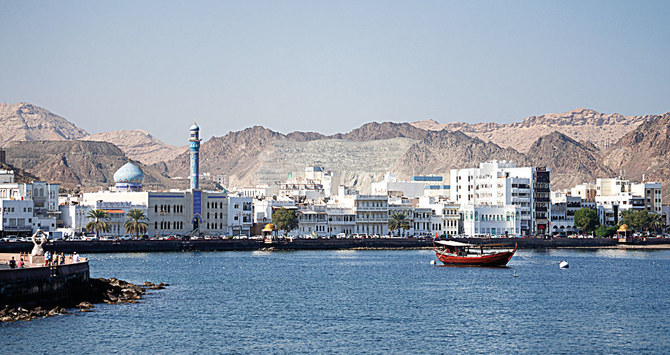
Oman’s long-term foreign and local currency sovereign rating has been hit. (Shutterstock)
Short Url
Updated 29 March 2020
Follow

S&P cuts Oman rating deeper into junk, trims Bahrain’s outlook

  • External challenges, indebtedness and dependence on declining oil revenue cited as reasons for concern

DUBAI: Rating agency S&P has lowered crude producer Oman’s sovereign ratings deeper into junk territory, citing external challenges, and changed the outlook for Bahrain’s ratings to stable from positive due to the country’s dependence on
oil revenue.

The changes came after S&P recently cut its forecast the Brent crude oil benchmark to an average of $30 a barrel in 2020, $50 per barrel in 2021, and $55 a barrel from 2022.

S&P cut Oman’s long-term foreign and local currency sovereign ratings to “BB-” from “BB,” citing higher external risks and indebtedness.

“The sharp drop in oil prices in 2020 will intensify Oman’s fiscal and external pressures, leading to a faster deterioration in the government’s balance sheet, which has considerably weaker buffers than during the 2014-2015 oil price shock,” it said.

The outlook for Oman’s ratings is negative, the rating agency said, reflecting the risk that the government’s medium-term fiscal consolidation plans could be insufficient to stem the rising state debt. It expects the fiscal deficit will average almost 8 percent of GDP in 2021-2023.

FASTFACT

$30

S&P has cut its forecast for the Brent crude oil benchmark to an average of $30 a barrel in 2020.

The large funding needs will be predominantly met through the issuance of foreign-currency debt, with the remainder financed by asset draw downs and domestic debt, it said.

S&P expects Oman’s external debt — adjusted for liquid external assets — will rise to 67 percent of current account receipts in 2023, from about 20 percent in 2018.

The rating agency said that the share of foreign-currency-denominated debt, largely held by non-residents, was high — at above 80 percent of total debt.

“We expect funding costs will rise despite monetary easing in the US, since portfolio flows to emerging markets could dry up and Oman’s macro-fundamentals are under pressure from external developments,” it said.

On Bahrain, the rating agency said its revenue remained dependent on oil, and hence sensitive to energy price shocks, despite efforts to increase non-energy receipts. “Recent revisions to our 2020 price projections for oil imply more elevated current account deficits for Bahrain, raising external vulnerabilities,” it said.

However, the provision of zero-interest loans from neighboring sovereigns — Saudi Arabia, Kuwait and UAE — and the expectation of further support, if needed, provide the government with an important financing buffer. 


Closing Bell: Saudi main index closes in red at 10,947 

Updated 19 February 2026
Follow

Closing Bell: Saudi main index closes in red at 10,947 

RIYADH: Saudi Arabia’s Tadawul All Share Index dipped on Thursday, losing 208.20 points, or 1.87 percent, to close at 10,947.25. 

The total trading turnover of the benchmark index was SR4.80 billion ($1.28 billion), as 14 of the listed stocks advanced, while 253 retreated. 

The MSCI Tadawul Index decreased, down 25.35 points, or 1.69 percent, to close at 1,477.71. 

The Kingdom’s parallel market Nomu lost 217.90 points, or 0.92 percent, to close at 23,404.75. This came as 24 of the listed stocks advanced, while 43 retreated. 

The best-performing stock was Musharaka REIT Fund, with its share price up 2.12 percent to SR4.34. 

Other top performers included Al Hassan Ghazi Ibrahim Shaker Co., which saw its share price rise by 1.18 percent to SR17.20, and Saudi Industrial Export Co., which saw a 0.8 percent increase to SR2.51. 

On the downside, Abdullah Saad Mohammed Abo Moati for Bookstores Co. was among the day’s biggest decliners, with its share price falling 9.3 percent to SR39. 

National Medical Care Co. fell 8.98 percent to SR128.80, while National Co. for Learning and Education declined 6.35 percent to SR116.50. 

On the announcements front, Red Sea International said its subsidiary, the Fundamental Installation for Electric Work Co., has entered into a framework agreement with King Salman International Airport Development Co. 

In a Tadawul statement, the company noted that the agreement establishes the general terms and conditions for the execution of enabling works at the King Salman International Airport project in Riyadh.  

Under the 48-month contract, the scope of work includes the supply, installation, testing, and commissioning of all mechanical, electrical, and plumbing systems.  

Utilizing a re-measurement model, specific work orders will be issued on a call-off basis, with the final contract value to be determined upon the completion and measurement of actual quantities executed.  

The financial impact of this collaboration is expected to begin reflecting on the company’s statements starting in the first quarter of 2026, the statement said. 

The company’s share price reached SR23.05, marking a 2.45 percent decrease on the main market.