



BEIRUT: Lebanon’s confirmed coronavirus disease (COVID-19) tally jumped to 412 on Saturday, prompting one medical expert to warn the country faces its peak infection rate next week.
After the number of victims rose by 21 on the previous day, authorities revealed that eight people have now died from the illness following the death of an 80-year-old patient with underlying health problems at Rafik Hariri University Hospital.
In its daily report, the Ministry of Health said that 398 suspected coronavirus cases have been transferred to the hospital and 995 cases remain in quarantine.
Doctors’ Syndicate chief Sharaf Abu Sharaf told Arab News that he expects Lebanon to reach its peak infection rate next week, warning that “until now, the increasing number of cases has been within our health capabilities, and our hospitals can accommodate them.”
He said that those quarantined at the hospital had shown positive test results, but “most of the cases are mild.”
Abu Sharaf also revealed that doctors have started using the anti-malarial drug chloroquine at university hospitals in Lebanon after studies in China, Europe and the US showed that it helps boost immunity and produce a negative test result.
Lebanon’s Health Ministry has promised to provide 50,000 boxes of the drug, he said.
Abu Sharaf said: “Lebanon started using this drug after we learned from the experiences of other countries fighting the virus, including China and France, while the US has approved it.
“This drug is given alongside other antibiotics and (helps to) return a positive result.”
Doctors have started using the anti-malarial drug chloroquine at university hospitals.
Sharaf Abu Sharaf, Doctors’ Syndicate chief
The head of the Doctors’ Syndicate warned that the drug, which is mainly used to treat malaria, AIDS and other illnesses, could harm the liver, heart and arteries, and should not be prescribed without sufficient reason.
He urged people to commit to home quarantine, and follow the instructions of the Ministry of Health, World Health Organization and the Doctors’ Syndicate.
“Home quarantine is the first cure and helps us avoid the tragedies that other countries have experienced,” he said.
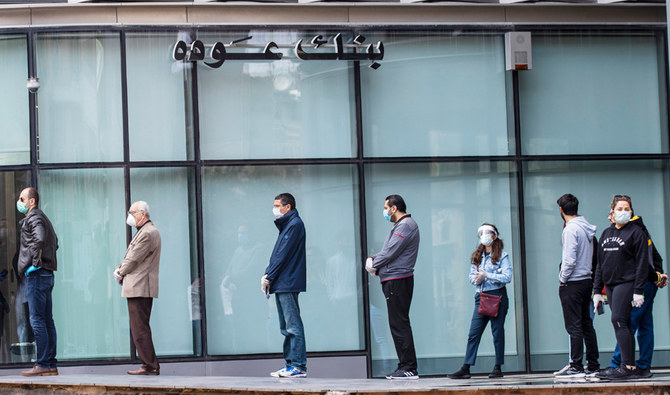
Lebanese troops and security services imposed a curfew between 7 p.m. and 5 a.m. and warned people against joining gatherings “regardless of their reason.”
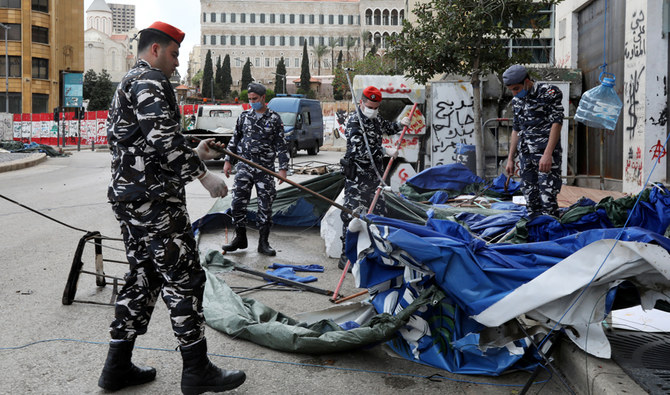
Late on Friday, security forces removed or destroyed protesters’ tents in the squares of central Beirut, sparking criticism from activists on social media.
Activists accused the authorities of trying to “douse the protests” and vowed to resume their movement after the “coronavirus nightmare” is over.
Syrian refugees in Lebanon received text message from the UN High Commissioner for Refugees requesting that they “stay in their homes” and assuring them that it will “cover the treatment of any Syrian who is infected.”
Industry Minister Imad Hoballah said that factories making medicines, food and basic materials can work at full capacity from Monday to help meet the demand for essential consumer goods.
The Doctors’ Syndicate also criticized the spraying of pesticides by municipalities and health authorities in different regions, warning that it could contaminate vegetables and consumer goods.
Dr. Ismail Sukkarieh told Arab News that random spraying of pesticides, including chlorine-based treatments, “exposes the eyes and lungs to harm.”
Spraying might do more harm than good because of the added threat of coronavirus, he said.


