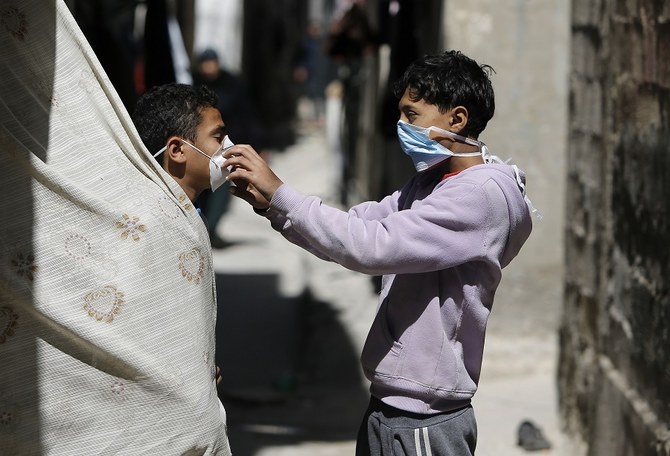
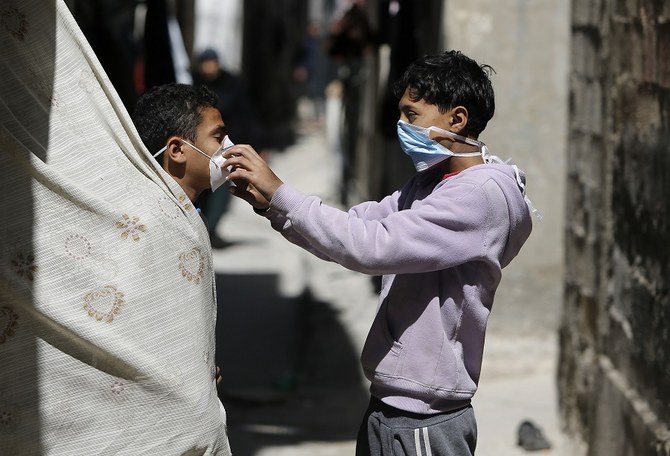
DUBAI: The Egyptian Red Crescent has delivered medical and humanitarian aid to Gaza Strip on Thursday, as it records more cases of COVID-19, local daily Egypt Today reported.
Nine more cases of the new coronavirus have been detected in Gaza on Wednesday, raising toll to 11 infections, according to the health ministry.
The government in Gaza earlier restricted social gatherings to contain the virus, which has already infected over half a million people worldwide.

Egypt sends medical supplies to Gaza in aid against COVID-19
https://arab.news/b8ydv
Egypt sends medical supplies to Gaza in aid against COVID-19
- The government in Gaza earlier restricted social gatherings to contain the virus
GCC states ‘face reliance on Saudi Arabia for food imports’
- With 70 percent of food coming through Strait of Hormuz, analysts warn of inevitable shortages
DUBAI: Some Gulf states may have to rely on overland food deliveries from Saudi Arabia if the US-Israel-Iran war continues to disrupt shipping through the Strait of Hormuz and restrict regional airspace, analysts warned on Thursday.
The region is up to 90 percent dependent on food imports, and price surges and scarcity of some goods are expected.
“With over 70 percent of GCC foodstuffs being imported through the Strait of Hormuz, Gulf states face shortages if the war persists,” said Neil Quilliam of the Chatham House think tank.
“While GCC countries have taken steps to diversify suppliers and ensure sufficient stores to withstand disruption, this can only last several months. At this point, price increases and longer lead times will start to hit the markets.”
Commodities analyst Ishan Bhanu said: “The biggest immediate effect will be due to the blockade of Jebel Ali in Dubai, serving about 50 million people. Qatar, Kuwait, Bahrain and Iraq effectively become landlocked and will depend on overland routes through Saudi Arabia.”
Bottlenecks are yet to show and the UAE has said its strategic reserves of vital goods cover four to six months of needs. It urged residents to report unjustified price increases through a dedicated hotline.
Supermarket staff throughout the Gulf said shelves remain largely stocked, though suppliers are taking longer to replenish certain products. Iran’s strikes on the Gulf since Saturday prompted panic buying in supermarkets, a dry run for what could come.
“Perception of risk matters, and even if stocks are sufficient now, public runs on supermarkets can spook the public,” Quilliam said.