

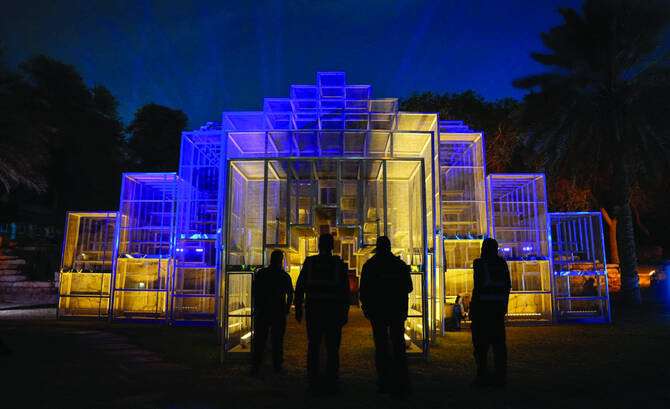

MAKKAH: Saudi Arabia’s Visual Arts Commission has released a two-part guide to public art — a full edition and a condensed version — outlining how artworks in streets, squares and public spaces should be planned, commissioned and maintained.
The full edition combines theory and practical guidance for government entities, practitioners and the public, covering every stage of a public art project from planning and implementation to long-term management.
The commission said that the guide aimed to raise awareness of public art, standardize terminology, and better align artistic, urban and cultural planning.
Officials said that the guide supported efforts to strengthen the public art sector, enrich the visual environment, improve quality of life, and reinforce the Kingdom’s position as a hub for creativity and contemporary art in line with Saudi Vision 2030.
Both editions are available on the commission’s website as part of efforts to expand access to specialized knowledge, support professional practice and foster the growth of the Kingdom’s visual arts sector.
Faisal Al-Khudaidi, director of the Society for Culture and Arts, described the guide as a turning point, saying public art in the Kingdom was shifting from scattered individual efforts to organized institutional work.
He said that the guide went beyond technical guidance by setting national standards for public art, treating artworks as expressions of local identity rather than decoration. It also protected artists’ rights, preserved cities’ artistic heritage and reinforced art’s role in the Kingdom’s cultural development.
Artist Amal Felemban welcomed the guide as a sign of the sector’s growing maturity, saying that it would help to unify concepts, raise standards, and give artists and commissioning bodies a clearer framework while reflecting the Kingdom’s cultural identity.
She said that investing in art began with building knowledge and professional standards, adding that public artworks shaped a city’s identity, strengthened people’s connection to place, and left a lasting cultural legacy.
Felemban said that she hoped the guide would encourage site-specific works and create more opportunities for Saudi artists to shape the Kingdom’s visual landscape.
She also praised the commission for combining international best practices with local identity, saying that she expected the guide to be the first of several initiatives supporting quality of life, sustainable development and the role of Saudi artists.


