Pakistan to 'quarantine,' disinfect banknotes collected from hospitals

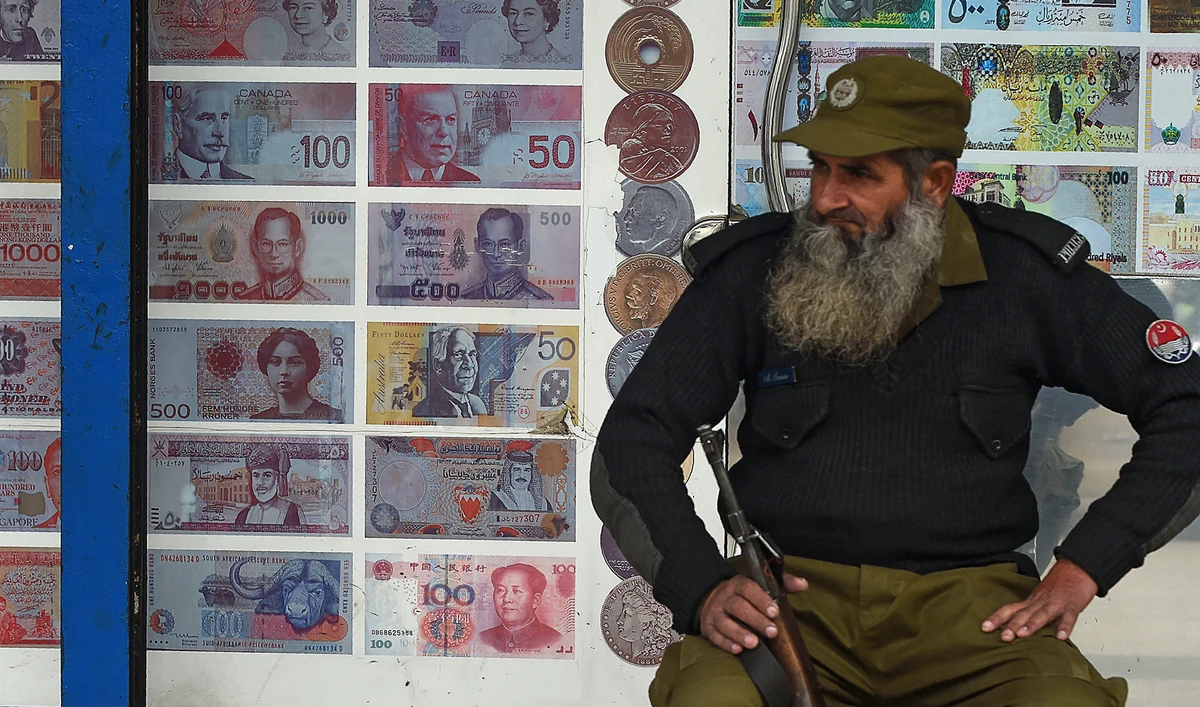
In this file photo, a Pakistani security guard sits outside the currency exchange shop in Lahore on Jan. 3, 2018. (AFP)
Short Url
Updated 24 March 2020
Follow

Pakistan to 'quarantine,' disinfect banknotes collected from hospitals

  • Directive comes amid increased virus cases as national tally exceeded 900 on Tuesday
  • Central bank will supply banks with new bills as disinfection procedures are put in place

KARACHI: Pakistan’s central bank has ordered commercial banks to quarantine paper money received from health facilities, as banknotes may be spreading coronavirus, the State Bank of Pakistan (SBP) announced on Monday.
The directive comes amid an increase in the number of infections recorded in Pakistan, where the tally exceeded 900 on Tuesday.
“Instructions have been provided by the SBP to clean, disinfect, seal and quarantine all cash being collected from hospitals and clinics and to block circulation of such cash in the market,” the central bank said in a statement following a video meeting of commercial bank presidents with SBP governor Dr. Reza Baqir.
Banks need to send daily reports on cash collection from health facilities for SBP to be able to supply sufficient amounts of notes, while the collected money will be under a 15-day quarantine.
As disinfection procedures have yet to be in place, for the time being the SBP will be supplying banks with new bills.
“The cash that banks would receive from hospitals would be quarantined and disinfected. We are considering the ways to disinfect such notes and that would be done through medically approved procedures. For now, we are trying to provide new notes,” SBP spokesman Abid Qamar told Arab News on Tuesday.
As banknotes can carry bacteria or viruses from persons who have touched them, hand washing is necessary after handling money.
In Pakistan, however, it is a common habit that people lick their fingers while counting bills.
“This way of cash counting is very dangerous,” said Dr. Qaiser Sajjad, secretary general of Pakistan Medical Association (PMA) “For public awareness, it is advised that if they count banknotes, they should immediately sanitize their hands,” he told Arab News.
The central bank’s decision may reduce some of the dangers posed by the handling of money and shopkeepers say the move timely in the face of the current coronavirus outbreak.
“Though we are exercising caution while handling cash, still it remains a danger, because we don’t know which note is infected,” said Ahmed Hussain, a grocery seller.
Although the central bank has been encouraging electronic payments, cash remains dominant in Pakistan.
“We receive cash as low as Rs12 (for bread) and deal with dozens of people everyday,” bread seller Wali Muhammad said. “We know we are in danger but we can’t afford machines (for non-cash payment).”

Pakistan, global crypto exchange discuss modernizing digital payments, creating job prospects 

Updated 05 December 2025
Follow

Pakistan, global crypto exchange discuss modernizing digital payments, creating job prospects 

  • Pakistani officials, Binance team discuss coordination between Islamabad, local banks and global exchanges
  • Pakistan has attempted to tap into growing crypto market to curb illicit transactions, improve oversight

ISLAMABAD: Pakistan’s finance officials and the team of a global cryptocurrency exchange on Friday held discussions aimed at modernizing the country’s digital payments system and building local talent pipelines to meet rising demand for blockchain and Web3 skills, the finance ministry said.

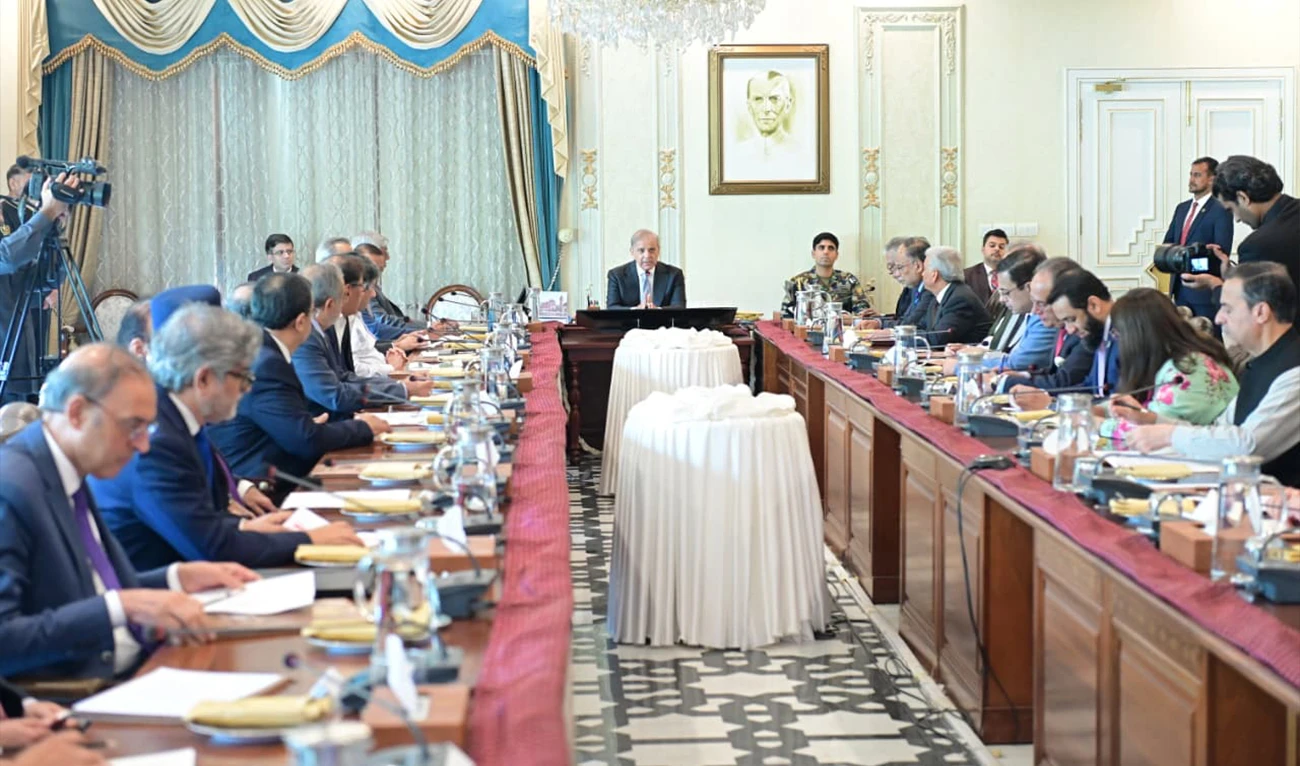
The development took place during a high-level meeting between Finance Minister Muhammad Aurangzeb, Pakistan Virtual Assets Regulatory Authority (PVARA) Chairman Bilal bin Saqib, domestic bank presidents and a Binance team led by Global CEO Richard Teng. The meeting was held to advance work on Pakistan’s National Digital Asset Framework, a regulatory setup to govern Pakistan’s digital assets.

Pakistan has been moving to regulate its fast-growing crypto and digital assets market by bringing virtual asset service providers (VASPs) under a formal licensing regime. Officials say the push is aimed at curbing illicit transactions, improving oversight, and encouraging innovation in blockchain-based financial services.

“Participants reviewed opportunities to modernize Pakistan’s digital payments landscape, noting that blockchain-based systems could significantly reduce costs from the country’s $38 billion annual remittance flows,” the finance ministry said in a statement. 

“Discussions also emphasized building local talent pipelines to meet rising global demand for blockchain and Web3 skills, creating high-value employment prospects for Pakistani youth.”

Blockchain is a type of digital database that is shared, transparent and tamper-resistant. Instead of being stored on one computer, the data is kept on a distributed network of computers, making it very hard to alter or hack.

Web3 refers to the next generation of the Internet built using blockchain, focusing on giving users more control over their data, identity and digital assets rather than big tech companies controlling it.

Participants of the meeting also discussed sovereign debt tokenization, which is the process of converting a country’s debt such as government bonds, into digital tokens on a blockchain, the ministry said. 

Aurangzeb called for close coordination between the government, domestic banks and global exchanges to modernize Pakistan’s payment landscape.

Participants of the meeting also discussed considering a “time-bound amnesty” to encourage users to move assets onto regulated platforms, stressing the need for stronger verifications and a risk-mitigation system.

Pakistan has attempted in recent months to tap into the country’s growing crypto market, crack down on money laundering and terror financing, and promote responsible innovation — a move analysts say could bring an estimated $25 billion in virtual assets into the tax net.

In September, Islamabad invited international crypto exchanges and other VASPs to apply for licenses to operate in the country, a step aimed at formalizing and regulating its fast-growing digital market.