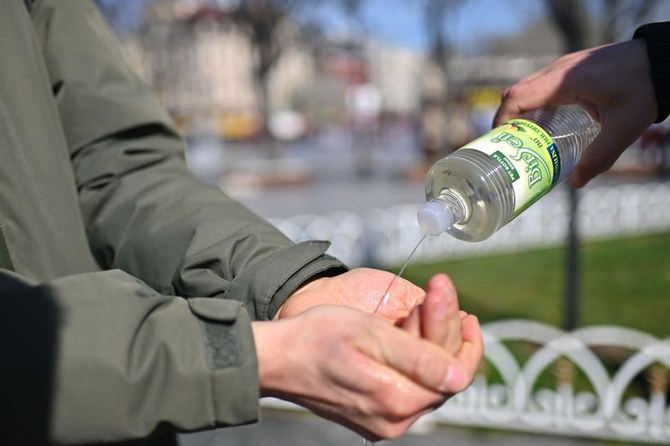
ISTANBUL: In Turkey, sprinkling hands with cologne has long been a ritual for a visit to the barber, a meal at a restaurant or even a trip on the bus.
It is seen as a symbol of hospitality, as well as an aid to hygiene, in a country that sets great store by both.
Now Turkish cologne — found in almost every household, either in the fridge or a closet — is seeing unprecedented demand as a weapon in the fight against the novel coronavirus.
Many Turks believe cologne, which has a high alcohol content, is effective in keeping hands and faces clean and thus warding off the risk of COVID-19.
Long queues could be seen outside cologne shops in Istanbul’s busy spice market, in the historic Eminonu district, in early March before Turkey announced its first confirmed case.
Now shops and pharmacies have put up signs reading “cologne sold out.”
People are commonly seen sprinkling cologne into their hands in the middle of the street, while taxi drivers offer doses to their clients.
An association in the northwestern city of Izmit is delivering free cologne as well as bread to the elderly, local media reported.
Eyup Sabri Tuncer, a leading traditional cologne maker, said it has received tens of thousands of orders in recent weeks.
“In order for a healthy delivery to the customers... we have temporarily suspended further online orders,” company official Atilla Ariman told AFP.
Bottles of cologne have flown off the shelves since Health Minister Fahrettin Koca urged Turks to use the liquid as an alternative hand sanitiser against the virus.
One user, Ilyas Gocdu, said he is using cologne three times more than before. “I believe it is more effective against germs as it contains alcohol,” he said.
Demand is so great that a black market has developed for both cologne and other hand sanitisers, with Istanbul police raiding a manufacturing plant last week to confiscate products made “unhealthily.”
Announcing his government’s economic stimulus package last week, President Recep Tayyip Erdogan said face masks as well as cologne would be handed out free to people aged 65 and over.
Turkey has so far recorded 37 coronavirus-related deaths and 1,529 cases.
Is the belief that cologne is effective against coronavirus grounded in science?
Professor Bulent Ertugrul, board member of the Turkish Society of Clinical Microbiology and Infectious Diseases, said alcohol can destroy the outer membrane of the coronavirus.
“As alcohol is a good solvent, it destroys this lipid envelope,” he told AFP.
Ertugrul said the best protection against the new coronavirus is washing one’s hands after contact with the environment.
But he added: “If soap and water are not available, using a hand sanitiser that is at least 60 percent alcohol can help.”
Cologne fits the bill, he said.
“As we know, cologne contains at least 70 percent alcohol,” he said.
“That’s why it is a good hand sanitiser against COVID-19.”


![]()

Turks fight coronavirus with secret weapon: eau de cologne
Short Url
https://arab.news/6p888
Turks fight coronavirus with secret weapon: eau de cologne
- Now Turkish cologne is seeing unprecedented demand as a weapon in the fight against the novel coronavirus
- Many Turks believe cologne, which has a high alcohol content, is effective in keeping hands and faces clean


Latest updates





Recommended


© 2026 SAUDI RESEARCH & PUBLISHING COMPANY, All Rights Reserved And subject to Terms of Use Agreement.