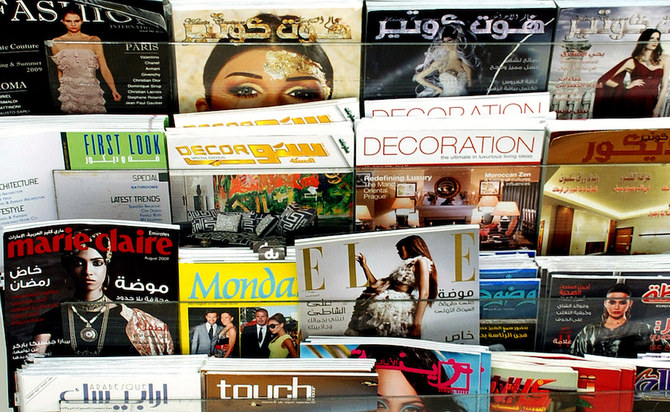
UAE National Media Council halts distribution of print publications

The ban does not apply to awareness publications approved by the health authorities. (File/AFP)
Short Url
Updated 21 March 2020
Follow

UAE National Media Council halts distribution of print publications

  • Regular subscribers of publications and large outlets in shopping centers are exempted from this
  • The ban does not apply to awareness publications approved by the health authorities

ABU DHABI: The UAE National Media Council has decided to temporarily halt the distribution of all print newspapers, magazines and marketing material from March 24, 2020 as part of preventive measures to contain the spread of the coronavirus, UAE state-news agency WAM reported.

Regular subscribers of publications and large outlets in shopping centers are exempted from this, provided all the health and safety precautions are adhered to.

The decision includes banning the distribution of printed materials, including advertisements, in residential complexes, restaurants, hotels, health centres and clinics, waiting halls in public sector and private sector services centres and other places where several people are likely to use the same printed materials. The ban does not apply to awareness publications approved by the health authorities.


Google launches AI music model in English, Arabic

Updated 8 sec ago
Follow

Google launches AI music model in English, Arabic

  • Lyria 3 lets users generate 30-second audio tracks via Gemini

DUBAI: Google has launched Lyria 3, a generative AI music model currently in final testing, that can be used via the Gemini website and app to create customized audio tracks.

Users can provide text prompts such as “an upbeat, modern Arabic fusion track for Ramadan” or “a massive, anthemic rock song with an emotive male singer.”

They can add images to their prompts and ask the model to generate a track that reflects the ideas within the pictures. They can also add lyrics or ask the model to generate them.

Lyria 3 then produces a 30-second track along with cover art generated by Google’s artificial intelligence image generator and editor, Nano Banana.

Google said the aim was not to create a musical masterpiece or for copying existing artists but to let users express themselves in unique ways. However, if a prompt specifies a particular artist, the model can draw inspiration their style while still creating an original track.

Lyria was launched in 2023 and is the company’s most advanced music generation model. SynthID, Google’s tool to watermark and identify AI-generated content, is embedded in all tracks it creates.

Users can also upload a file to check whether it was generated using Google AI. Gemini will examine it for SynthID and provide a response based on its analysis.

Lyria 3 is available in Arabic, English, Spanish, French, Hindi, Japanese, Korean and Portuguese, with more languages expected in the future. It will be available on the mobile app in the coming days.