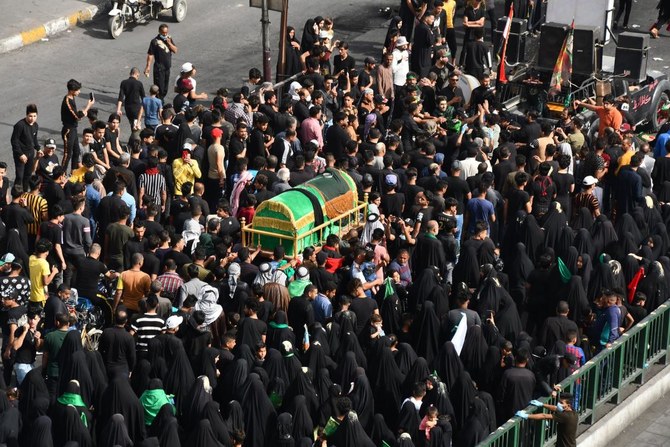
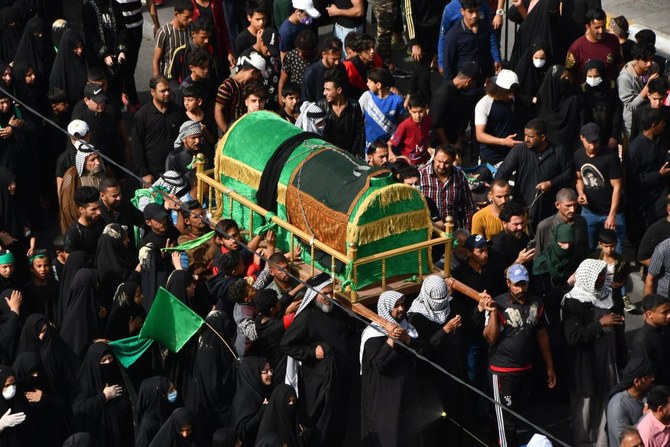
BAGHDAD: Tens of thousands of Iraqi Shiites turned out to commemorate a revered imam on Saturday, defying curfews imposed to stem the spread of the coronavirus.
On foot, they streamed to the golden-domed mausoleum of Imam Al-Kadhim in Baghdad, where authorities kept an outer gate open to allow pilgrims into the surrounding courtyard.
The inner shrine remained closed despite some pilgrims pressing authorities to let them in, a shrine official told AFP.
“There are many fewer pilgrims than in previous years,” the official said, asking not to be identified.
“For the first time, there are no foreign pilgrims — everyone comes from Iraqi provinces.”
The anniversary typically draws millions of devout followers from around the world who visit and kiss the shrine housing the remains of Musa Al-Kadhim, who died in 799 in the custody of Abbasid caliph Harun Al-Rashid.
Many come from Iran, which is now battling one of the world’s deadliest coronavirus outbreaks.
Iraq banned travel to and from Iran last month for fear of a potential spillover.
Last week, it expanded the measures into a total flight ban until March 24 and shut shrines across the country.
The country’s top Shiite cleric Grand Ayatollah Ali Sistani has urged Iraqis not to gather in large numbers for prayers, where the risk of contamination could be high.
On Friday, his representative issued another rare statement urging Muslims to abide by medical advice on social distancing, but did not specifically tell pilgrims to stay home.
Authorities have struggled to enforce lockdowns announced in more than half of Iraq’s 18 provinces, as well as a ban on travel between provinces.
In the southern city of Nasiriyah, thousands of pilgrims packed onto a bridge with a mock coffin to honor the fallen Imam as they could not make it to Baghdad.
Influential cleric Moqtada Al-Sadr called on his followers to take part in the pilgrimage to the Imam Al-Kadhim mosque despite federal authorities urging otherwise.
The Iraqi health ministry has documented 208 COVID-19 cases and 17 deaths, but many expect the real number is much higher as only some 2,000 people have been tested in a country of 40 million.
A fully fledged outbreak would be devastating for the country, where years of conflict and underinvestment have ravaged the health care system.


![]()
![]()
![]()

Iraq Shiites defy coronavirus curfews to commemorate revered imam

Short Url
https://arab.news/ckenm
Iraq Shiites defy coronavirus curfews to commemorate revered imam
- The anniversary typically draws millions of devout followers from around the world who visit and kiss the shrine housing the remains of Musa Al-Kadhim
- Iraq banned travel to and from Iran last month over coronavirus fears


Latest updates


© 2026 SAUDI RESEARCH & PUBLISHING COMPANY, All Rights Reserved And subject to Terms of Use Agreement.