UAE sends supplies to aid Iran in coronavirus fight

1 / 3
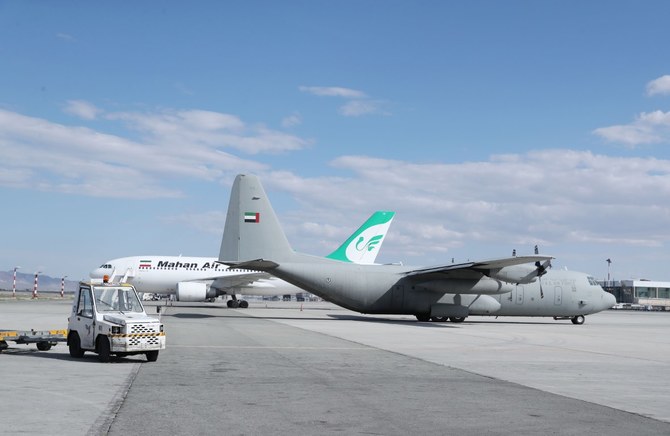
The UAE sent over 32 tonnes of supplies to Iran. (WAM)
2 / 3
The planes took off from Abu Dhabi. (WAM)
3 / 3
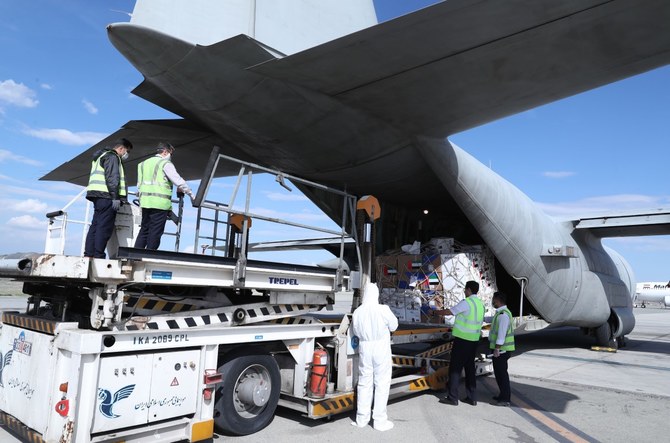
This is the second batch of aid UAE sends to Iran. (WAM)
Short Url
Updated 17 March 2020
Follow

UAE sends supplies to aid Iran in coronavirus fight

  • The UAE has also provided medical supplies to Wuhan in China at the start of the coronavirus outbreak
  • They also earlier collaborated with WHO to send supplies and experts to Iran

DUBAI: The United Arab Emirates sent two aid planes with over 32 metric tons of medical supplies to fight COVID-19 to Iran, state news agency WAM reported on Monday.

The second batch of humanitarian relief planes took off from Abu Dhabi.

“The UAE’s efforts in carrying out a second medical aid flight to Iran are consistent with our country’s founding humanitarian principles, which guide our belief that providing life-saving assistance to those experiencing distress is essential to serving the common good,” Minister of State for International Cooperation Reem bint Ibrahim Al-Hashemy said.

The first aid delivery to Iran was made on March 3 in collaboration with the World Health Organization (WHO), which involved 7.5 tonnes of medical supplies and five WHO experts.

The UAE has also provided medical supplies to Wuhan in China at the start of the coronavirus outbreak, and to Afghanistan.


Algeria inaugurates strategic railway to giant Sahara mine

President Tebboune attended an inauguration ceremony in Bechar. (AFP file photo)
Updated 02 February 2026
Follow

Algeria inaugurates strategic railway to giant Sahara mine

  • The mine is expected to produce 4 million tons per year during the initial phase, with production projected to triple to 12 million tons per year by 2030
  • The project is financed by the Algerian state and partly built by a Chinese consortium

ALGEIRS: Algerian President Abdelmadjid Tebboune on Sunday inaugurated a nearly 1,000-kilometer (621-mile) desert railway to transport iron ore from a giant mine, a project he called one of the biggest in the country’s history.
The line will bring iron ore from the Gara Djebilet deposit in the south to the city of Bechar located 950 kilometers north, to be taken to a steel production plant near Oran further north.
The project is financed by the Algerian state and partly built by a Chinese consortium.
During the inauguration, Tebboune described it as “one of the largest strategic projects in the history of independent Algeria.”
This project aims to increase Algeria’s iron ore extraction capacity, as the country aspires to become one of Africa’s leading steel producers.
The iron ore deposit is also seen as a key driver of Algeria’s economic diversification as it seeks to reduce its reliance on hydrocarbons, according to experts.
President Tebboune attended an inauguration ceremony in Bechar, welcoming the first passenger train from Tindouf in southern Algeria and sending toward the north a first charge of iron ore, according to footage broadcast on national television.
The mine is expected to produce 4 million tons per year during the initial phase, with production projected to triple to 12 million tons per year by 2030, according to estimates by the state-owned Feraal Group, which manages the site.
It is then expected to reach 50 million tons per year in the long term, it said.
The start of operations at the mine will allow Algeria to drastically reduce its iron ore imports and save $1.2 billion per year, according to Algerian media.