
BEIRUT: Lebanese President Michel Aoun addressed the nation in a televised speech, in which he called on people to stay at home.
He said: “This the hour of national solidarity. Keep working from your homes. Life doesn’t stop and should not stop.”
He saluted medical staff and wished the sick a speedy recovery. He said that the virus did not distinguish between political allegiances: “Our national unity remains our source of strength and we will overcome the epidemic.”
At midnight on Sunday, Lebanon closed its borders with Syria in accordance with a government decree.
“The decree excluded fruit and vegetable trucks transporting agricultural products to Arab countries through Syria,” Ibrahim Tarshishi, head of the Bekaa Farmers Association, said. Such a closure of border crossings between Lebanon and Syria has not occurred since the 1970s.
The decision was taken as the Lebanese authorities announced a new phase in its fight against coronavirus by declaring a national emergency. The number of confirmed cases was 99.
A complete lockdown was announced for 15 days, excluding bakeries, pharmacies, food stores and health institutions.
It does not require a total curfew, but rather a reduced movement of people.
The Ministry of Health, in its daily report, called on “the Lebanese people to abide by the strict measures adopted by the authorities, particularly the mandatory home quarantine and the restrictions on movement, except when absolutely necessary.”
HIGHLIGHTS
• Keep working from your homes. Life doesn’t stop and should not stop, says President Michel Aoun.
• A complete lockdown was announced for 15 days, excluding bakeries, pharmacies, food stores and health institutions.
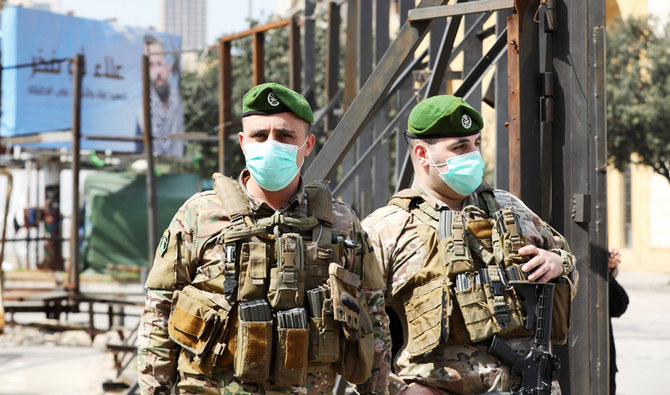
On Sunday, all the municipalities across the country were mobilized to reinforce a total lockdown and organize the entry of shoppers to food stores, limiting the number of people allowed into shops at the same time, while also following disinfection and prevention measures.
The presidential palace held a Higher Defense Council meeting and a Cabinet session, which was attended by the heads of the Lebanese Order of Physicians, the Order of Nurses in Lebanon and the Red Cross.
The populace was called upon to adhere to the home quarantine to limit the number of cases, which is expected to increase in the next few days, according to the Ministry of Health.
Churches canceled Sunday prayers, while Dar Al-Fatwa, Lebanon’s Sunni authority, decided to cancel Friday prayers for the next two weeks.
There are dozens of illegal crossings along the Lebanese-Syrian borders, which are used to smuggle goods and people, in addition to the military ones used by Hezbollah. Most of those crossings are located in mountainous areas.
“Hezbollah took a city in the Central Bekaa region as a mandatory isolation center for its members suspected of carrying the coronavirus after traveling between Lebanon, Syria and Iran,” a security source in the Bekaa told Arab News.
Such a closure of border crossings between Lebanon and Syria has not occurred since the 1970s.