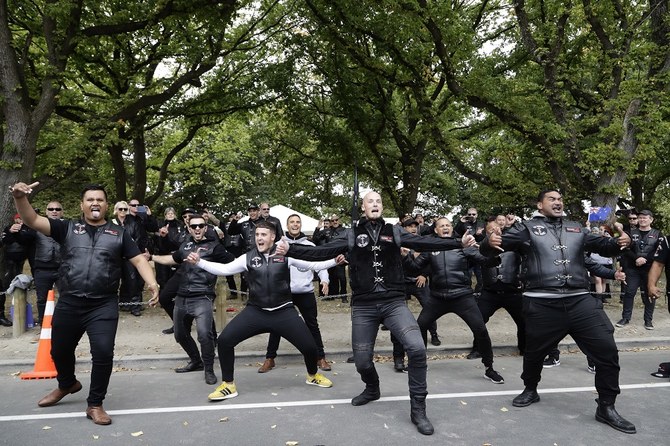


Sunday dawned here with the kind of picturesque colors Christchurch was hoping to show to an interconnected world through its memorial to the victims of the attacks on two mosques here a year ago on March 15.
The people of Christchurch love their gardens — there are 7,500 acres of them dotted in and around their city, which would have offered a grand backdrop to an event that had been intended to touch thousands of attendees and millions more online.
Hagley Park was the original outdoor setting (the venue was later changed to Horncastle Arena) for a service marking a year since 51 Muslims were killed during worship. It is one of the centerpieces of the self-styled Garden City, as a stroll around its rolling greensward — like other parts of the city, distinctly quiet because of coronavirus fears — confirmed on Sunday.
The oaks and elms were still there, however, just as in the springtime there’s a tidal wave of daffodils, and azaleas seemingly without end, along with oodles of colorful roses, the pilgrim flower introduced by the English in the 19th century when the new land could hardly have been more far-flung — as distant from Manchester or Makkah as one can almost possibly go.
On Sunday it was to provide a natural platform for an event involving singers, cultural groups, politicians, school children and members of the Muslim community remembering the carnage visited upon the Al-Noor and Linwood mosques.
The National Memorial Service, along with other events like it elsewhere in New Zealand, was designed to send out a more hopeful message about the country in which the atrocity occurred. Or that was the plan until fears over the new coronavirus intervened.
Prime Minister Jacinda Ardern said she was “very saddened” to have to cancel the service for fear of possible contagion but felt that “in remembering such a terrible tragedy we shouldn’t create the risk of further harm being done.” The country has eight confirmed COVID-19 cases.
Similar events elsewhere in the country were also canceled, including a multi-faith symposium hosted by a group from the UAE. However, this did not stop many well-wishers from delivering their own informal tributes. In Wellington, for instance, 51 seats were cloaked in black as a tribute at a football match in Sky Stadium between Wellington Phoenix and Melbourne Victory.
‘We really feel we want to move on and, in a sense, forget’
In Christchurch, members of the New Zealand Islamic Information Center handed out copies of the Qur’an at Eastgate Shopping Center, while messages and bunches of flowers were delivered to the scenes of the killings. Among the items outside the Al-Noor mosque were signs reading: “We may be small, but we are strong” and “We love you!”
Brenton Tarrant, an Australian national, currently faces 92 charges in relation to the attacks. Ardern has vowed she will never publicly utter the accused man’s name, but she had intended to speak about plenty else at the Christchurch service.
In the wake of the attacks the international stature of the relatively youthful leader — she is still not yet 40 — rose on the back of her empathetic handling of the crisis that changed her even as it did the wider culture around her.
She is credited with moving swiftly to tighten lax gun ownership laws. Almost 7,000 firearms have since been removed and 1.2 million owners paid in compensation in the buyback scheme.
“A year on,” Ardern told reporters last week, “I believe New Zealand has fundamentally changed.”
For Naser Tamimi, a Palestinian who has lived in New Zealand for the past 10 years, the official marking of the anniversary was as much to do with the wider country assessing such shifts as it was a specific balm to local Muslims.
Along with others in the nearby city of Dunedin, where he studies business at the University of Otago, Tamimi had been asked if he intended being a part of the Christchurch activities.
“We said no, we wouldn’t really be doing anything,” he told Arab News. “We really feel we want to move on and, in a sense, forget, even as we still pray for those affected every day. Which we don’t need an anniversary date to do.”
What’s more, he said, survivors’ families he had spoken with, including a friend who was injured in the attack, “wanted the same.” Dua’a (prayer) is much bigger than one-off events.
This was not to diminish the day’s wider significance for “the new New Zealand,” Tamimi added in a sentiment echoed on Sunday by a spokesman for the Al-Noor mosque.
“We’re trying to move forward, we’re saying how can we move forward,” Tony Green told the state broadcaster RNZ.
“We’re saying what can you learn from terrible things. How can you go forward with that and speak to that — the crucial thing for us is healing, and a community can never fully heal if they are seen as an ‘other’.”
Paul Spoonley, a sociologist at the country’s Massey University who specializes in extremism, recently assessed up to 70 groups and somewhere between 150 and 300 potentially violent, hardcore right-wing activists in New Zealand.
No doubt those numbers will be scrutinized again in another year’s time. But as Tamimi was careful to stress, however they are assessed, and whether or not other events are eventually rescheduled in a virus-free future, one emotional fact remained today: “This is home.”
(Additional reporting from wire services)