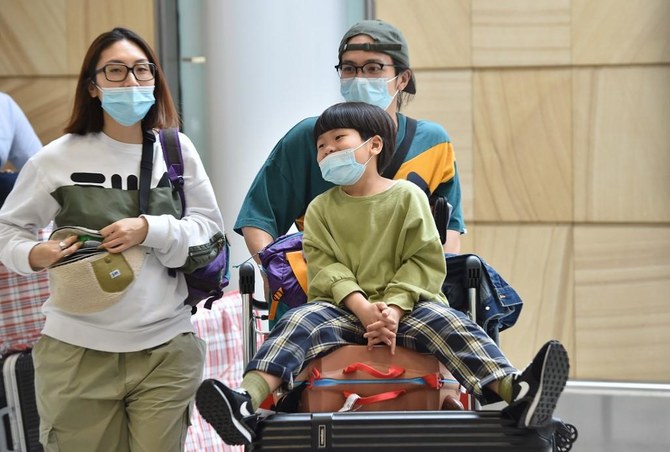
Australia, Singapore further restrict travel as coronavirus spreads

Australia’s premier on Friday warned citizens the coronavirus pandemic is now so widespread that they should reconsider all foreign travel. (AFP)
Short Url
Updated 13 March 2020
Follow

Australia, Singapore further restrict travel as coronavirus spreads

  • Australian citizens should reconsider all foreign travel
  • Singapore to deny entry or transit to visitors who have been in Italy, France, Spain or Germany in the last 14 days

SYDNEY/SINGAPORE: Australia and Singapore have further restricted travel movement as the coronavirus continues to spread globally.
Australia’s premier on Friday warned citizens the coronavirus pandemic is now so widespread that they should reconsider all foreign travel, as the government moved to halt events of more than 500 people.
“We now advise all Australians to reconsider your need to travel overseas at this time, regardless of your destination, age or health,” Prime Minister Scott Morrison said, stepping up measures to slow the spread of the disease.
Singapore meanwhile will deny from Monday entry or transit to visitors who have been in Italy, France, Spain or Germany in the last 14 days, as part of measures to control the fast-spreading coronavirus, the health ministry said on Friday.
The southeast Asian travel hub, which also advised against non-essential travel to the four countries, will immediately halt docking by cruise ships, it added.
Singapore has a similar ban in place for travelers from Iran, South Korea and China, where the virus first surfaced late last year.


UN rights chief appeals for $400 million as crises mount and funding shrinks

Updated 2 sec ago
Follow

UN rights chief appeals for $400 million as crises mount and funding shrinks

  • The UN office is appealing for $100 million less than last year, after a significant scale back of its work in some areas
  • Volker Turk’s office undertook less than half the number of ⁠human rights monitoring missions compared to 2024
GENEVA: UN human rights chief Volker Turk appealed for $400 million on Thursday to address mounting human rights needs in countries such as Sudan and Myanmar, after donor funding cuts drastically reduced the work of his office and left it in “survival mode.”
The UN office is appealing for $100 million less than last year, after a significant scale back of its work in some areas due to a fall in contributions from countries including the US and Europe.
“We are currently ‌in survival ‌mode, delivering under strain,” Turk told ‌delegates ⁠in a ‌speech in Geneva, urging countries to step up support.
In the last year, Turk’s office raised alarm about human rights violations in Gaza, Sudan, the Democratic Republic of the Congo, Ukraine, and Myanmar, among others.
However, due to slashes in funding, Turk’s office undertook less than half the number of ⁠human rights monitoring missions compared to 2024, and reduced its presence in ‌17 countries, he said. Last year it ‍received $90 million less in ‍funding than it needed, which resulted in 300 job ‍cuts, directly impacting the office’s work, Turk said in December.
“We cannot afford a human rights system in crisis,” he stated.
Turk listed examples of the impacts of cuts, noting the Myanmar program was cut by more than 60 percent in the last year, limiting its ability to gather evidence.
A ⁠UN probe into possible war crimes in the Democratic Republic of the Congo is also struggling to become fully operational due to limited funding, while work to prevent gender-based violence and protect the rights of LGBTIQ+ people globally has been cut up to 75 percent, the office said.
“This means more hate speech and attacks, and fewer laws to stop them,” Turk stated.
The UN human rights office is responsible for investigating rights violations. Its work contributes to ‌UN Security Council deliberations and is widely used by international courts, according to the office.