ISLAMABAD: Pakistan has called on Afghan leaders to unite for the sake of upcoming intra-Afghan peace negotiations, as the neighboring country has been caught up in a political crisis following September’s disputed election.
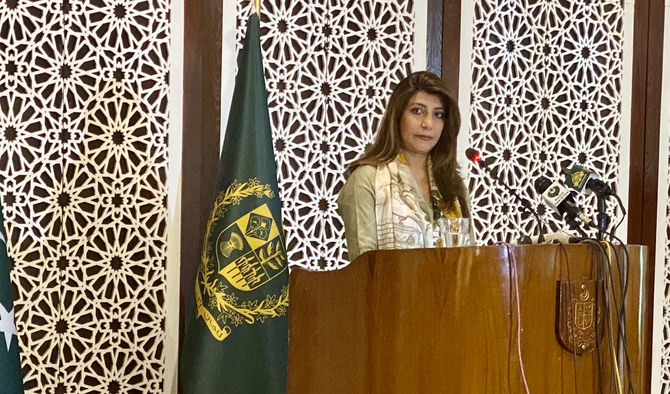
“They should decide that how they have to take forward the efforts to bring peace and stability in Afghanistan. It is an opportunity to take Afghanistan forward from conflict to peace,” Foreign Office spokeswoman Aisha Farooqui said during a weekly press briefing in Islamabad.
The intra-Afghan talks follow a US peace deal with the Afghan Taliban, finally signed on Feb. 29, after nearly a year and half of talks in Qatar.
Farooqui told Arab News that Pakistan recognizes Ashraf Ghani as the president of Afghanistan and Prime Minister Imran Khan has congratulated him on the victory and second term in office.
However, while Ghani’s oath-taking was ongoing on Monday, his political rival Abdullah Abdullah held a separate ceremony, declaring himself the country’s new president.
“There can be only one president. After the announcement of Afghanistan’s Independent Election Commission, Ashraf Ghani is the new president of Afghanistan,” Farooqui said, referring to the electoral commission’s official results, which Abdullah contested.
The two leaders have been sharing power — Ghani as president and Abdullah as Afghanistan’s chief executive — following a deal brokered by Washington after disputed presidential elections in 2014.
“Abdullah Abdullah is a very important Afghan leader. Pakistan wants all Afghan leaders and representatives of all political parties to sit together to take forward the peace deal. US and Taliban deal is a historic step for the peace and stability in Afghanistan,” Farooqui said.
“We believe intra-Afghan dialogue is a crucial step in this journey toward lasting peace and stability in Afghanistan,” she said, adding that Pakistan has played its role in facilitating the deal, but now it is in the hands of Afghans and their representatives to take the process forward.
Afghan affairs expert Rahim Ullah Yousafzai said the situation in Afghanistan is leading toward a unity government like in 2014.
“The efforts are being made by the US to negotiate with both Ashraf Ghani and Abdullah Abdullah to form a unity government like in 2014. All international powers have accepted Ghani’s government and no one recognized Abdullah as president,” Yousafzai told Arab News on the phone from Peshawar.
“There is no indication from Afghan institutions that they will act on Abdullah’s orders as all including police and army are under Ghani’s control. The only way forward to end this political chaos is a unity government and the US would like to end this soon to take forward the peace deal through intra Afghan dialogue,” he said.


![]()

Pakistan calls for dueling Afghan leaders to unite ahead of peace talks
Pakistan calls for dueling Afghan leaders to unite ahead of peace talks
- Says intra-Afghan dialogue is crucial for peace and stability in Afghanistan
- Pakistan recognizes Ashraf Ghani as the president of Afghanistan, FO official says
Latest updates


© 2026 SAUDI RESEARCH & PUBLISHING COMPANY, All Rights Reserved And subject to Terms of Use Agreement.