Oil falls, OPEC backs deeper cuts

1 / 2
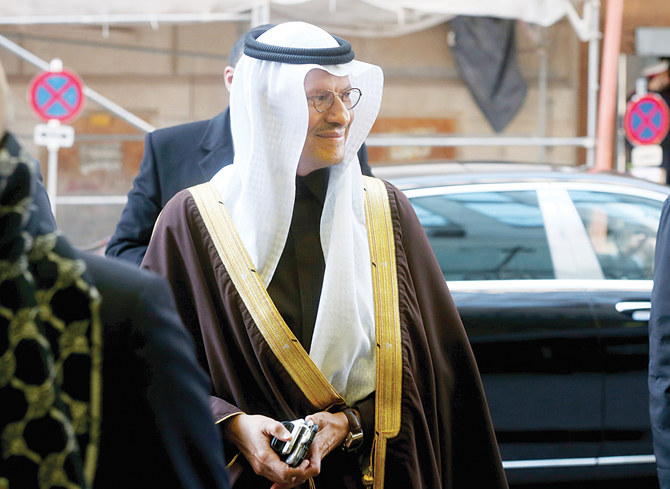
Saudi Energy Minister Prince Abdul Aziz bin Salman arrives on Thursday for a meeting of the Organization of the Petroleum Exporting Countries in Vienna. (AP)
2 / 2
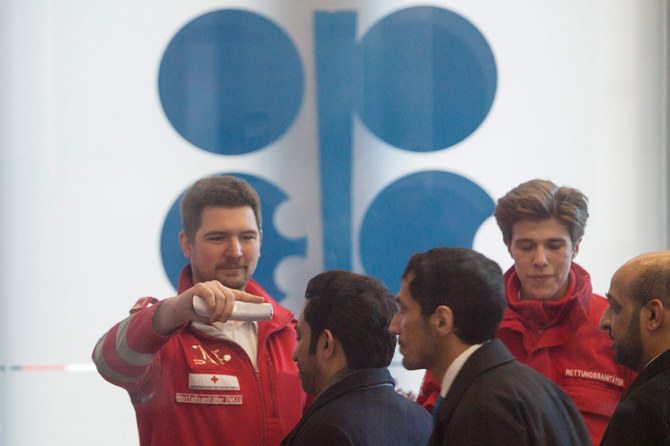
Red Cross medics measure the temperature of participants of the 178th Organization of Petroleum Exporting Countries (OPEC) meeting in Vienna, Austria, on March 5, 2020. (AFP / ALEX HALADA)
Short Url
Updated 06 March 2020
Follow

Oil falls, OPEC backs deeper cuts

  • Major crude producers agree on bigger reduction in output to bolster prices during Vienna meeting

LONDON: Oil fell on Thursday as the coronavirus epidemic showed no signs of slowing, with deaths mounting globally, and while major producers agreed on deeper output cuts to bolster prices, they could not immediately secure Russian support for the decision.

Brent crude fell by 37 cents, or 0.7%, to $50.76 a barrel by 1442 GMT. US West Texas Intermediate (WTI) was down 14 cents, or 0.3 percent, at $46.64.

OPEC agreed to cut oil output by an extra 1.5 million barrels per day (bpd) in the second quarter of 2020 to support prices that have been hit by the coronavirus outbreak, but made its action conditional on Russia and others joining in.


Extension

Russia, however, has so far indicated that it would back an extension rather than deeper production cuts.

“The uncertainty surrounding the outcome of the OPEC+ meeting is weighing on oil prices,” said Commerzbank analyst Carsten Fritsch.

Russian Finance Minister Anton Siluanov said Moscow was prepared for a possible drop in oil prices should OPEC and its allies fail to reach an agreement over cutting supply.

“The key will be the OPEC+ communique that is articulated to the market once the meetings conclude, to gauge whether the wording signals a collective harmonious voice among the group that plausibly helps to rebalance oil markets, or whether it’s merely complex face-saving maths,” Ehsan Khoman, head of MENA research and strategy at MUFG, said. Oil demand has been hit hard by the coronavirus outbreak. Original forecasts for growth in crude demand in 2020 have been slashed, as factory operations, travel and other economic activities around the world have been curtailed by measures aiming to stop the
virus spreading.

Prices were supported by a lower than expected rise in crude oil inventories in the US, alleviating some concern about oversupply in the world’s biggest oil consumer.

US crude stocks rose modestly last week — less than analysts had expected — while US oil exports rose to more than 4 million
bpd for the first time since December, suggesting a rise in overseas demand.


Economic gains

Concern over demand growth remains, however. 

The head of the International Monetary Fund said the global spread of the virus has crushed hopes for stronger economic gains this year.

China’s top gas importer, PetroChina, has declared force majeure on natural gas imports because of the coronavirus outbreak.

The company issued the notice, which allows the suspension of contractual obligations because of exceptional circumstances, to suppliers of piped gas and to at least one liquefied natural gas supplier, though details could not be confirmed immediately.


Saudi minister at Davos urges collaboration on minerals

Global collaboration on minerals essential to ease geopolitical tensions and secure supply, WEF hears. (Supplied)
Updated 51 min 44 sec ago
Follow

Saudi minister at Davos urges collaboration on minerals

  • The reason of the tension of geopolitics is actually the criticality of the minerals

LONDON: Countries need to collaborate on mining and resources to help avoid geopolitical tensions, Saudi Arabia’s minister of industry and mineral resources told the World Economic Forum on Tuesday.

“The reason of the tension of geopolitics is actually the criticality of the minerals, the concentration in different areas of the world,” Bandar Alkhorayef told a panel discussion on the geopolitics of materials.

“The rational thing to do is to collaborate, and that’s what we are doing,” he added. “We are creating a platform of collaboration in Saudi Arabia.”

Bandar Alkhorayef, Saudi Minister of Industry and Mineral Resources 

The Kingdom last week hosted the Future Minerals Forum in Riyadh. Alkhorayef said the platform was launched by the government in 2022 as a contribution to the global community. “It’s very important to have a global movement, and that’s why we launched the Future Minerals Forum,” he said. “It is the most important platform of global mining leaders.”

The Kingdom has made mining one of the key pillars of its economy, rapidly expanding the sector under the Vision 2030 reform program with an eye on diversification. Saudi Arabia has an estimated $2.5 trillion in mineral wealth and the ramping up of extraction comes at a time of intense global competition for resources to drive technological development in areas like AI and renewables.

“We realized that unlocking the value that we have in our natural resources, of the different minerals that we have, will definitely help our economy to grow to diversify,” Alkhorayef said. The Kingdom has worked to reduce the timelines required to set up mines while also protecting local communities, he added. Obtaining mining permits in Saudi Arabia has been reduced to just 30 to 90 days compared to the many years required in other countries, Alkhorayef said.

“We learned very, very early that permitting is a bottleneck in the system,” he added. “We all know, and we have to be very, very frank about this, that mining doesn’t have a good reputation globally.

“We are trying to change this and cutting down the licensing process doesn’t only solve it. You need also to show the communities the impact of the mining on their lives.”

Saudi Arabia’s new mining investment laws have placed great emphasis on the development of society and local communities, along with protecting the environment and incorporating new technologies, Alkhorayef said. “We want to build the future mines; we don’t want to build old mines.”