

KABUL: A deadly blast shattered a period of relative calm in Afghanistan on Monday and the Taliban ordered fighters to resume operations against Afghan forces just two days after signing a deal with Washington aimed at ushering in peace.
No group immediately claimed responsibility for the attack at a football ground in Khost in eastern Afghanistan, where three brothers were killed, officials told AFP.
The blast occurred around the same time the Taliban ordered fighters to recommence attacks against the Afghan army and police forces, apparently ending an official "reduction in violence" that had seen a dramatic drop in bloodshed and given Afghans a welcome taste of peace.
The partial truce between the US, the insurgents, and Afghan forces lasted for the week running up to the signing of the US-Taliban accord in Doha on Saturday and was extended over the weekend.
"The reduction in violence ... has ended now and our operations will continue as normal," Taliban spokesman Zabihullah Mujahid told AFP.
"As per the (US-Taliban) agreement, our mujahideen will not attack foreign forces but our operations will continue against the Kabul administration forces."
The Taliban's military commission circulated instructions for fighters to resume operations, according to a document that an insurgent provided to AFP.
Soon after, an Afghan army commander told AFP that the Taliban were attacking army positions in the northwest province of Badghis. At least one soldier was killed.
President Ashraf Ghani said Sunday he would continue the partial truce at least until talks between Afghan officials and the Taliban kick-off, supposedly on March 10, though he angered the militants by rejecting a prisoner swap component in the deal.
Fawad Aman, a defense ministry spokesman, said Monday the government was "checking to see if (the truce) had ended."
Washington has said it expected the Taliban to maintain the reduction of violence ahead of the launch of intra-Afghan talks, slated to take place in Oslo.
"The reduction in violence was a confidence builder. We're very serious about our obligations and we expect the Taliban will be serious about their obligations," US Forces-Afghanistan commander General Scott Miller said late Monday.
"The United States has been very clear about our expectations — the violence must remain low."
The US has previously said it would defend Afghan partners if they come under attack.
The Doha deal includes a commitment to swap 5,000 Taliban prisoners held by the Afghan government in return for 1,000 captives, but Ghani said the US had no authority to negotiate such an exchange.
"Ghani's stand shows that the Americans hadn't done the groundwork before signing the agreement," a Taliban source in Pakistan said.
Analyst Michael Kugelman from the Wilson Center think-tank said he was not surprised the Taliban were on the offensive again.
"Remember, violence is leverage for the Taliban. It won't easily give it up," he tweeted.
"And now it's exploiting that leverage to strengthen its bargaining position going into the intra-Afghan dialogue, when (and if) it begins."
According to Khost police chief Sayed Ahmad Babazai, the blast at the football match killed three people and wounded 11 others.
"A motorcycle rigged with a bomb exploded," Babazai told AFP.
Abdul Fatah Wakman, president of the Khost Football Federation, told AFP the three people killed were brothers.
Since the deal signing, the Taliban have been publicly claiming "victory" over the US.
Under the terms of the deal, foreign forces will quit Afghanistan within 14 months, subject to Taliban security guarantees and a pledge by the insurgents to hold talks with Kabul.
While supporters of the accord say it marks a critical first step toward peace, many Afghans fear it amounts to little more than a US capitulation that will ultimately see the insurgents return to power.
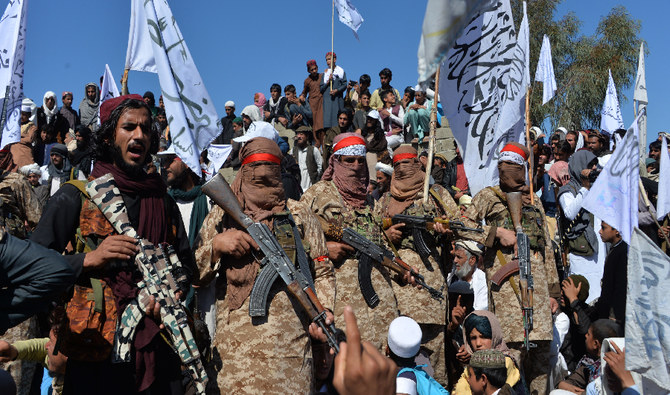
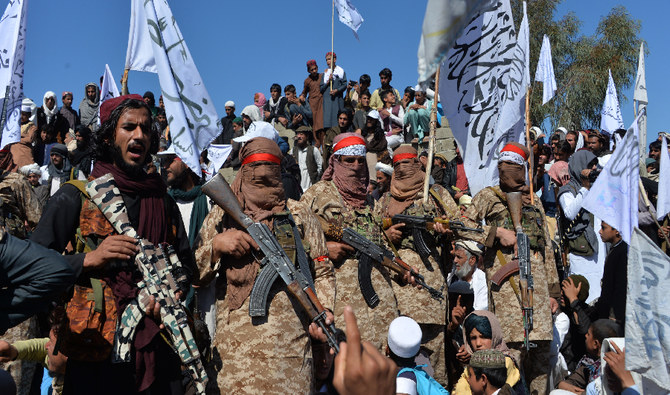
In the eastern province of Laghman, thousands of locals and jubilant Taliban fighters massed on Monday to celebrate what they called their "defeat of the US".
They also vowed to continue operations against the Afghan government until an "Islamic system" of government is restored. The Taliban ruled most of Afghanistan from 1996-2001 under an extreme interpretation of Islam.


