ISLAMABAD: A Ministry of Religious Affairs official said on Tuesday that the government wanted to extend maximum facilities to Hajj pilgrims with the help of Saudi authorities, adding that the application process for Hajj 2020 was now open in the country and people would be able to submit their documents and dues until March 6.
“People can submit their Hajj application forms online,” Imran Siddiqui, a spokesperson for the ministry, told Arab News. “The online process will help ensure transparency in the government Hajj scheme.”
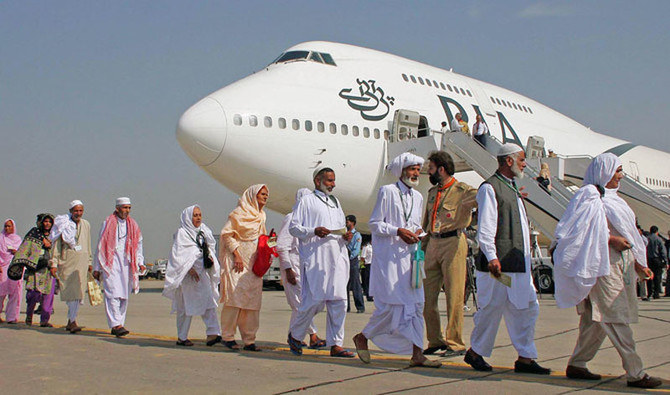
Earlier this month, the federal cabinet approved the Hajj Policy 2020 under which 179,210 pilgrims will to perform Hajj this year. Sixty percent of them will utilize the government Hajj program while 40 percent will perform their pilgrimage with the help of private Hajj operators.
The ministry said the Hajj package through government scheme would cost Rs490,000 ($3,188) to the intending pilgrims from the country’s northern region and Rs480,000 ($3,123) to those traveling from the southern parts.
The State Bank of Pakistan has already directed 13 authorized banks to keep all their designated branches open on Saturday and Sunday to help the intending pilgrims submit their applications and deposit their dues.
With the help of the Saudi authorities, the ministry is endeavoring to provide maximum facilities to the pilgrims before and during the Hajj season.
The spokesperson said the government had requested the Saudi authorities to include at least four Pakistani airports in the “Makkah Route” project to facilitate pilgrims. “We are hopeful to get a positive response from the Saudi Ministry of Interior by next month,” he said.
Pakistan was formally included in the project last year after a maiden visit of Crown Prince Mohammed bin Salman to the country. Under the project, the customs clearance and immigration of the pilgrims was completed at the Islamabad airport before their departure to Saudi Arabia.
Around 20,000 pilgrims availed this facility last year at the Islamabad airport, and Pakistan now wants the Saudi authorities to expand this facility to at least four other major airports of the country, including Karachi, Lahore, Peshawar and Quetta.
The ministry has also signed an agreement with Saudi officials to facilitate the pilgrims during the Hajj in Makkah and Madinah. “A six-member high level committee will be constituted to look after all the issues and complaints of the pilgrims, and resolve them in real time,” Siddiqui said.
He added that the ministry had already signed agreements with the top Saudi companies to provide “the best” accommodation, transportation and food to pilgrims. “We are aiming for zero complaints from pilgrims … and will be providing them all the facilities within our resources,” he said.


![]()

Hajj 2020 applications open, Pakistanis can apply by March 6
Short Url
https://arab.news/5be97
Hajj 2020 applications open, Pakistanis can apply by March 6
- The Ministry of Religious Affairs says online Hajj applications will ensure transparency in the process
- Islamabad requests the Saudi authorities to expand its ‘Makkah Route’ project to four major airports this year
Latest updates


© 2026 SAUDI RESEARCH & PUBLISHING COMPANY, All Rights Reserved And subject to Terms of Use Agreement.