

UN calls for ‘two state’ solution to be respected in Middle East

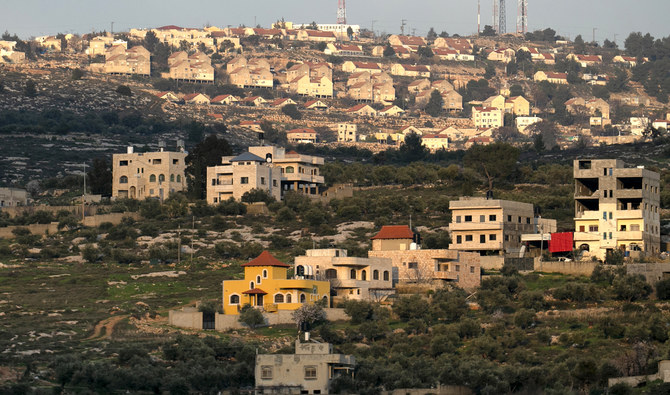
The Trump plan includes an Israeli settlement freeze for four years. (AFP)
Short Url
Updated 25 February 2020
Follow

UN calls for ‘two state’ solution to be respected in Middle East

  • “All parties should refrain from undermining the viability of the two states solution in order to maintain the prospects for a just, comprehensive and lasting peace”

UNITED NATIONS: The UN Security Council made a rare show of unity Monday when it called on all parties to maintain their support for a two state solution to the Israel-Palestinian conflict.
“Council Members reiterated their support for a negotiated two state solution ... where two democratic states, Israel and Palestine, live side by side in peace within secure and recognized borders,” said a statement released by Belgium, which holds the rotating presidency, and supported by all 14 other members, including the United States.

Opinion

This section contains relevant reference points, placed in (Opinion field)


“All parties should refrain from undermining the viability of the two states solution in order to maintain the prospects for a just, comprehensive and lasting peace,” the statement added, an allusion to Israel’s recent threat to build thousands more homes in East Jerusalem, in an area claimed by the Palestinians.
The council also “stressed the need to exert collective efforts to launch credible negotiations on all final status issues” and expressed “grave concern about acts of violence against civilians.”
The statement came after two days of rising tensions in the region after the Palestinian group Islamic Jihad fired rockets at Israel, following the killing of three of its members in the Gaza Strip and Syria.


Israel police to deploy around Al-Aqsa for Ramadan, Palestinians report curbs

Updated 57 min 38 sec ago
Follow

Israel police to deploy around Al-Aqsa for Ramadan, Palestinians report curbs

  • The Al-Aqsa compound is a central symbol of Palestinian identity and also a frequent flashpoint

JERUSALEM: Israeli police said Monday that they would deploy in force around the Al-Aqsa Mosque during the Muslim holy month of Ramadan, which begins this week, as Palestinian officials accused Israel of imposing restrictions at the compound.
Over the course of the month of fasting and prayer, hundreds of thousands of Palestinians traditionally attend prayers at Al-Aqsa — Islam’s third-holiest site, located in east Jerusalem, which Israel captured in 1967 and later annexed.
Arad Braverman, a senior Jerusalem police officer, said forces would be deployed “day and night” across the compound, known to Jews as the Temple Mount, and in the surrounding area.
He said thousands of police would also be on duty for Friday prayers, which draw the largest crowds of Muslim worshippers.
Braverman said police had recommended issuing 10,000 permits for Palestinians from the occupied West Bank, who require special permission to enter Jerusalem.
He did not say whether age limits would apply, adding that the final number of people would be decided by the government.
The Palestinian Jerusalem Governorate said in a separate statement it had been informed that permits would again be restricted to men over 55 and women over 50, mirroring last year’s criteria.
It said Israeli authorities had blocked the Islamic Waqf — the Jordanian?run body administering the site — from carrying out routine preparations, including installing shade structures and setting up temporary medical clinics.
A Waqf source confirmed the restrictions and said 33 of its employees had been barred from entering the compound in the week before Ramadan.
The Al-Aqsa compound is a central symbol of Palestinian identity and also a frequent flashpoint.
Under long?standing arrangements, Jews may visit the compound — which they revere as the site of their second temple, destroyed by the Romans in 70 AD — but they are not permitted to pray there.
Israel says it is committed to maintaining this status quo, though Palestinians fear it is being eroded.
Braverman reiterated Monday that no changes were planned.
In recent years, a growing number of Jewish ultranationalists have challenged the prayer ban, including far?right politician Itamar Ben-Gvir, who prayed at the site while serving as national security minister in 2024 and 2025.