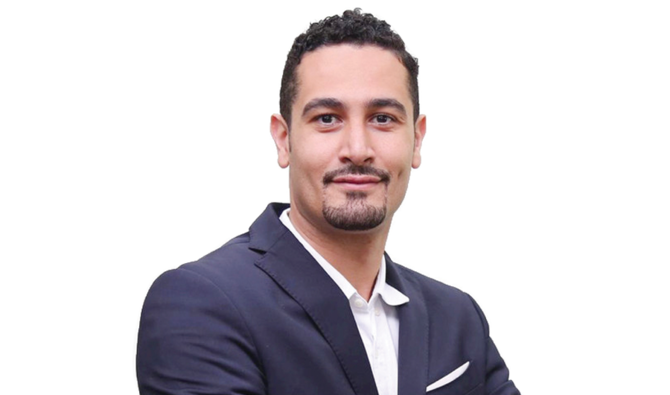
Hussain Hanbazazah has been the director of the King Abdul Aziz Center for World Culture (Ithra), which was developed by Saudi Aramco, since December 2019. Prior to that, he was the center’s director of media relations.
In 2007, he gained a bachelor’s degree in electrical engineering from the University of Missouri in Columbia and while studying there was a member of the International Student Organization.
He went on to obtain a master’s degree in sustainable electrical energy from the Georgia Institute of Technology, in 2015.
He joined Saudi Aramco in February 2008 as an electrical engineer and rose through the ranks to become a project support general supervisor, the job he held when he left the company in 2017 to become a director at the Saudi Center for International Strategic Partnerships (SCISP). There, he was quickly promoted to the position of vice president.
In 2018, he moved back to Saudi Aramco as director of media relations before taking up his latest role. Hanbazazah took part in last week’s launch of Ithra’s planned program of events for the year ahead. “The start of this decade is particularly exciting for Ithra as we gear up to deliver a great slate of new programs and events in 2020 for our audiences.
“We are pleased to bring back favorites like our annual Tanween festival, in addition to new enriching programming as well as our other popular seasonal events,” he said. He tweets @hanbazazah.

Hussain Hanbazazah, director of the King Abdul Aziz Center for World Culture (Ithra)
https://arab.news/y9ffj
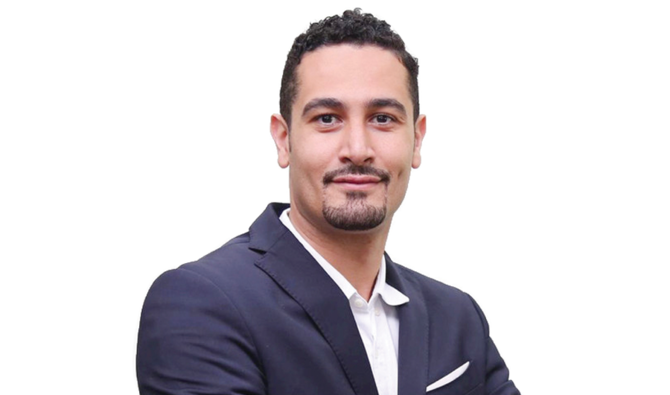
Hussain Hanbazazah, director of the King Abdul Aziz Center for World Culture (Ithra)
- The start of this decade is particularly exciting for Ithra as we gear up to deliver a great slate of new programs and events in 2020 for our audiences
14 sculptures go on display at public spaces in Riyadh
- The works were chosen by Riyadh Art from its international Tuwaiq Sculpture symposium to reflect its ‘vision of weaving beauty and intellect into the city’s fabric’
- Initiative aligns with efforts to make art a key part of city’s identity that improves quality of life and promotes the cultural economy, says Royal Commission for Riyadh City’s Khalid Al-Hazani
RIYADH: Fourteen sculptures selected from the annual international Tuwaiq Sculpture symposium, a Riyadh Art program, went on display on Wednesday at three prominent public spaces across the Saudi capital: ROSHN Front, the SEDRA residential community, and Sports Boulevard.
The project is part of Riyad Art’s efforts to showcase artworks in public spaces, and the addition of more works in other places is expected later.
Khalid Al-Hazani, the executive vice president of the lifestyle sector at the Royal Commission for Riyadh City, said: “This step reflects (Riyadh Art’s) vision of weaving beauty and intellect into the city’s fabric, and creating vibrant and culturally rich public spaces, allowing art to become an integral part of people’s daily lives.”
It is also in line with Riyadh Art’s broader strategy for transforming the city into an open-air art gallery, he added, thereby “turning art into a central element of the city’s identity and a key contributor to improving quality of life and promoting the cultural economy.”
The three chosen locations were considered perfect places to host the artworks because of their vibrancy, strong community connections and accessibility, Al-Hazani noted.
“This provides residents and visitors with the opportunity to engage with the sculptures in their everyday lives,” he said.
Seven of the sculptures have been installed at ROSHN Front, considered a key urban hub. The artworks on display there form a thought-provoking artistic landscape that encourages interaction, organizers said, and explores a number of themes including the values of urban transformation, community spirit, and creative curiosity.
Three sculptures are on display at the SEDRA residential community. Chosen to complement its serene character and nature-integrated urban planning, they blend in with their surroundings to reflect the values of environmental harmony, contemplation and renewal, organizers explained.
The remaining four sculptures are at Sports Boulevard, known for its open, green spaces. These works reflect several concepts, in particular ideas of nature, balance and public health.
All of the sculptures are part of Riyadh Art’s permanent collection, which includes works created by local and international artists during the Tuwaiq Sculpture symposium.