SINGAPORE: Asian economies could lose $105-$115 billion in gross domestic product (GDP) this year due to a slump in tourism following the outbreak of the coronavirus, ING said in a report on Monday.
“If we assume that tourism to and from China basically grinds to a halt in 2020, and extra regional tourism also diminishes, then the cost to the region from lost tourism revenues alone is approximately $105-$115 billion,” said Robert Carnell, ING’s chief economist for Asia-Pacific.
In a report titled “Holidays in hell,” Carnell said the research assumed zero tourism receipts for Asian countries from inbound China visitors as it sought to calculate the total loss from the epidemic.
“That’s obviously a gross simplification, but it fits a scenario where the epidemic lingers long after it peaks. Official travel restrictions may be slow to be removed, and travelers may remain wary long after it is safe for them to travel again,” the report said.
Fears of a coronavirus pandemic grew on Monday after sharp rises in new cases reported in Iran, Italy and South Korea.
The virus has infected more than 77,000 people and killed more than 2,500 in China, most in Hubei province, the epicenter of the outbreak. Outside mainland China, the outbreak has spread to about 29 countries and territories, with a death toll of about two dozen, according to a Reuters tally.
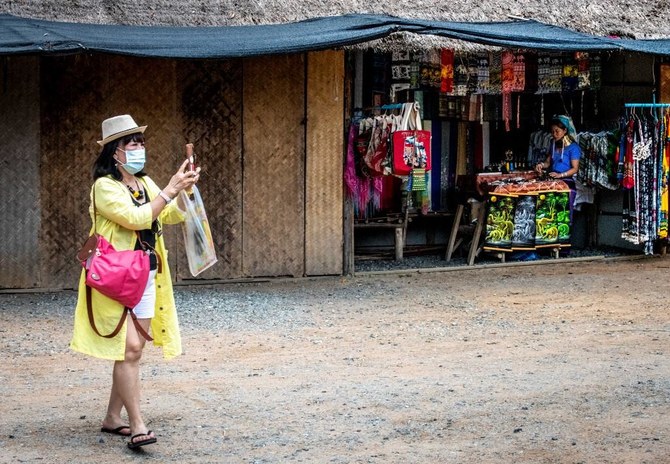
From Bali to Bangkok, Asia’s main tourism hotspots have suffered thousands of cancelations, even as countries impose travel restrictions to try and halt the spread the virus.
“While Thailand tops the poll for the region as a whole in terms of pure numbers, Chinese tourists are still a very important source of income for other South East Asian economies,” ING said.
As part of its analysis, ING included spending by outbound tourists to China, as well as the inbound Chinese tourists that will no longer be visiting countries in the region.


Coronavirus outbreak to cost Asia $115 billion in lost tourism revenues
https://arab.news/w78s9
Coronavirus outbreak to cost Asia $115 billion in lost tourism revenues

- From Bali to Bangkok, Asia’s main tourism hotspots have suffered thousands of cancelations
- ‘Chinese tourists are still a very important source of income for other South East Asian economies’


Real Estate Registry signs 10 agreements at forum in Riyadh
RIYADH: The Real Estate Registry concluded its participation in the Real Estate Future 2026, as a partner of the forum, with a distinguished presence that included the launch of its business portal, the signing of 10 agreements and memoranda of understanding with entities from the public and private sectors, the organization of specialized workshops, and the awarding of the Gold Award at the Real Estate Excellence Awards.
During his participation in the forum, the CEO of the firm, Mohammed Al-Sulaiman, reviewed the latest developments in real estate registration in the Kingdom in a keynote speech, highlighting the pivotal role of the Real Estate Registry in building a unified and reliable system for data. He also announced the launch of the national blockchain infrastructure, which aims to enable the microcoding of real estate assets, enhance transparency, expand investment opportunities, and support innovative ownership models within a reliable regulatory framework.
On the sidelines of the forum, Al-Sulaiman met with Nigeria’s Minister of Housing and Urban Development, Ahmed Dangiwa. During the meeting, they discussed areas of joint cooperation, exchanged experiences and advice on shaping the future of the real estate sector, and reviewed best practices in implementing real estate registration systems that enhance reliability and improve the efficiency of property registration.
efficiency of property registration systems.
The Real Estate Registry’s participation included organizing three specialized workshops that focused on the role of geospatial technologies in identifying ownership, enhancing transparency, and improving the quality of real estate data.
The workshop “Empowering the Real Estate Registry for the Business Sector” reviewed digital solutions that enable the business sector to manage its real estate assets more efficiently and enhance governance and technical integration. The workshop “From Off-Plan Sales to Title Deed” focused on the journey of documenting real estate ownership and the role of the registry in linking the stages of development and documentation within an integrated digital system.
On the sidelines of the forum, the Real Estate Registry signed 10 agreements and memorandums of understanding, including a deal with Yasmina Information Technology Co. to utilize real estate data in developing smarter insurance solutions that support the real estate sector and enhance service reliability.
Partnerships were also signed with Haseel, NewTech, and Sahl, as well as HissaTech and Droub, to develop innovative digital solutions in property ownership, fractional ownership, and asset tokenization, as well as real estate finance and investment within a trusted regulatory framework.
Further collaborations included an MoU with ROSHN Group, an agreement with the Saudi Water Authority to enable data integration and quality enhancement, an agreement with the Saudi National Bank, and a partnership with Saudi Post to link the national address with the property registry as a unified geospatial identifier supporting data accuracy and integration.
The registry’s participation was crowned with the Golden Award at the Real Estate Excellence Awards in the category of Excellence in Property Documentation, in recognition of its role in building a model based on transparency, accuracy, and speed, as well as advanced digital technologies and specialized legal expertise, contributing to rights protection and increasing the sector’s attractiveness.
The Real Estate Registry emphasized that its participation reflects its continued role as a key enabler of the real estate sector, a trusted data source, and an active partner in driving digital transformation, enhancing market efficiency, and building investor and financier confidence, in line with Saudi Arabia’s Vision 2030 objectives for a fully integrated and sustainable digital real estate ecosystem.


